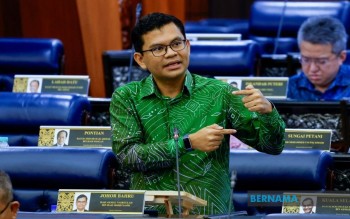
Small and medium enterprises in Malaysia still have access to substantial government support, with more than RM4 billion remaining under Bank Negara Malaysia's Small and Medium Enterprise Stabilisation Relief Facility, Economy Minister Akmal Nasrullah Mohd Nasir revealed during parliamentary proceedings on June 25. The facility, established with a total allocation of RM5 billion, has been designed specifically to assist micro, small and medium enterprises navigate current economic challenges by bolstering cash flow management and minimising operational disruptions.
The government's financing programme has already demonstrated traction since its inception. As of June 18, the facility had approved financing exceeding RM700 million across more than 1,000 enterprises, indicating steady uptake among the target business community. However, the substantial amount remaining suggests that awareness and accessibility may still represent barriers for some qualifying businesses seeking to access these funds. The availability of such a large unallocated pool underscores the government's commitment to providing a safety net for the broader SME sector, which continues to absorb the impact of supply chain disruptions and international economic headwinds.
Akmal's statement came in response to parliamentary questions concerning government measures to counteract rising job losses and business contractions triggered by the global supply crisis and broader economic uncertainty. The question, posed by PN-Bachok Member of Parliament Mohd Syahir Che Sulaiman, prompted a comprehensive overview of the multi-faceted approach the government has adopted to stabilise the economy and protect employment. For Malaysian businesses struggling with liquidity concerns, the minister advised approaching their financial institutions directly to identify tailored solutions, with processing timelines standardised at seven working days to expedite access to capital.
Complementing the direct financing facility, the government has mobilised an additional RM5 billion in financing guarantees through Syarikat Jaminan Pembiayaan Perniagaan Bhd, significantly expanding the safety net available to MSMEs. This dual-track approach—combining direct credit provision with guarantee mechanisms—addresses both the liquidity crisis and the risk aversion that many financial institutions have adopted during periods of economic uncertainty. The guarantee facility effectively reduces lending risk, encouraging banks and financial institutions to maintain credit availability to businesses that might otherwise struggle to meet traditional collateral requirements.
Beyond immediate financing interventions, the government has deployed a broader economic resilience strategy through the Progressive Acceleration for Capability and Employability (PACE) Economic Resilience Package, which commands an allocation exceeding RM710 million. This comprehensive programme extends well beyond simple cash transfers, instead focusing on structural economic strengthening across four interconnected pillars: social protection mechanisms, workforce training and employment placement, support for gig economy participants, and capacity-building initiatives targeting young professionals and SME operators. This layered approach recognises that business survival during economic stress requires not merely temporary financial relief but sustained institutional and human capital development.
The employment dimension receives particular emphasis within the PACE framework, reflecting government recognition that job losses and business failures operate as interconnected phenomena during economic downturns. More than RM580 million has been channelled through PERKESO to reinforce the Employment Insurance System, providing financial support for workers displaced by business failures or retrenchment exercises. This safety net prevents cascading economic damage whereby job losses generate reduced consumer spending, which further pressures struggling businesses. In parallel, HRD Corp has received RM100 million to manage training and job placement services, supported by the MYFutureJobs platform that serves as a digital bridge connecting displaced workers with new employment opportunities.
The gig economy—a rapidly expanding segment of Malaysia's labour market—has received targeted attention through RM20 million allocated via the Skills Education Fund Corporation specifically for training programmes. This reflects acknowledgement that independent contractors and platform-based workers operate outside traditional safety nets, making them particularly vulnerable during economic stress. Meanwhile, TalentCorp has secured RM10 million to facilitate industrial training partnerships between SMEs and emerging talent, building skilled workforces at enterprise level while simultaneously providing employment pathways for youth entering the labour market during an economically constrained period.
Supply chain resilience represents another critical dimension of government intervention, with Akmal emphasising enhanced monitoring protocols targeting essential commodity supplies and pricing. The manufacturing, food production, agriculture and services sectors—representing core economic drivers—receive particular scrutiny to prevent artificial supply constraints or price volatility from exacerbating business difficulties. This preventive approach aims to address root causes of operational disruption rather than merely treating symptoms through financial support alone.
The minister's parliamentary statement indicates that the government recognises the complexity of managing economic resilience during a period of simultaneous domestic and international headwinds. Malaysian businesses operate within integrated regional and global supply networks, making them vulnerable to disruptions originating beyond national borders. Yet the government has sought to deploy policy levers within its control to stabilise the domestic operating environment, create employment buffers, and maintain financial system functionality. The substantial funds remaining under the SME SRF suggest either that communication about the facility requires enhancement, or that additional barriers—whether documentary, regulatory or institutional—may impede eligible businesses from accessing available support.
Akmal's commitment to provide a ministerial statement regarding the global supply crisis in the coming parliamentary sitting signals that government understanding of current challenges continues to evolve. The timing of this statement, scheduled for the following Monday subject to parliamentary approval, indicates recognition that Parliament requires systematic briefing on external economic threats and the government's strategic response. For Malaysian SMEs, the accumulation of support mechanisms—from direct financing through the SME SRF, to employment protection via PERKESO, to skills development through multiple institutional channels—reflects a deliberate attempt to insulate the business sector and labour market from the worst effects of global economic stress while building institutional resilience for the longer term.

