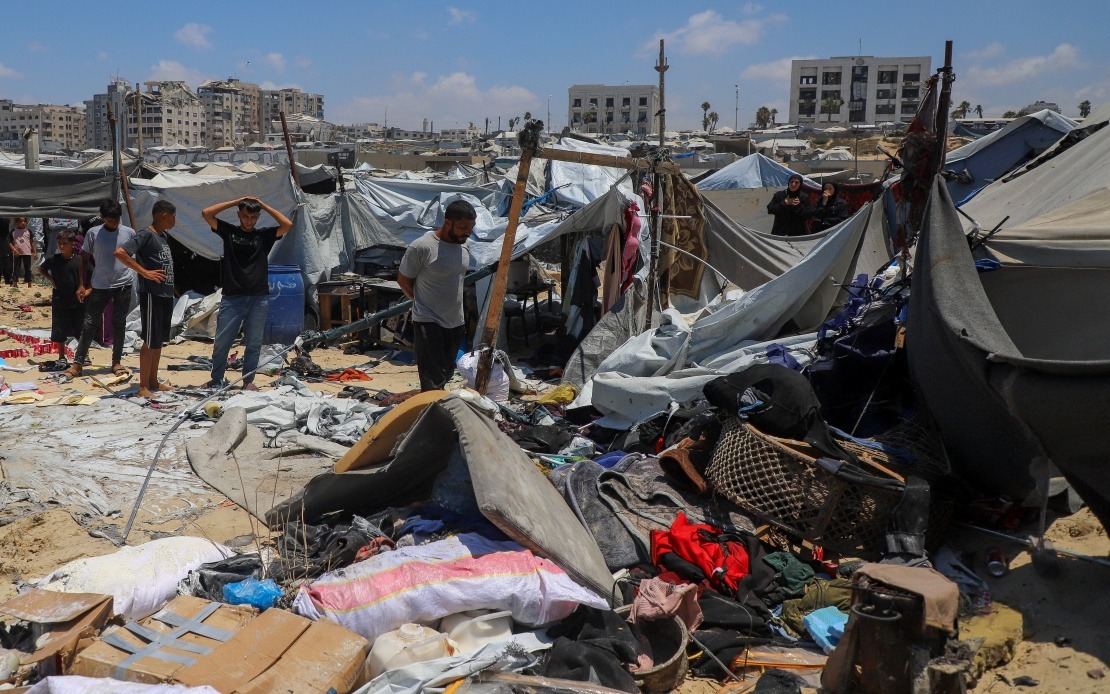
Destruction across the Gaza Strip has reached devastating proportions, with the Israeli military responsible for destroying more than 90 per cent of the enclave while maintaining control over approximately 80 per cent of the territory, according to a situation assessment released Monday by the Palestinian Government Communication Centre. The scale of the destruction underscores the prolonged and intensive nature of military operations that have systematically reshaped the physical landscape of the Palestinian territory over recent months.
The Palestinian government report, compiled from local sources and covering the period from June 29 to July 6, documented a particularly aggressive phase of operations concentrated in Khan Younis, Rafah, and Gaza City during that week alone. Eight Palestinians lost their lives during this seven-day span, according to local medical authorities who compiled casualty figures from frontline hospitals and medical facilities struggling to function amid the ongoing conflict.
Beyond casualty figures, the report highlighted the systematic nature of displacement occurring across Gaza, with Israeli forces conducting demolitions of residential structures and conducting artillery strikes against populated areas. The destruction of homes represents not merely physical devastation but forces ongoing displacement of families from their communities, compounding the humanitarian crisis facing civilians already enduring severe shortages of food, clean water, and medical supplies. The report emphasised that these operations have intensified rather than diminished in recent weeks, contrary to any expectations of de-escalation.
Operations have expanded significantly into the occupied West Bank, where Israeli military forces have undertaken widespread raids targeting Palestinian population centres. Cities and towns including Ramallah, Nablus, Hebron, Bethlehem, Jenin, Qalqilya, Tulkarem, and sections of occupied Jerusalem have experienced military incursions involving home invasions, arrests without formal charges, movement checkpoints, and roadblocks that effectively restrict civilian access to essential services and livelihood opportunities.
Settler violence has emerged as a parallel threat to Palestinians, with militia groups affiliated with Israeli colonial settlements conducting coordinated attacks on Palestinian communities and their property. The report documented specific incidents including arson targeting a commercial establishment in al-Lubban ash-Sharqiya village, physical assaults against Palestinian herding communities in areas east of Bethlehem, attempts to forcibly seize livestock, and blockades preventing villagers from accessing Burqa. These attacks represent an additional layer of coercion beyond formal military operations.
The agricultural sector has become a particular target of these coordinated pressures, revealing what Palestinian analysts characterise as a systemic approach to dismantling Palestinian economic independence. The Palestinian Ministry of Agriculture documented widespread damage to agricultural infrastructure and productive capacity across the West Bank, signalling how the conflict extends into domains affecting food security and rural livelihoods. For Malaysian observers, this dimension reflects how territorial conflicts inevitably weaponise access to natural resources and productive capacity.
Olive cultivation, traditionally central to Palestinian agricultural identity and export economy, has suffered especially severe damage. Palestinian authorities recorded 2,559 olive trees uprooted, burned, or deliberately damaged during the reporting period, with damage concentrated in the Salfit, Jenin, and Nablus governorates where agricultural activity remains strongest. These numbers represent not merely trees but the accumulated investment and heritage embedded in Palestinian rural communities who have cultivated these groves across generations.
The economic toll extends beyond immediate crop losses. The Palestinian Ministry of Agriculture quantified direct financial losses from agricultural damage at approximately US$11.78 million during this single week, affecting at least 125 farming families whose economic survival depends on agricultural production and export. The cumulative impact of such weekly losses compounds over months into systemic destruction of productive capacity that will require years to restore even if political conditions permit reconstruction.
For regional observers in Southeast Asia, this escalating pattern demonstrates how territorial conflicts increasingly target civilian economic foundations rather than solely military objectives. Malaysian policymakers monitoring Middle Eastern developments should recognise that such strategies create prolonged humanitarian emergencies that destabilise entire regions, generate refugee pressures, and undermine development across neighbouring territories. The destruction of agricultural capacity specifically suggests an approach designed to force long-term demographic and economic transformation rather than achieve temporary military advantage.
The concurrent reports of military operations across both Gaza and the West Bank indicate no geographic limitation to operations and no sanctuary for Palestinian civilian populations regardless of location. The coordination between military strikes, settler militia actions, and systematic disruption of agricultural livelihoods suggests orchestrated pressure rather than random violence, raising questions about strategic objectives extending beyond immediate security concerns.
International humanitarian organisations have struggled to maintain operations amid such systematic destruction, with medical facilities overwhelmed, supply chains disrupted, and movement restrictions preventing humanitarian assistance from reaching affected populations. The scope of destruction documented in the Palestinian government report exceeds typical conflict parameters and enters territory characterised as potential crimes against humanity by international legal frameworks.
For Malaysia and ASEAN nations maintaining diplomatic ties across multiple parties to Middle Eastern conflicts, these reports present policy challenges regarding humanitarian response, refugee protection, and support for Palestinian institutions attempting to document and address civilian harm. The escalating pace and scale of destruction suggests that diplomatic initiatives seeking conflict de-escalation have proven ineffective, requiring renewed international engagement from non-aligned nations capable of influencing parties toward civilian protection and settlement negotiations.

