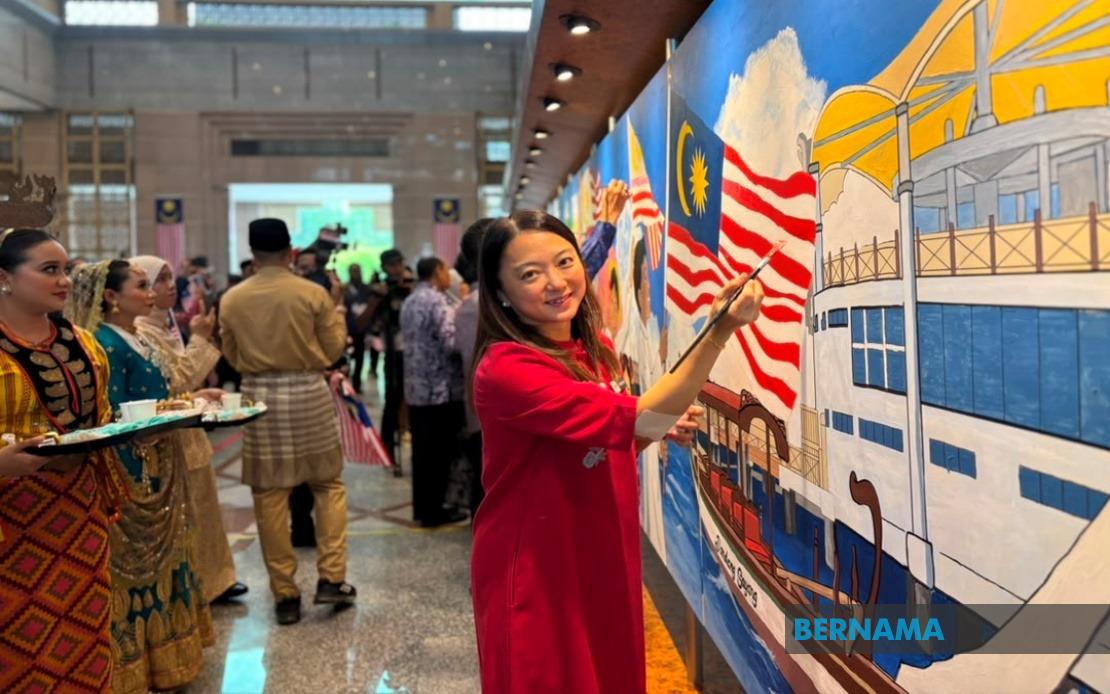
More than 62,000 Jalur Gemilang flags have reached residents and public spaces across Kuala Lumpur, Putrajaya and Labuan since the beginning of August, marking a coordinated effort to foster patriotic sentiment ahead of the National Day and Malaysia Day (HKHM) 2026 celebrations. The distribution campaign reflects an institutional push to make the national flag a visible presence throughout the Federal Territories, with flags positioned prominently along official routes, in government precincts, and within residential neighbourhoods to ensure the symbol of national sovereignty permeates daily life for millions of residents and visitors.
Hannah Yeoh, the Minister in the Prime Minister's Department overseeing the Federal Territories, articulated a broader vision behind the initiative that extends beyond mere symbolic display. Speaking after attending the Aspirasi Jalur Gemilang: Mural Kemerdekaan programme, she stressed that flying the Jalur Gemilang represents a tangible expression of love for the nation and gratitude for the independence Malaysians enjoy today. Her remarks underscore how government institutions view flag displays not simply as nationalist protocol but as a pedagogical tool for cultivating deeper emotional and civic connections among the populace to Malaysia's sovereignty and national identity.
The minister's emphasis on correct flag protocol reveals a particular concern within government circles about maintaining dignity in the flag's presentation. She instructed that agencies and organisations pay special attention to how flags are mounted and displayed, recognising that improper handling—whether through accidental damage, incorrect orientation, or disrespectful positioning—can undermine the symbolic power these national emblems are intended to convey. This focus on procedural correctness reflects a philosophy that patriotism is not merely felt but performed and ritualised, with specific protocols carrying cultural and political significance.
To address concerns among the public about proper flag etiquette, Hannah pointed towards readily available online resources and guidelines that provide clear visual examples for displaying the Jalur Gemilang correctly. Her reassurance that citizens need not fear making mistakes if they consult these materials speaks to a recognition that many Malaysians may lack familiarity with formal flag protocols and might hesitate to display flags if uncertain about proper procedure. By framing the guidelines as accessible and user-friendly rather than restrictive, the government aims to democratise flag-flying and transform it from something reserved for official ceremonies into an everyday patriotic act accessible to ordinary Malaysians.
The initiative carries particular relevance for business owners and corporate entities, whom the minister specifically addressed regarding their responsibility to ensure employees understand flag protocols. This direction suggests that government oversight extends into private sector behaviour and corporate norms, reflecting an expectation that businesses actively participate in creating a visually patriotic environment. The implicit message is that national symbols should feature prominently in commercial spaces, and those responsible for maintaining these spaces bear an obligation to ensure proper treatment of the Jalur Gemilang, whether in shopping complexes, office buildings, or retail establishments frequented by Malaysian and international visitors.
Central to Hannah's messaging was a conviction that patriotic sentiment should be cultivated from childhood, embedded in school environments, and reinforced throughout formative years. She argued that normalising flag-flying from an early age creates lifelong habits of national identification and removes the hesitation some adults experience around patriotic expression. This developmental approach aligns with educational philosophies that view repeated exposure to national symbols as foundational to creating emotionally invested citizens who internalise loyalty and pride as natural components of their identity.
The practical dimensions of the flag distribution extend beyond symbolic gestures, involving coordination among multiple government bodies. The Federal Territories Department (JWP) and Putrajaya Corporation (PPj) partnered in the initiative, demonstrating institutional alignment in implementing this patriotic campaign. The involvement of senior officials, including JWP director-general Datuk Muhammad Azmi Mohd Zain and PPj president Datuk Mohd Sakeri Abdul Kadir, underscores the official significance accorded to this undertaking within the federal administration.
The campaign's centrepiece, an Independence Mural stretching 25.40 metres along Menara Seri Wilayah in Putrajaya, encapsulates the government's approach to embedding national symbolism within urban geography. The mural incorporates iconic landmarks representing all three Federal Territories alongside the Jalur Gemilang, creating a visual narrative that ties geographic identity to national sovereignty. By integrating architectural and landscape elements distinctive to Kuala Lumpur, Putrajaya and Labuan with the national flag, the artwork reinforces the message that Malaysia's federal structure and territorial integrity are unified under a single national symbol.
For Malaysian audiences, this campaign reflects broader patterns within Southeast Asia regarding how nation-states cultivate patriotic culture in increasingly diverse societies. As Malaysia navigates questions around national identity, inter-ethnic relations, and regional positioning in an era of geopolitical flux, visible expressions of national unity through ubiquitous flag displays serve multiple functions simultaneously. They communicate continuity and stability to citizens, project state presence in public spaces, and create shared visual culture that transcends linguistic and religious boundaries.
The timing of this intensive distribution and promotional effort ahead of HKHM 2026 also suggests preparations for commemorative events that may carry heightened political and symbolic weight. Successive Malaysian governments have utilised National Day and Malaysia Day celebrations as occasions for affirming national narratives, reiterating constitutional foundations, and mobilising public participation in state-sanctioned patriotic performances. The extensive flag distribution programme lays groundwork for visual spectacles that require widespread flag participation to achieve their intended impact.
From a regional perspective, Malaysia's systematic approach to flag proliferation and public education about flag protocol differs in degree and visibility from practices in some neighbouring countries, though the underlying impulse to create recognisable national symbolism throughout urban and semi-urban environments is common across Southeast Asia. The emphasis on guideline compliance and proper etiquette also reflects institutional anxiety about maintaining control over how national symbols are deployed, suggesting concerns that improper or irreverent flag handling could be weaponised to undermine state authority or offend national sentiment.
The initiative ultimately represents a top-down patriotic campaign that aims to make national identity visually omnipresent and performatively accessible while simultaneously regulating how citizens engage with that identity. By distributing flags generously while insisting on proper protocols, the government strikes a balance between encouraging voluntary patriotic expression and maintaining state authority over how national symbols are treated. For Malaysians observing this campaign, the message is clear: displaying the Jalur Gemilang is not only permitted but encouraged, provided it is done respectfully and in accordance with established guidelines.

