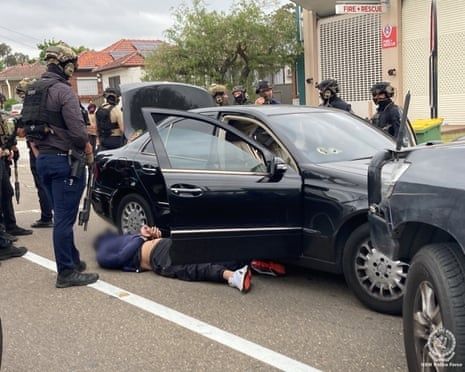
New South Wales police have announced the arrest of 356 people across a three-day operation designed to combat violent and sexual crimes on the state's public transport network. The latest enforcement phase, which concluded over the weekend, represents a significant expansion of Operation Waratah, the multi-year initiative established to protect commuters travelling on trains, buses, trams and ferries throughout NSW. With these new arrests, the cumulative total under the operation since its inception in 2024 has now surpassed 1,800 individuals brought to justice.
The scale of the operation demonstrates the commitment of NSW authorities to establishing safer public spaces for commuters. Between Thursday and Saturday, more than 400 officers were deployed across the state's transit infrastructure each day, creating a visible police presence intended both to deter criminal activity and reassure the travelling public. The concentrated timeframe and resource commitment reflect the police force's assessment that public transport corridors require sustained, intensive enforcement to effectively combat entrenched patterns of harassment, assault, and predatory behaviour.
The operational success extends beyond arrest numbers alone. Officers seized 28 knives and other weapons during the three-day phase, a figure that underscores the prevalence of armed individuals utilising public transport networks. Additionally, police detected 137 drug-related offences, suggesting that substance abuse remains intertwined with transport-related crime and that enforcement operations serve dual purposes in disrupting both violent crime and illicit drug distribution.
The arrested individuals faced a total of 645 separate charges, indicating that many detainees were charged with multiple offences rather than single incidents. This multiplicity reflects the complex nature of criminal activity on public transport, where individuals may commit a range of offences during a single journey or across multiple journeys. The diversity of charges also suggests that Operation Waratah casts a reasonably wide net, addressing not only the most serious violent and sexual crimes but also ancillary offences that contribute to an overall environment of public transport insecurity.
The operational reach during this latest phase covered 539 trains, 127 buses and 29 light rail trams, demonstrating the breadth of NSW's public transport footprint and the logistical complexity of conducting coordinated enforcement across multiple transport modes and geographic areas. Sydney's integrated transport network, which serves millions of daily journeys across diverse suburbs and precincts, presents both significant challenges and opportunities for police operations. The ability to deploy officers simultaneously across such varied infrastructure reflects sophisticated planning and coordination among NSW Police divisions.
For Malaysia and the broader Southeast Asian region, the Operation Waratah model offers valuable lessons in managing public transport safety. Many major cities across Southeast Asia, including Kuala Lumpur, Bangkok and Jakarta, grapple with similar challenges of crime on buses, trains and light rail systems serving rapidly urbanising populations. The NSW approach combines visible policing, intelligence-led enforcement, and sustained commitment over multiple phases, representing a departure from one-off crackdowns that may create temporary deterrence without addressing structural problems.
The establishment of Operation Waratah in 2024 and its subsequent expansion through multiple phases suggests that Australian authorities recognised public transport crime as a persistent problem requiring dedicated, multi-year resources rather than sporadic responses. This institutional commitment contrasts with approaches in some jurisdictions where enforcement fluctuates based on media attention or political pressure. The accumulation of over 1,800 arrests across the operation's lifespan indicates either a substantial reservoir of criminal activity within the system or the operation's effectiveness in identifying and processing offenders who might otherwise evade detection.
However, the sheer number of arrests also raises broader questions about the root causes of public transport violence and sexual offences. While enforcement operations are essential for victim protection and justice, they represent a supply-side response to demand-side problems. Questions persist regarding whether arrest numbers correlate with genuine reduction in offence rates, or whether the operation primarily displaces criminal activity to different times or locations. Sustainable solutions would ideally incorporate environmental design improvements, enhanced mental health services, and community engagement alongside enforcement.
The prevalence of weapons on public transport identified during this operation—28 weapons across three days—suggests that NSW faces significant challenges in preventing dangerous items from entering transit systems. Other major transit networks globally employ various security screening technologies and protocols with varying degrees of public acceptance and effectiveness. The balance between security measures and maintaining public transport's accessibility and efficiency remains a persistent policy challenge.
The data released by NSW Police provides a snapshot of enforcement activity but limited detail regarding the characteristics of arrested individuals, the nature of specific charges, or the outcomes of previous Operation Waratah phases. Understanding whether arrests translate into convictions, the severity of charges, and whether particular precincts or transport modes experience disproportionate crime would enhance the analytical value of such operations for policy makers throughout the region seeking to improve public transport safety without unnecessarily restricting access or privacy.
Looking forward, the continuation of Operation Waratah into subsequent phases will determine whether this represents a successful, scalable model for managing transport-related crime or whether the operation eventually faces resource constraints, community concerns about policing practices, or diminishing returns as enforcement reaches saturation points. The operation's ongoing evolution will provide important data for Australian authorities and international counterparts navigating the challenge of maintaining secure, accessible public transport in increasingly complex urban environments.

