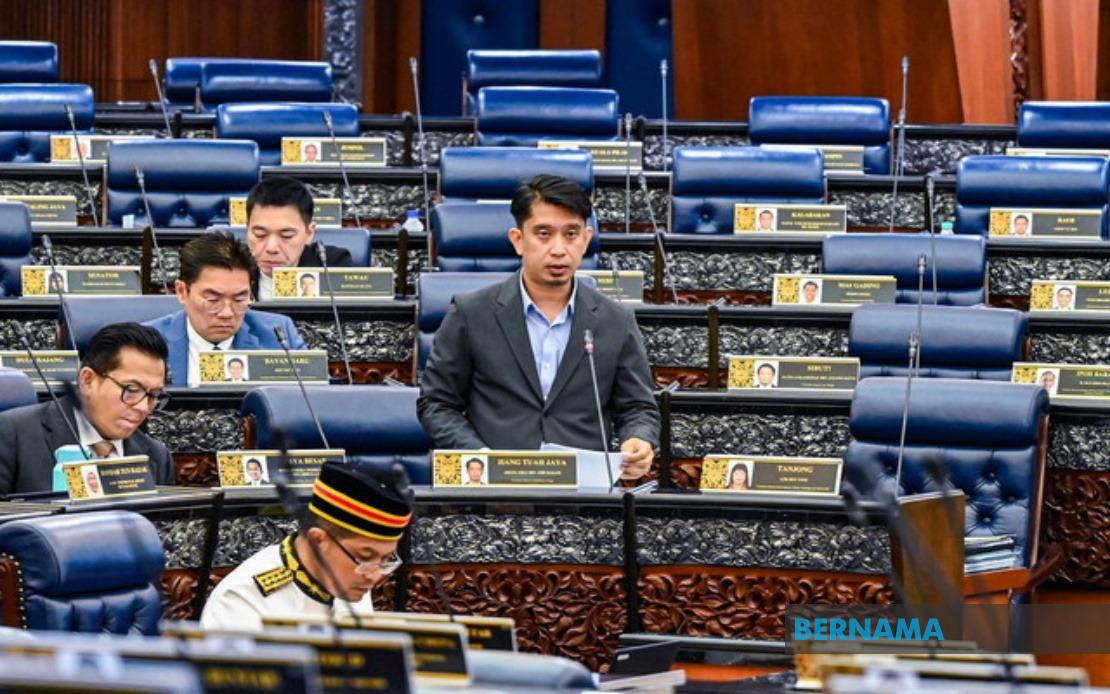
The push to develop Malaysia's science and technology workforce is gaining significant momentum, with Parliament learning that nearly 59 per cent of students entering public universities between 2023 and March 2026 chose STEM-related fields. Deputy Minister of Higher Education Adam Adli Abd Halim disclosed that 326,419 of the 556,556 diploma and degree students who enrolled during this period pursued Science, Technology, Engineering and Mathematics disciplines, while the remaining 230,137 opted for non-STEM subjects. These figures underscore a deliberate institutional strategy to align higher education output with the nation's technological ambitions.
The concentration of student numbers in STEM reflects broader policy objectives embedded within Malaysia's economic transformation agenda. Responding to parliamentary questions, Adam Adli emphasised that public universities are deliberately channelling resources and student intake toward technical disciplines that underpin the country's transition toward high-value industries. The focus extends beyond traditional engineering into emerging domains including artificial intelligence, semiconductor design, automation systems, digital infrastructure and renewable energy technologies. This targeted approach suggests that Malaysia's education system is responding to tangible demand signals from employers and policymakers anxious about the nation's competitive position in knowledge-intensive sectors.
The government's strategic vision for technical manpower development finds its most concrete expression in the National Science, Technology and Innovation Policy framework spanning 2021 to 2030. Rather than establishing rigid quotas for specific engineering disciplines, the policy adopts a holistic ecosystem approach centred on cultivating what officials term the RSET cohort—Researchers, Scientists, Engineers and Technologists. This broader categorisation recognises that innovation-driven economies require diverse technical talent distributed across multiple sectors and specialisations rather than narrowly defined engineering roles alone. The flexibility of this approach allows Malaysia to adjust workforce composition as industry priorities shift, particularly crucial in rapidly evolving fields like artificial intelligence and semiconductor manufacturing.
Under the DSTIN 2021-2030 framework, Malaysia has established a quantifiable target that carries significant implications for higher education planning. The policy aims to achieve a ratio of 200 RSET professionals for every 10,000 workers by the end of the decade. Given current projections that Malaysia's workforce will expand to approximately 17.06 million people, this target translates into a requirement for roughly 341,200 RSET professionals by 2030. The gap between current graduation rates and this target suggests substantial ongoing investment requirements in university capacity, instructor training and research infrastructure. For Malaysian students and families, this projection signals robust long-term employment prospects within technical fields, provided institutions successfully expand their capacity to meet demand.
The parliamentary exchange reveals ongoing tension between supply-side expansion and quality assurance in technical education. When pressed on whether Malaysia possesses sufficient expert lecturers, modern research laboratories and advanced facilities to support growing enrolment in programmes spanning artificial intelligence, semiconductor engineering and digital systems, Adam Adli's response centred on the Malaysian Technical University Network. This institutional framework, encompassing four specialist universities, represents the government's mechanism for concentrating resources and expertise in technical education. The MTUN approach essentially acknowledges that not all public universities can realistically compete in cutting-edge technical instruction; instead, strategic concentration allows economies of scale and specialisation to flourish within designated institutions.
The distinction between public and private university sectors adds another dimension to Malaysia's STEM development strategy. The parliamentary question specifically sought comparative enrolment data between IPTA institutions and private higher education providers, though the deputy minister's response focused primarily on public university figures. This selective emphasis potentially masks important trends regarding private sector engagement in technical education. Malaysia's private universities have increasingly developed niche programmes in emerging technologies, sometimes partnering with multinational corporations or international institutions. Understanding the full scale of STEM training across both sectors would provide a more complete picture of national capacity to meet the 2030 RSET target.
The policy framework also reflects Malaysia's recognition that demographic and economic circumstances differ substantially from competitor nations. Unlike some developed economies experiencing declining student populations or shifting labour market demands away from traditional engineering, Malaysia must accelerate STEM graduate production while simultaneously managing quality and relevance. The emphasis on programmes addressing artificial intelligence, semiconductors and green technology suggests policymakers view these sectors as strategic pillars for middle-income advancement. Investment in STEM education thus represents not merely human capital development but an explicit bet on particular technological pathways that Malaysian leaders believe will drive prosperity.
Implementing this ambitious agenda presents practical challenges extending beyond simple enrolment expansion. Attracting and retaining qualified academics in technical fields requires competitive compensation packages, particularly when graduates themselves command premium salaries in industry. Research laboratory equipment demands substantial capital investment, with costs for semiconductor or advanced manufacturing facilities running into millions of ringgit. International partnerships and technology transfer arrangements may be necessary to ensure Malaysian institutions maintain proximity to global standards in fast-moving disciplines. These infrastructure and staffing challenges explain why the government has concentrated technical education within the MTUN rather than attempting simultaneous upgrades across multiple campuses.
For Southeast Asian context, Malaysia's STEM focus aligns with regional trends toward technical skill development but reflects particular national circumstances. Singapore's education system already produces intense concentration in technical fields; Thailand and Indonesia are expanding STEM capacity; Vietnam emphasises engineering training. Malaysia's target of 200 RSET professionals per 10,000 workers invites comparison with peer nations, though comparable data remains sparse. The regional talent competition for semiconductor expertise, artificial intelligence specialists and digital infrastructure engineers means Malaysia must not only graduate sufficient numbers but ensure quality and relevance comparable to regional alternatives. Brain drain toward Singapore and other higher-income neighbour nations remains a persistent challenge requiring attention beyond enrolment statistics alone.
The parliamentary discussion also signals ministerial concern regarding lecturer expertise and facility standards, even if the response emphasised positive aspects. The very fact that supplementary questions focused on whether capacity adequately supports programme expansion suggests some scepticism among parliamentarians about implementation progress. Building the physical and human infrastructure for quality technical education proceeds incrementally; universities cannot instantaneously develop laboratories or recruit world-class researchers. This reality means the gap between policy ambitions and practical capacity will likely persist through the remainder of the decade, potentially constraining the ultimate achievability of the 341,200 RSET professional target.
Looking forward, Malaysia's STEM education strategy carries implications well beyond immediate labour market considerations. The concentration of resources toward technical fields reflects a deliberate choice about the nation's economic future, rooted in assumptions about which sectors will generate employment and prosperity. Success in meeting RSET targets could accelerate Malaysia's transition toward knowledge-intensive industries; failure might perpetuate reliance on lower-value economic activities. The 326,419 students currently pursuing STEM studies represent not merely individual career choices but collective national investment in particular technological futures. How effectively institutions nurture these students' talents and how successfully graduates transition to productive employment in Malaysian companies will ultimately determine whether current policy ambitions translate into economic reality.

