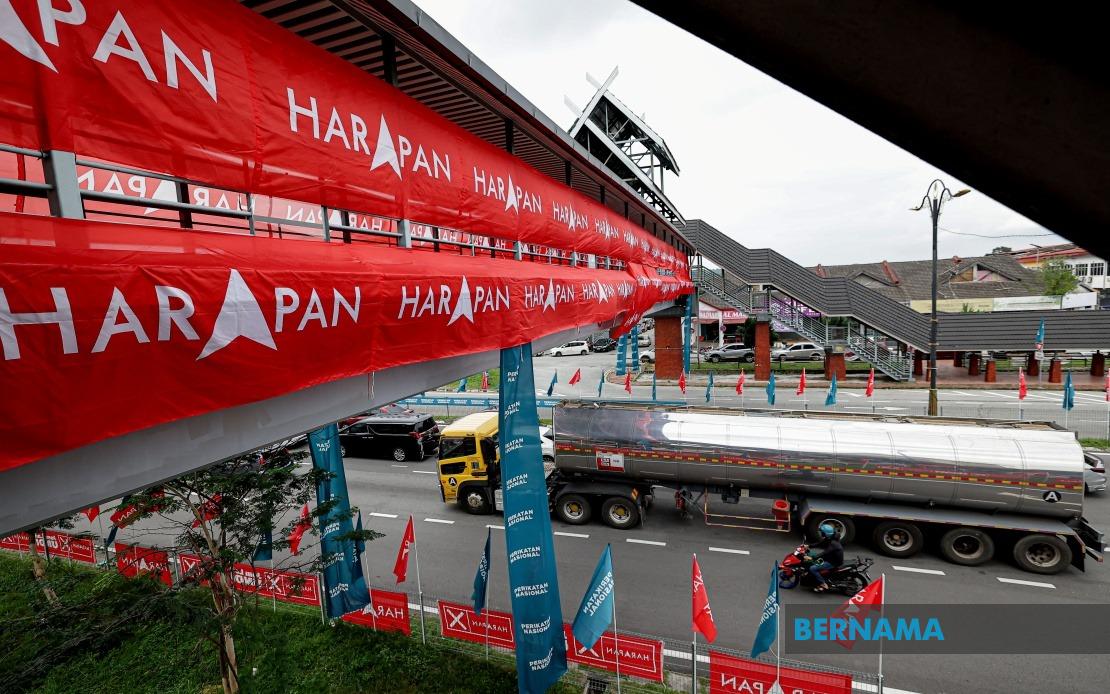
The 16th Negeri Sembilan state election is set to commence its early voting phase tomorrow, with the Election Commission (EC) facilitating ballots for over 22,000 security personnel and their family members. The figure comprises 16,884 military personnel alongside their spouses, alongside 5,455 police officers and their spouses, representing a substantial portion of the state's uniformed services. This early voting mechanism, scheduled four days ahead of the official polling day on August 1, allows essential personnel to participate without disrupting security operations across the state.
The EC has coordinated the logistics across 38 designated early polling centres distributed throughout Negeri Sembilan, with all locations opening synchronously at 8 am. The specific venues reflect the geographical spread of security infrastructure, including the Army Basic Training Centre (PUSASDA) in Port Dickson, the Negeri Sembilan Contingent Police Headquarters (IPK) and Sendayan Air Base in Seremban, as well as the Nilai District Police Headquarters (IPD). Closing times will vary according to individual location requirements, allowing flexibility within the coordinated framework. This decentralised approach ensures that personnel can vote conveniently without requiring extended absence from duty stations.
Weather conditions pose a variable factor for tomorrow's proceedings. The Malaysian Meteorological Department (MetMalayS) projects predominantly clear skies across most of Negeri Sembilan during morning hours, though Port Dickson faces forecasts of heavy rainfall and thunderstorms. Afternoon weather patterns show a concerning pattern, with forecasters predicting heavy rain across virtually the entire state. Such meteorological challenges may influence participation rates and logistical management at polling centres, particularly those in exposed locations or areas with drainage complications.
The dissolution of the Negeri Sembilan State Legislative Assembly on June 5 initiated this electoral cycle, which now progresses toward its culmination on August 1. The state election carries significance within Malaysia's broader political landscape, reflecting shifting coalition alignments and voter preferences. Security personnel participation, whilst numerically meaningful, represents only a fraction of the overall 36 state seats and total electorate, yet their early voting completion reduces administrative pressure on polling day operations.
The candidate field reveals a fragmented political landscape contesting these 36 constituencies. Pakatan Harapan (PH) maintains its broadest reach, presenting candidates in all 36 seats through contributions from three constituent parties: PKR fielding 16 candidates, DAP presenting 11, and Amanah nominating nine. This comprehensive coverage reflects PH's positioning as a major coalition challenge to incumbent administrations. Barisan Nasional (BN), the traditional administrative bloc, contests 25 seats with representation from three component parties, involving 16 UMNO candidates, seven from MCA and two from MIC, indicating a more selective strategy focusing resources on competitive constituencies.
Perikatan Nasional (PN) enters with 11 candidates distributed among four parties, including five from PAS, four from Parti Wawasan Negara (Wawasan), and one each from Gerakan and the Malaysian Indian People Party (MIPP). This coalition presents a viable alternative that consolidates certain voter demographics, particularly within conservative and Malay-Muslim segments. The relatively modest candidate count suggests PN prioritises targeted contests rather than comprehensive coverage, possibly reflecting resource constraints or strategic focus on winnable seats based on demographic analysis.
Independent and smaller party participation demonstrates Malaysia's political pluralism, though these contestants typically struggle against established coalition machinery. Bersatu, contesting independently from its former PN alliance, has fielded 24 candidates, representing a significant independent effort that acknowledges broader appeal beyond single ideological positioning. Berjasa contributes seven candidates to the contest, whilst Parti Orang Asli Malaysia (ASLI) and Parti Sosialis Malaysia (PSM) each field single representatives, likely focusing on constituencies with particular community concentrations or ideological receptiveness.
The overall candidate count of 103 across 36 seats indicates multiple contests in most constituencies, requiring voters to exercise genuine choice rather than facing default options. This candidate proliferation reflects Malaysia's electoral competitiveness and suggests meaningful variations in voter preference may determine outcomes. Multiple candidates in many constituencies could produce fractured vote distributions, potentially allowing narrow-margin victories or surprising upsets if opposition votes split inefficiently across similar ideological appeals.
The early voting process tomorrow represents a procedural element within broader election management, yet carries symbolic importance for recognising security personnel's participation rights whilst maintaining operational readiness. The coordinated scheduling and designated infrastructure demonstrate institutional capacity to accommodate specialised voting needs within democratic frameworks. Success in managing this early voting phase sets institutional precedent and operational tone for the main polling day, offering EC an opportunity to demonstrate organisational effectiveness and transparency.
Negeri Sembilan's electoral dynamics reflect statewide concerns spanning economic development, federal-state relations, and governance quality. The security personnel voting bloc, whilst occupying specialised status, ultimately responds to same societal pressures and policy preferences as broader populations. Their participation preferences may signal broader community sentiments regarding incumbent performance, coalition viability, and preferred development directions. Results emerging from this state election will influence national political calculations and coalition positioning heading into eventual federal contests, making the August 1 outcome consequential beyond Negeri Sembilan's immediate administrative boundaries.
The election itself occurs within Malaysia's evolving political environment, where coalition formations remain fluid and electoral outcomes demonstrate capacity to reshape established power structures. Negeri Sembilan's result contributes data points to broader trends regarding voter preferences, youth participation, and regional variations in political alignment. Tomorrow's early voting, whilst procedurally routine, initiates the democratic engagement phase that will crystallise into electoral outcomes determining the state's administrative direction through the next political cycle.

