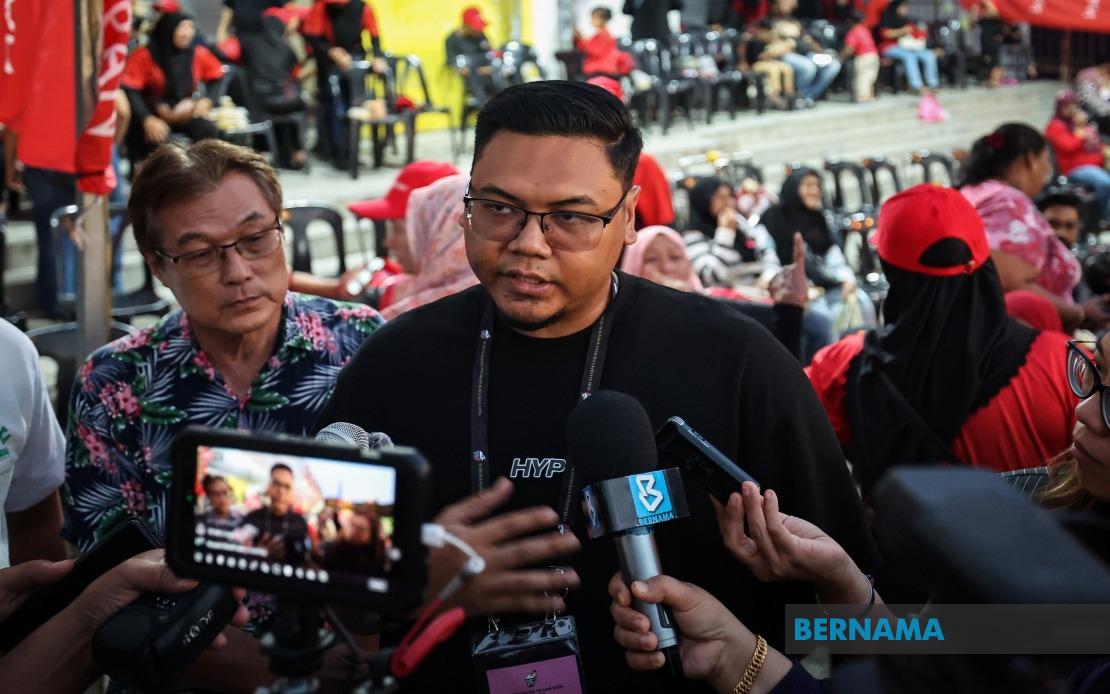
In a significant show of political realignment ahead of Johor's state election, more than 120 former members and leaders from Bersatu's Pulai division have announced their backing for Pakatan Harapan, signalling potential fractures within the Malay-Muslim party's support base in the state. The public declaration, made in Johor Bahru on July 8, represents a notable shift that could influence outcomes in several constituencies, particularly the Kempas state seat where PH candidate Muhammad Faezuddin Mohd Puad is contesting.
Muhammad Faezuddin, who also heads the Johor chapter of Angkatan Muda Keadilan, explained that while the defecting members had signalled their intentions to join the PH camp earlier, they deliberately timed the announcement to maximise visibility during the election campaign. Among the prominent defectors were former Pulai Bersatu Srikandi Information chief Rafidah Ani, former Pulai Srikandi secretary Noriah Mat Daud, and former Bukit Mewah Bersatu branch chief Mohd Suhimi Abdul Rahman, along with several division and branch-level officials. The departing members had reportedly already informed Bersatu's leadership of their decision, indicating a formalised break rather than an impulsive shift in allegiance.
The defections appear rooted in grievances about governance and organisational culture rather than ideology alone. Muhammad Faezuddin articulated PH's political philosophy as one premised on inclusive service delivery, arguing that his coalition assists residents regardless of their party affiliation. This contrasts sharply with what he characterised as the old political establishment's approach of directing resources and favours exclusively to party loyalists and well-connected individuals. Such messaging has proven effective in recruitment drives, suggesting that voters and party members increasingly resent patronage-based systems that exclude them from government assistance and development projects.
Rafidah Ani's statement revealed deeper organisational dysfunction within Bersatu's structure. She highlighted that women's wing members, or Srikandi members, felt marginalised and unvalued within the party hierarchy, describing their experience as akin to being treated as second-class participants. Despite her long involvement in Bersatu and consistent efforts to help vulnerable populations including single mothers, she found that securing institutional support for grassroots welfare initiatives proved extremely difficult. Such testimony suggests systemic problems in resource allocation and member recognition that extend beyond individual complaints.
Mohd Suhimi's departure, formalised after the 2022 Johor state election, reflects broader disenchantment with Bersatu's direction and effectiveness as a vehicle for local development. He cited not only poor treatment of party members but also the party's inability to secure material assistance for residents of his constituency. In the context of Malaysia's competitive political environment, where voters increasingly evaluate parties based on tangible service delivery and development outcomes, such failures represent significant strategic liabilities. Suhimi's hope that PH will deliver greater progress in economic development and healthcare for Kempas reflects the emerging voter priority of results-oriented governance over partisan loyalty.
The timing of these defections carries particular weight given Johor's political trajectory. The state has witnessed significant electoral volatility in recent years, with the 2022 election reshaping the political landscape. The defection of more than 120 Bersatu members into PH's fold suggests that initial goodwill toward Bersatu, which entered the 2022 election as part of the BN coalition, may have eroded substantially among grassroots activists and members. This erosion likely reflects broader sentiments across the peninsula regarding Bersatu's governance record and internal management.
For the Kempas constituency specifically, where Muhammad Faezuddin faces a three-way contest against candidates from Barisan Nasional and Parti Bersama Malaysia, the influx of former Bersatu workers and supporters could prove decisive. In the 2022 election, the BN-UMNO incumbent won with a majority of only 3,514 votes, demonstrating the seat's marginal status. The mobilisation of over 120 additional activists from Bersatu backgrounds potentially expands PH's ground organisation significantly, particularly if these members remain engaged in door-to-door canvassing and community outreach activities throughout the campaign period.
Muhammad Faezuddin's emphasis on expanding PKR membership in the Kempas People's Housing Project area reveals a strategic understanding of where political gains can be achieved. Public housing schemes typically vote as cohesive blocs when mobilised effectively, and the explicit intention to attract residents from these areas underscores PH's focused approach to constituency-level campaigning. The concentration of defectors' energy on this specific demographic likely reflects demographic data suggesting significant swing-voter populations in PPR communities.
The broader context of the 16th Johor state election amplifies the significance of these defections. With 172 candidates competing for 56 assembly seats across a voting population of 2,727,926 eligible voters, marginal movements in party support and activist engagement can significantly alter election outcomes. Johor's size and strategic importance within Malaysian politics make developments here consequential for national political trajectories, particularly regarding the sustainability of Bersatu's political project and the strength of PH's revival in Peninsular Malaysia.
These defections also illuminate underlying tensions within Malaysia's Malay-Muslim political sphere. Bersatu, founded as a vehicle for Dr Mahathir Mohamad's political comeback, has struggled to establish a durable identity distinct from UMNO or establish itself as a transformative force within Malay-Muslim politics. The departure of activists citing poor internal governance, inadequate resource provision, and inability to deliver for constituents suggests that Bersatu has failed to differentiate itself substantively from the very establishment structures it was created to challenge.
For PH more broadly, these defections represent validation of its strategic positioning as a coalition capable of absorbing former opposition members and creating space for political realignment. The emphasis on inclusive governance and results-oriented development resonates particularly with grass-roots members who have experienced the limitations of purely partisan service delivery models. As Malaysia navigates an increasingly complex political environment characterised by voter sophistication and demand for accountability, parties that can credibly demonstrate commitment to non-partisan service delivery and inclusive governance frameworks may enjoy significant advantages in attracting defectors and swing voters.

