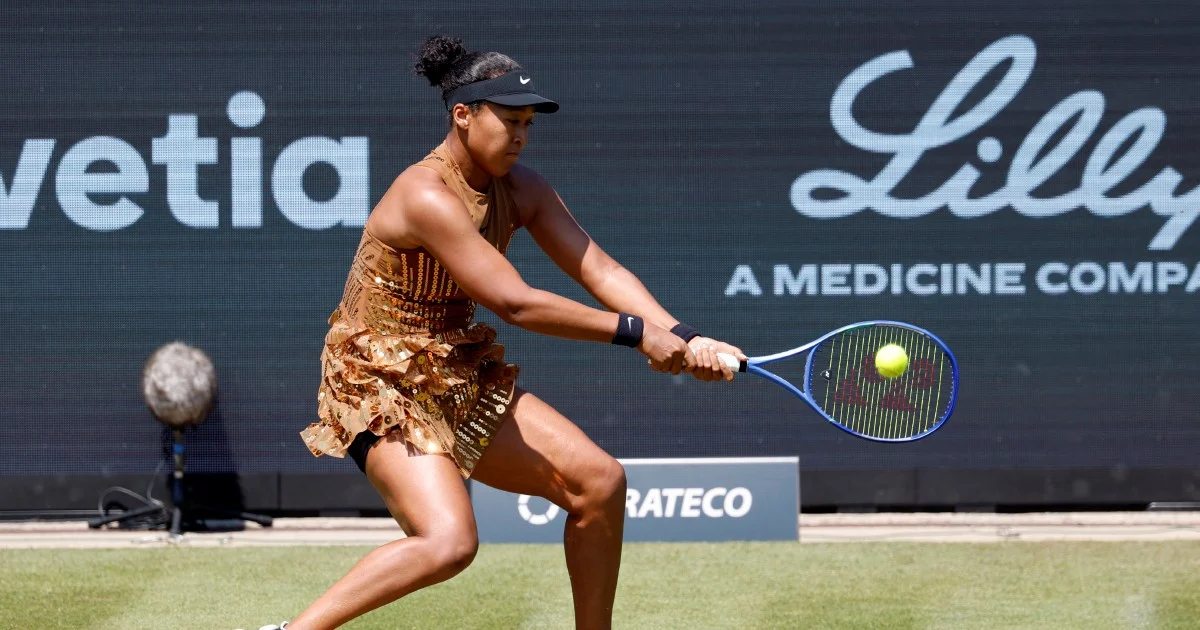
Naomi Osaka achieved a significant milestone in her tennis career by reaching her debut grass court final at Bad Homburg on Wednesday, brushing aside Chinese challenger Wang Xinyu with a dominant performance. The four-time Grand Slam champion's breakthrough on grass represents a notable development in her ongoing efforts to expand her success across different playing surfaces, particularly at the professional level's premier grass court competitions.
Osaka's path to the final highlights her continued relevance at the highest tier of women's tennis despite facing competitive challenges in recent seasons. Her progression through the Bad Homburg draw demonstrates a renewed focus on performance consistency, particularly on surfaces outside the hard courts where she has traditionally flourished. The German tournament has emerged as a crucial platform for players seeking to build momentum before Wimbledon, making Osaka's final appearance there distinctly meaningful within the broader context of the grass court season.
Wang's elimination from the tournament represented a missed opportunity for the Chinese player to establish herself among the elite competitors preparing for the year's grass court showcase. The Bad Homburg competition attracts strong international competition, and reaching the final would have enhanced Wang's ranking points and confidence heading into subsequent tournaments. Osaka's superior execution and court awareness ultimately separated the two competitors during their semifinal encounter, underscoring the experience differential between a four-time major champion and an emerging challenger.
The significance of Osaka's final appearance extends beyond immediate tournament results. Grass court performance has historically served as a barometer for overall competitive health among elite players, as the surface demands specific technical adjustments and tactical approaches distinct from other playing conditions. By reaching this final, Osaka signals that her game possesses the necessary adaptability to succeed across the professional tennis landscape's varied environmental challenges. This development carries particular importance given increased scrutiny regarding her consistency at major championships in recent years.
For Malaysian and Southeast Asian tennis enthusiasts, Osaka's achievement carries broader implications regarding representation at elite competition levels. Her Grand Slam credentials and Asian heritage have made her an influential figure throughout the region, and her continued success at prestigious tournaments maintains high visibility for Asian players in global sports markets. The Bad Homburg final provides another platform for demonstrating that Asian competitors remain competitive forces across all tournament categories and surfaces.
Bad Homburg has established itself as a quality warm-up venue preceding Wimbledon, attracting elite players seeking match practice on grass before tennis's most prestigious grass court competition. The tournament's prestige has grown significantly as players recognize its value for fine-tuning preparations and identifying tactical adjustments needed for different opponents. Osaka's presence in the final validates the tournament's status as a meaningful stepping stone within the professional women's tennis calendar.
The biomechanical demands of grass court tennis require distinct adjustments from hard court specialists. Players must modify serve delivery techniques, adjust movement patterns for reduced traction, and recalibrate timing on approach shots given altered ball behavior. Osaka's successful transition through the Bad Homburg draw suggests she has invested preparation time in developing these surface-specific competencies. Her ability to apply Grand Slam-level experience to grass court conditions became apparent during her semifinal victory against Wang.
Wang's competitive standing within women's professional tennis continues developing as she pursues consistent results against higher-ranked opposition. While this Bad Homburg semifinal loss represents a setback in her immediate tournament objectives, the experience gained competing against established champions like Osaka contributes incrementally to her long-term development. Chinese players have steadily increased their presence at elite tournament levels, and Wang's participation in prestigious international competitions reflects this broader trajectory of improved representation.
Osaka's final opponent remained undetermined at publication, with another semifinal still to be contested. Regardless of her eventual opponent, Osaka's advancement demonstrated the competitive intensity and technical precision required to succeed at Bad Homburg. The tournament's draw included several top-ranked competitors, making her progression particularly noteworthy as validation of her current playing form and readiness for the grass court season's most demanding challenges.
Looking ahead toward Wimbledon, Osaka's Bad Homburg final appearance provides momentum and confidence entering the season's most significant grass court tournament. Major championships represent the pinnacle of professional tennis, and any preparation tournament success contributes positively to player psychology and competitive readiness. Her maiden grass court final, regardless of its outcome, marks an encouraging development as she continues pursuing consistency across different surfaces and tournament categories throughout what remains a consequential period in her professional career.

