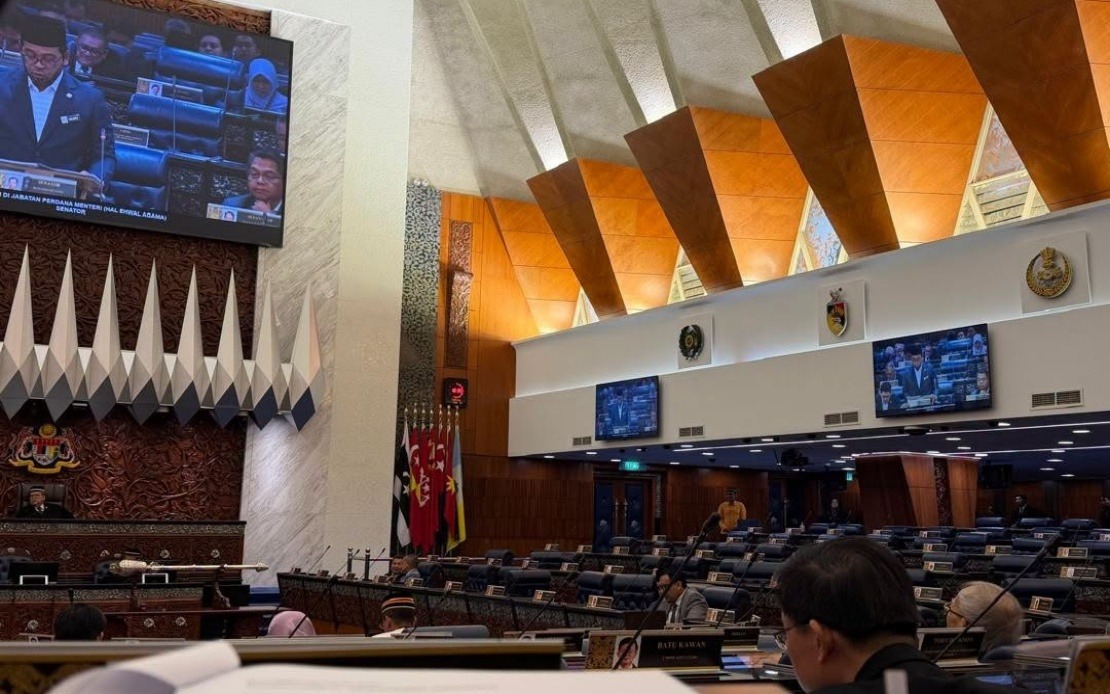
Opposition members staged a dramatic walkout from Parliament on Tuesday, abandoning a scheduled briefing on the Royal Commission of Inquiry report into Lembaga Tabung Haji—Malaysia's pilgrimage savings fund serving over 7.7 million account holders. The boycott, orchestrated ahead of Minister in the Prime Minister's Department for Religious Affairs Dr Zulkifli Hasan's planned presentation, has drawn sharp criticism from government-aligned lawmakers who view the action as politically motivated rather than principled.
Datak Seri Dr Zaliha Mustafa, chairman of the MADANI Government Backbenchers Club and Sekijang MP, delivered a pointed rebuke through social media, arguing that the opposition's departure undermined its credibility as defender of Muslim and Islamic interests. Her statement highlighted a central tension in Malaysian parliamentary politics: the opposition's frequent invocation of Islamic values and fiduciary responsibility for depositors' savings rings hollow, she suggested, when lawmakers abandon the chamber precisely when called upon to scrutinise those very concerns through established democratic processes.
The RCI report addresses governance failures at Tabung Haji, an institution holding the savings of ordinary Malaysians preparing for the Hajj pilgrimage. The inquiry examined how funds were managed, invested, and safeguarded—questions of acute concern to account holders across the country. For a Muslim-majority parliament, the substance of these findings carries both financial and spiritual dimensions, making the opposition's absence from debate particularly conspicuous in government narratives.
Dr Zaliha's argument centres on the opposition's stated positions versus its parliamentary conduct. Over months, opposition parties have publicly criticised government handling of the Tabung Haji situation, positioning themselves as champions of depositor protection and institutional integrity. Yet when Parliament created a formal venue—the special Dewan Rakyat sitting—for opposition members to cross-examine findings, challenge government responses, and present alternative evidence or arguments, they chose departure over engagement. From the government's perspective, this gap between rhetoric and action warrants public scrutiny.
The opposition's walkout was triggered by Speaker Tan Sri Johari Abdul's decision to proceed with the session despite the absence of Prime Minister Datuk Seri Anwar Ibrahim and Deputy Prime Minister Datuk Seri Fadillah Yusof, both undergoing medical treatment. Perikatan Nasional chief whip Datuk Seri Takiyuddin Hassan had proposed postponement, arguing that the absence of the nation's two most senior political figures diminished the session's legitimacy and the opportunity for meaningful accountability. This procedural objection provided the formal justification for the walkout, though it also reflects deeper questions about parliamentary protocol and the conditions under which opposition members view debate as worthwhile.
The incident raises important considerations for Malaysian governance. Parliamentary opposition serves essential democratic functions—scrutinising executive actions, amplifying public concerns, and offering alternative policy perspectives. When opposition legislators stage boycotts, they sacrifice those functions, trading legislative voice for symbolic protest. The calculation is whether the symbolic value justifies the substantive loss. In this case, government backbenchers argue the opposition misjudged that trade-off, prioritising procedural objections over substantive representation of constituent interests.
Tabung Haji's importance extends beyond partisan politics. The institution manages funds for millions of working-class and middle-class Malaysians, often representing decades of savings accumulated through modest monthly contributions. Account holders across Malaysia—regardless of political affiliation—have legitimate interests in understanding what the RCI uncovered and how authorities will respond. An opposition walkout arguably disadvantages those constituents who depend on parliamentary scrutiny to protect their interests, regardless of which party sits in government.
The dispute also illustrates persistent tensions in Malaysian parliamentary culture regarding when boycotts or walkouts constitute legitimate protest versus abandonment of duty. The opposition's reasoning—that key government principals should be present to answer for their administration—carries weight in principle. Yet parliamentary systems typically permit legislative proceedings to continue in the absence of any single minister, including the Prime Minister, with other designated representatives answering questions. The Speaker's decision reflects standard parliamentary practice, even if opposition members viewed it as insufficient given the report's significance.
For ordinary Malaysians observing this political theatre, the substantive question remains unresolved: what will happen to address the governance failures the RCI identified at Tabung Haji? Whether opposition members ultimately participate in debate or not, account holders expect concrete action—reforms, accountability measures, and safeguards against future mismanagement. The political blame-trading between government and opposition, while entertaining to partisan observers, may obscure this fundamental public interest.
Moving forward, the episode suggests that the opposition faces pressure to re-engage on Tabung Haji matters through parliamentary channels, or risk the government's narrative that it lacked serious intent. For the government, the immediate political victory of claiming superior commitment to accountability may prove temporary; sustained focus on actual reforms and transparent implementation of RCI recommendations will ultimately determine whether public confidence in the institution recovers. The Tabung Haji controversy, like many governance crises, will ultimately be judged not by parliamentary theatrics but by real outcomes for the millions of depositors whose savings remain at stake.

