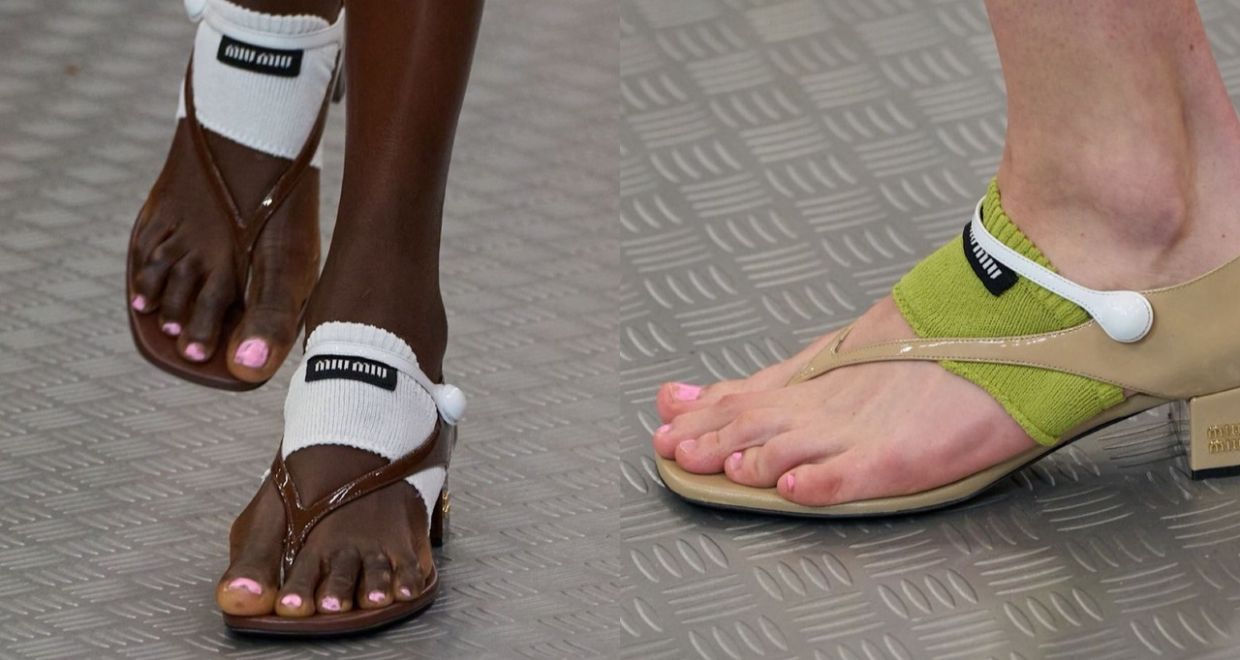
The eternal dilemma of warm-weather dressing—whether to go completely barefoot or commit to full coverage—appears to have found an unlikely middle ground. Retailers across Asia are reporting a surge in demand for open-toe socks, a hybrid garment that challenges conventional footwear wisdom by exposing the toes while wrapping around the arch and upper foot. For consumers navigating tropical heat and humidity, this seemingly counterintuitive trend offers a practical solution that doesn't sacrifice style.
The phenomenon gained significant traction following luxury brand Miu Miu's 2025 Spring/Summer collection, which featured unconventional sock designs that covered only the arch rather than the entire foot. This high-fashion endorsement catalysed wider adoption, with celebrity influencers quickly amplifying the trend. South Korean actor Cha Jung-won recently showcased the pairing of sky-blue flip-flops with beige knit leg warmers on social media, demonstrating how the look could transition from runway to everyday wear.
Data from online fashion platforms reveals the dramatic acceleration of this category. Style commerce platform Ably documented a staggering 1,664 per cent increase in transaction value for flip-flop socks over a one-month period spanning mid-May to mid-June, with related searches climbing 3,227 per cent during the same window. The underlying driver appears to be South Korea's unusually early heat wave, which accelerated the seasonal shift toward summer footwear. Summer shoe categories including mules, slides, and flip-flops experienced an 80 per cent sales surge between May 31 and June 7 compared to the previous year, according to online fashion platform W Concept, demonstrating how weather anomalies can reshape consumer purchasing patterns.
What distinguishes contemporary open-toe and flip-flop socks from their winter equivalents is their construction and intended function. Rather than prioritising insulation and warmth, summer versions employ sheer, mesh, and loosely knitted fabrics that maximise breathability while maintaining a decorative purpose. Retailers position these items as styling accessories that transform basic flip-flops and sandals from utilitarian footwear into considered fashion statements. A 29CM fashion official explained the appeal: "Open-toe socks grow on you the more you look at them. They are a summer cheat code for adding an accent to shoes like flip-flops, sandals and ballerina flats, when bare feet feel too plain and ordinary socks feel too stuffy."
For regions like Malaysia and Southeast Asia, where monsoon seasons bring persistent moisture and humidity, the practical advantages extend beyond aesthetics. The socks mitigate friction and chafing caused by flip-flop and sandal straps, a common complaint during prolonged wear. During heavy rainfall, the same socks can be paired with rain boots to reduce skin irritation from waterlogged footwear. This functional dimension transforms what might initially appear as a frivolous trend into a genuinely useful adaptation for tropical climates where foot comfort intersects with style concerns.
Styling open-toe socks requires a deliberate approach to avoid fashion mishaps. Fashion authorities recommend beginning with neutral shades—grey, black, or white—to test the aesthetic. Grey socks paired with black flip-flops or ballerina flats complement denim, Bermuda shorts, and satin skirts effectively. For those seeking bolder statements, vivid hues including yellow, pink, or sky blue create striking visual impact, particularly when deliberately mismatched with contrasting shoe colours. The critical principle involves restraint in other areas; since the sock-and-shoe combination already demands visual attention, the remainder of the outfit should remain understated, typically featuring simple t-shirts paired with shorts or basic skirts.
Pattern integration offers another dimension for experimentation. Visible designs such as polka dots or floral motifs on the socks create particularly compelling compositions when worn with minimalist footwear and clean silhouettes. This approach allows individuals to introduce personality and seasonality into their wardrobes without overwhelming the overall aesthetic. The interplay between visible sock patterns and exposed toes creates a deliberate focal point that grounds an otherwise simple summer outfit.
Fashion editor Je Hye-yoon articulated the philosophical shift underlying this trend: "This summer, socks are no longer an item to hide. Bare the toes, leave them open or tuck them between flip-flop straps, and let socks take on a new kind of presence." This reframing represents a broader evolution in how fashion treats functional garments, transforming socks from invisible infrastructure into visible design elements. The trend reflects a contemporary aesthetic that embraces seeming contradictions and challenges established rules about appropriate seasonal dressing.
For Southeast Asian consumers and fashion editors, this trend carries particular relevance given the region's climate realities and growing fashion consciousness. The open-toe sock phenomenon demonstrates how global luxury fashion influences cascade through digital platforms and social media, eventually reaching mainstream retailers and consumers. It also illustrates how practical concerns—managing perspiration, preventing blisters, maintaining comfort in heat—can intersect with style aspirations, creating products that serve genuine needs while satisfying aesthetic desires. As e-commerce platforms continue expanding their sock and hosiery categories, Malaysian shoppers will likely encounter increasingly diverse options designed for tropical climates, blending function with the contemporary fashion logic that rejects either-or choices in favour of creative hybridisation.

