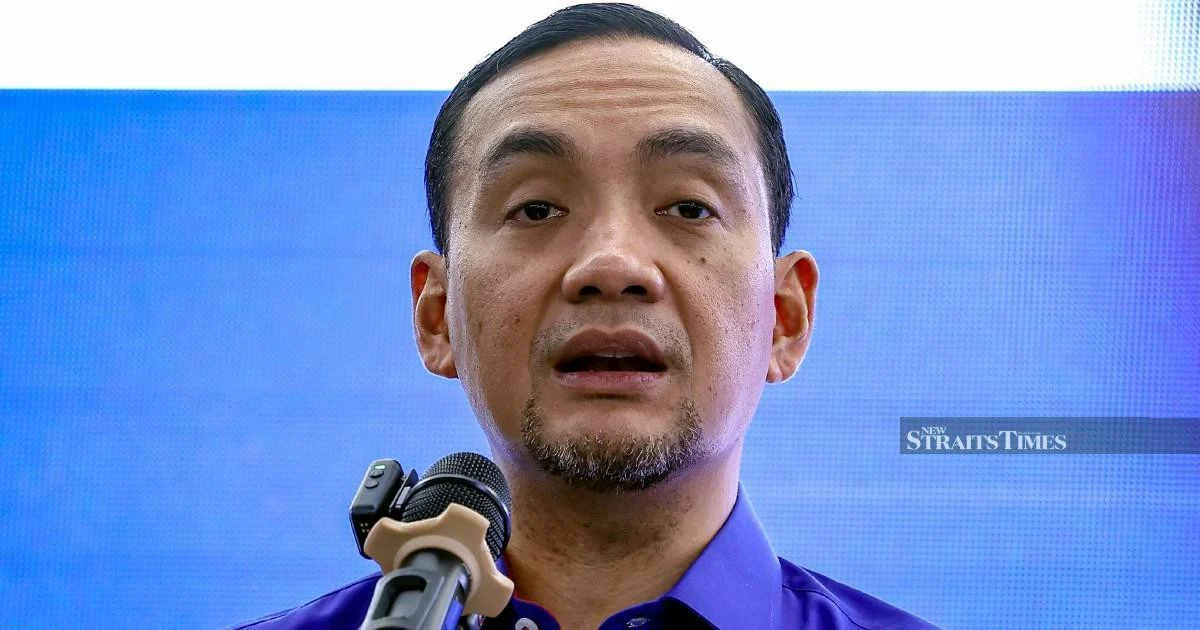
Johor's caretaker menteri besar, Datuk Onn Hafiz Ghazi, has firmly rejected suggestions that the Regent of Johor played a role in initiating the dissolution of the state's legislative assembly on June 1. The denial addresses growing public speculation and media reports that the palace had instructed the controversial decision, a question that has dominated political discourse in Malaysia's southern state since the assembly was formally dissolved.
The timing and nature of the dissolution have drawn scrutiny from observers seeking to understand the decision-making process behind the move. Political watchers had questioned whether the dissolution represented the independent choice of the caretaker menteri besar or reflected pressure from the palace. Onn Hafiz's statement represents an attempt to distance the sultan's office from the political machinery and establish that the executive branch acted autonomously in this matter.
Johor politics has historically been marked by the significant influence wielded by the royal institution, making questions about palace involvement in major state decisions commonplace. The position of regent carries considerable symbolic and sometimes practical weight in state affairs, and decisions that might appear to carry royal endorsement often face heightened public interest and scrutiny. Against this backdrop, the caretaker menteri besar's explicit denial becomes particularly noteworthy for what it suggests about internal political calculations.
The dissolution set in motion a process that would lead to fresh elections for the Johor state assembly. This electoral exercise carries implications not only for Johor but potentially for the broader national political balance. State-level politics in Johor frequently influences dynamics at the federal level, given the state's size, economic importance, and historical weight in Malaysian politics. The composition of the Johor assembly following new elections could reshape coalition dynamics and influence which alliances hold sway in the state government.
Onn Hafiz's clarification may also serve a broader purpose within the political narrative surrounding his administration. As a caretaker menteri besar operating in a transitional period, establishing clear lines of authority and responsibility helps frame the role of the executive in state governance. The denial implicitly asserts that consequential political decisions emanated from the elected leadership rather than through royal direction, an important distinction in maintaining the constitutional framework that defines parliamentary democracy in Malaysia.
The question of palace involvement in political decisions remains sensitive across Malaysian politics, where questions about the proper constitutional role of the monarchy periodically surface. While the institution of the ruler commands profound respect and loyalty in Malaysian society, the separation between constitutional monarchy and executive governance represents a ongoing tension in how power operates in practice. Onn Hafiz's statement addresses this tension directly by clarifying boundaries between the two spheres.
Within Johor's specific political context, the denial may also reflect intra-coalition dynamics that remain unresolved. Political forces within the ruling coalition and opposition blocks maintain different interpretations of who held decision-making authority for the dissolution. By explicitly rejecting palace involvement, the caretaker menteri besar positions his government as the responsible agent, which carries both political credit and political accountability for the consequences of the decision.
The path to fresh elections through dissolution represents a significant moment in Johor's electoral cycle and offers an opportunity for political realignment. Parties across the spectrum have begun positioning themselves for campaign operations, and the framing of who initiated the dissolution matters for how voters perceive the legitimacy and motivations behind the electoral exercise. Onn Hafiz's intervention into the narrative establishes one version of events that his administration will likely emphasize during campaigning.
Southeast Asian observers of Malaysian politics note that questions about where power actually resides—with elected officials, traditional institutions, or complex combinations of both—frequently surface in state contexts across the region. The Johor situation exemplifies how constitutional monarchy operates in practice, with regular need for clarification about respective roles and authorities. These moments of public disputation about institutional roles reveal underlying structural questions about governance that persist across multiple electoral cycles.
Moving forward, the caretaker administration will likely maintain this position on the dissolution's origins while managing preparations for new elections. How voters ultimately respond to the assembly's dissolution and the subsequent electoral campaign may ultimately matter more than the current debate about palace involvement. Nevertheless, the political narrative established now through statements like Onn Hafiz's will shape how both supporters and critics interpret the legitimacy and fairness of the ensuing electoral process, making his clarification a consequential intervention in Johor's contemporary political discourse.

