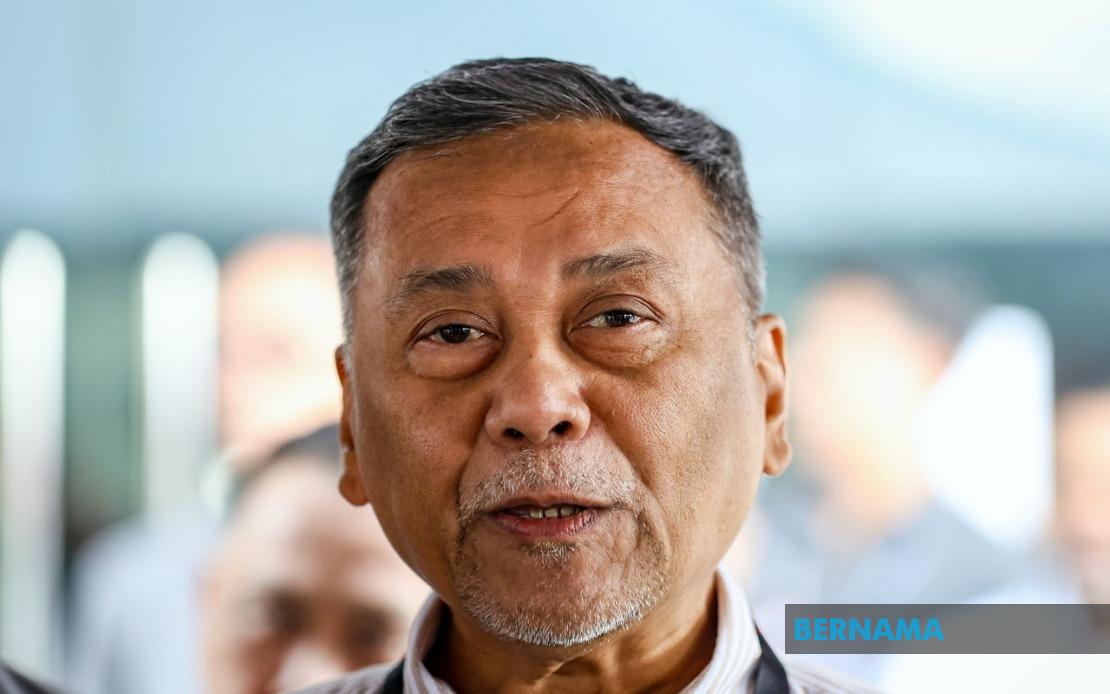
As Johor prepares for its 16th state election tomorrow, the Election Commission has sought to clarify responsibility for monitoring campaign content across different platforms, drawing a distinction between physical and digital materials that may violate election rules. Election Commission Chairman Datuk Seri Ramlan Harun made the pronouncement during an inspection of ballot box checking centres in Pontian yesterday, emphasising that complaints about online campaign posters and digital materials should be directed to the Malaysian Communications and Multimedia Commission rather than the EC itself.
The clarification comes at a critical moment, with approximately 2.7 million registered voters set to cast ballots tomorrow to elect 56 assemblymen across the Johor state legislature. The timing underscores ongoing tensions surrounding campaign conduct in what has been a closely watched election season in Southeast Asia's most economically developed state. The distinction between agencies reflects Malaysia's regulatory framework, where different bodies maintain oversight of specific media channels and communication platforms.
Ramlan explained that the EC's enforcement capabilities focus primarily on physical campaign materials. The commission's team has already removed posters and banners from various locations following public complaints, he noted. However, the explosive growth of digital campaigning has created jurisdictional questions that require clear direction for citizens seeking to report violations. By routing online complaints to MCMC, the EC is acknowledging the telecommunications regulator's statutory authority over internet-based content distribution.
The controversy intensified earlier this week when UMNO Supreme Council member Datuk Seri Shahaniza Shamsuddin publicly urged the EC to take action against campaign materials featuring former Prime Minister Datuk Seri Najib Razak and his wife, Datin Seri Rosmah Mansor. These individuals are not contesting in the Johor election, making their prominent display in campaign posters and banners potentially problematic under election regulations. Shahaniza, who serves as Pahang UMNO information chief, characterised the practice as extreme and suggested it was designed to manipulate public perception by invoking their political legacy.
The use of non-candidate faces in election campaigns raises substantive questions about electoral fairness and influence. By prominently featuring prominent political figures, campaign organisers may be attempting to transfer their popularity to candidates without explicit endorsement, creating an indirect form of political leverage. This concern is particularly acute in Malaysian politics, where family networks and established political brands carry considerable weight in voter decision-making. The presence of such materials during the campaign period could sway voters who associate the images with particular policy directions or political movements.
Malaysia's dual-channel regulatory approach reflects broader governance challenges in the digital age. While traditional media and physical campaign materials remain subject to established rules developed over decades, online platforms operate with less stringent oversight, partly due to their rapid evolution and the technical complexities involved in monitoring content distribution. The MCMC, as the designated authority for telecommunications and multimedia matters, possesses specific statutory powers to enforce compliance regarding online content, including removal authority and the ability to investigate violations.
The EC's decision to clarify jurisdictional boundaries also suggests internal capacity constraints. Managing both physical and digital campaign monitoring simultaneously may exceed the commission's operational capabilities during an active election period. By explicitly directing digital complaints to MCMC, the EC is effectively managing its workload while ensuring that violations are still reported to competent authorities. This division of labour is pragmatic, though it requires public awareness that violations on different platforms warrant complaints to different agencies.
From a voter perspective, the clarification provides necessary guidance for those wishing to report suspected violations. Citizens witnessing campaign materials they believe breach election rules now have explicit direction on where to lodge complaints depending on whether the materials appear on physical or digital platforms. This transparency reduces friction in the complaint process and theoretically improves the speed with which violations can be addressed. However, it also places responsibility on members of the public to determine which regulatory body holds jurisdiction in specific circumstances.
The focus on campaign material conduct reflects broader international attention on Malaysian electoral integrity. As the nation navigates increasingly competitive electoral contests, the transparency and fairness of campaign processes have become scrutinised more closely by domestic stakeholders and international observers. Election management commissions worldwide face comparable challenges in adapting regulatory frameworks to accommodate digital innovation while maintaining established principles of fairness and transparency.
With voting scheduled to commence tomorrow morning, the clarification from the EC comes at the final moment before citizens exercise their franchise. The distinction between EC and MCMC jurisdictions will likely prove consequential if campaign violations emerge during final hours before polls open. Both agencies will need to coordinate efficiently to address complaints, particularly those involving materials distributed across multiple platforms or those that straddle the boundary between physical and digital dissemination.
The Johor election serves as a testing ground for how Malaysian election management responds to contemporary challenges in campaign monitoring and enforcement. The outcome of this election and the effectiveness of the joint EC-MCMC approach to handling violations will inform how the country's electoral framework evolves in future contests. For now, the public has clear guidance: online campaign complaints should go directly to MCMC, while physical materials remain the EC's domain.

