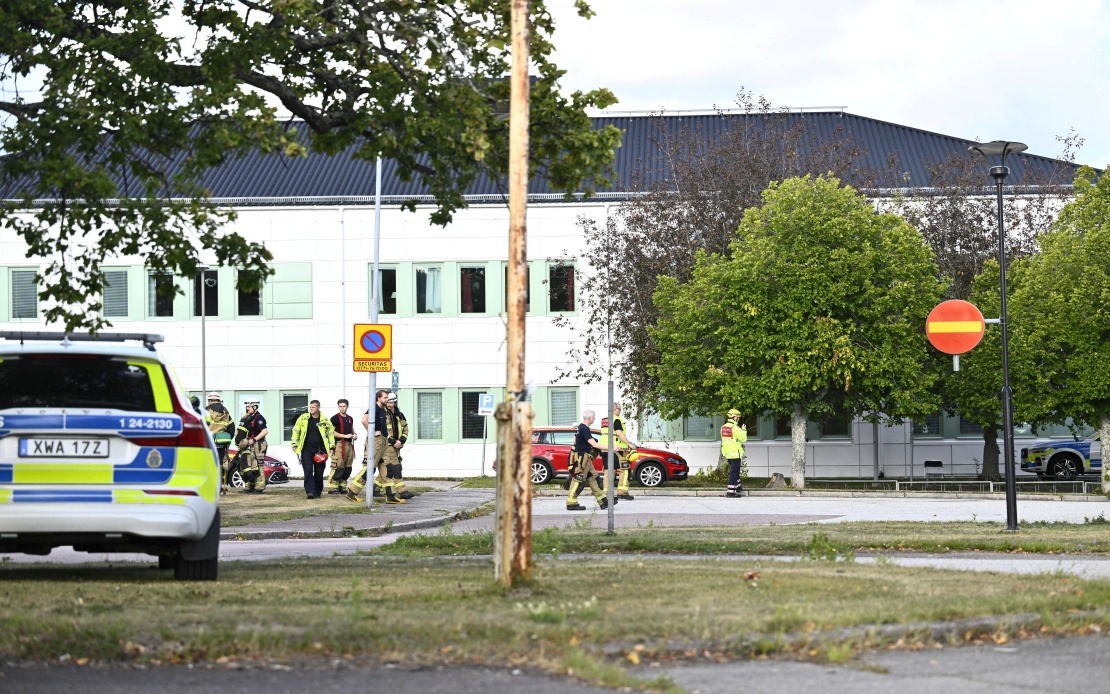
A fatal assault with a sword at a school in central Sweden has left one person dead and two others critically wounded, marking a rare but severe incident of school violence in the Nordic nation. The attack took place at Brinell School in the town of Fagersta during midday hours, prompting an immediate and substantial emergency response that drew police, medical teams, and local authorities to the scene.
Emergency services arrived at the school shortly after 2:06 pm local time on the afternoon of the incident, responding to urgent calls from the educational facility. The two most severely affected victims, both males under 18 years old, sustained injuries serious enough to require immediate hospitalisation, though medical personnel reported their conditions as serious yet stable. A third individual at the scene suffered injuries classified as minor in comparison, receiving treatment appropriate to the nature of their wounds.
Authorities quickly identified and arrested an 18-year-old male in connection with the attack. According to information from Sweden's public broadcaster SVT, the suspect had previous association with the school as a former pupil, suggesting potential familiarity with the premises and community. Police records indicate the individual can be linked to two residential addresses within Fagersta, providing investigators with lines of inquiry as they seek to establish motive and circumstances surrounding the violence.
The incident triggered a comprehensive security lockdown affecting multiple educational and civic facilities across Fagersta. Seven locations—including Olympen, Fagerstahallen, Risbroskolan, Skogsglantan, Bjorksta, Prastkragen, and Norrbybacken—were placed under strict access restrictions to ensure the safety of students, staff, and visitors during the active police investigation. This precautionary measure reflected concerns that additional threats might exist or that further disturbances could occur in the immediate aftermath of the attack.
Swedish Justice Minister Gunnar Strommer issued a statement acknowledging the gravity of the situation, emphasizing that the government maintains continuous oversight of the unfolding developments. He confirmed that law enforcement personnel were actively engaged at the location and working with appropriate urgency to gather evidence, interview witnesses, and establish facts about the incident. The minister's comments underscored the seriousness with which Swedish authorities treat such violence, particularly when it occurs within educational settings and involves young people.
The attack stands out as a particularly troubling incident within the Swedish context, where school violence remains comparatively uncommon relative to other nations. Sweden has historically maintained strong school safety protocols and mental health support systems designed to prevent such occurrences. The fact that this incident involved a weapon such as a sword, rather than more commonly encountered instruments, adds an additional dimension to the concerns raised by education officials and community leaders.
For Malaysian and Southeast Asian observers, such incidents in developed Nordic countries underscore that school safety represents a universal concern transcending wealth or development status. While Sweden is renowned for its social safety nets and progressive policies, the incident demonstrates that factors contributing to youth violence—whether psychological distress, social alienation, or access to weapons—can manifest across different societal contexts. The prompt response and transparent communication from Swedish authorities also provides a model of crisis management worthy of consideration by education systems throughout the region.
The broader implications of this event will likely prompt Swedish policymakers to examine existing safeguards within educational institutions and evaluate whether additional measures for identifying and supporting at-risk young people might be warranted. Mental health support in schools, threat assessment protocols, and coordination between educational and law enforcement agencies will probably feature prominently in subsequent reviews and discussions among Swedish education and security officials.
Investigations into the precise motivations driving the assault remain ongoing, with police pursuing multiple investigative threads. The fact that the alleged perpetrator held ties to the institution as a former student raises questions about whether institutional or interpersonal grievances may have factored into the decision to commit violence. Swedish law enforcement will likely examine digital communications, witness accounts, and psychological evaluations to construct a comprehensive picture of events leading to the attack.
The incident has prompted expressions of solidarity from community members and expressions of concern for the victims and their families. Educational institutions across Fagersta have been coordinating support services for affected students and staff members who experienced trauma as a result of the violence and subsequent lockdown procedures.

