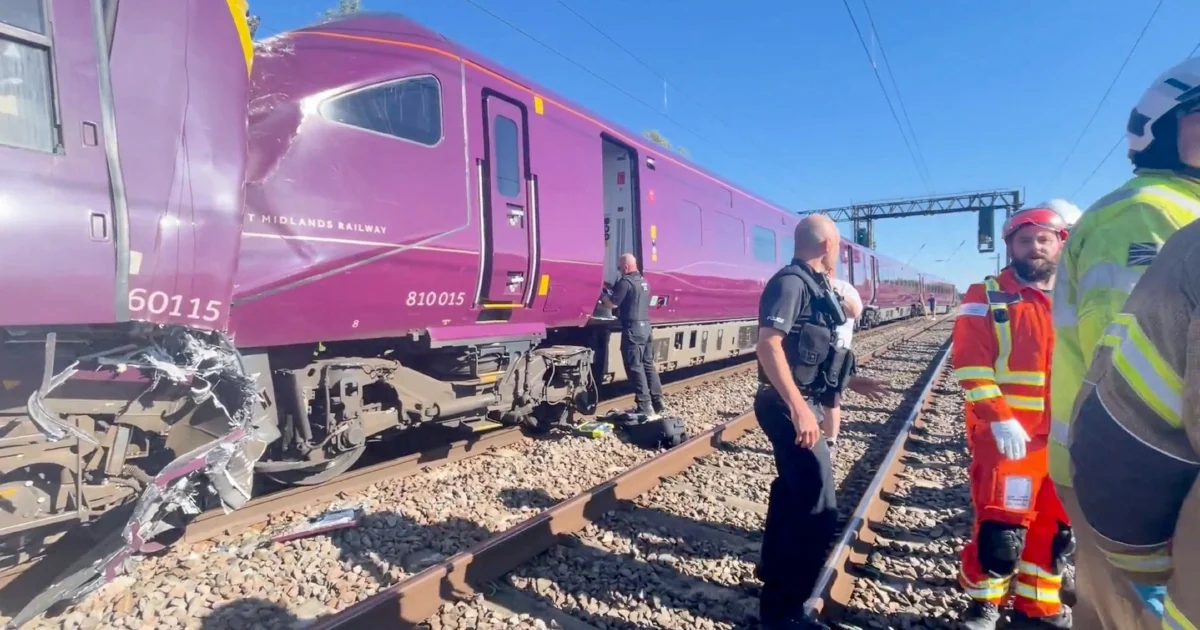
A significant railway accident unfolded north of London on Friday when two passenger trains collided, resulting in one fatality and a large number of casualties requiring emergency medical intervention. The collision triggered an immediate response from the UK's emergency services, who were deployed to manage the complex rescue operation and treat the injured. Emergency officials confirmed that beyond the one death, numerous passengers sustained injuries of varying severity, with particular concern focused on 11 individuals whose conditions were classified as very serious.
The scale of this incident underscores the inherent risks associated with rail transport, despite the industry's sophisticated safety infrastructure. When trains collide at high speeds, the forces involved can overwhelm the structural protections designed into modern rolling stock, resulting in widespread devastation within carriages. The geographic proximity of this accident to London, one of Europe's busiest metropolitan areas, meant that emergency medical resources could be mobilized swiftly, though the sheer number of casualties still strained the response system.
The circumstances surrounding the collision remain under investigation by the relevant authorities. Such incidents typically involve complex contributing factors that may include signal system failures, driver error, weather conditions, or mechanical defects. The location north of London suggests this occurred on one of the major commuter or intercity routes that radiate outward from the capital, potentially carrying substantial passenger numbers. Understanding what precipitated this accident will be crucial for identifying systemic vulnerabilities that might have contributed and preventing similar occurrences.
For passengers and the broader travelling public across the UK and indeed Europe, rail incidents of this magnitude raise persistent questions about transport safety. While statistically rail travel remains among the safest forms of passenger transport, individual catastrophic events generate significant concern and scrutiny. The psychological impact on survivors and their families extends far beyond the immediate physical injuries, often creating lasting anxiety around rail travel that can persist for years.
The response by emergency services likely involved coordination between ambulance services, fire and rescue teams, police, and hospital networks across a wide geographic area. Major incident protocols would have been activated, with resources drawn from multiple regional authorities. The triage process alone in such situations requires careful management, with paramedics prioritizing the most critically injured for immediate transport to major trauma centers capable of handling multiple serious cases simultaneously.
For regional implications, this incident resonates particularly in Southeast Asia, where rail expansion and modernization remain high priorities. Countries including Malaysia are investing substantially in new rail infrastructure and upgrading existing networks. This UK collision serves as a sobering reminder that even wealthy, developed nations with decades of railway expertise can experience catastrophic failures. The technological sophistication and regulatory frameworks underpinning British railways are among the world's most advanced, yet they did not prevent this tragedy.
The investigation phase will likely reveal detailed information about the two trains involved, their routes, their capacity, and the exact moment of impact. Black box data, witness testimonies, and engineering analysis will piece together the sequence of events. Such technical inquiries often uncover surprising factors—sometimes mundane maintenance issues overlooked through bureaucratic processes, or systemic weaknesses in communication protocols that only manifest under specific conditions.
The impact on rail services in the immediate aftermath typically involves widespread disruption as lines are closed for investigation and recovery. This creates significant consequences for commuters relying on rail transport, potentially affecting hundreds of thousands of people as alternative arrangements must be hastily organized. The economic consequences ripple through businesses and communities dependent on reliable rail connectivity.
Britain's rail network, comprising thousands of kilometers of track operated by multiple private companies under government regulation, handles millions of journeys annually. This particular incident, while tragic, occurs against a backdrop of hundreds of millions of journeys completed safely each year. Nevertheless, the death of even one person in such circumstances highlights that human tragedy remains an ever-present potential outcome of transport accidents, regardless of safety improvements.
The bereaved family and injured passengers will require substantial support in the months ahead, ranging from immediate medical treatment to long-term rehabilitation and psychological counselling. Many victims may never fully recover from their injuries, facing permanent disability. The accident's legacy will extend far beyond the immediate casualty figures, affecting the lives of numerous individuals and their families indefinitely.
As investigations proceed and findings eventually emerge, the rail industry worldwide will scrutinize the lessons learned. Safety recommendations may be implemented across British railways and potentially influence international rail safety standards. This incident, tragic as it is, may ultimately contribute to improvements that prevent future accidents, providing some small measure of meaning from the tragedy. The families affected will hope that their loss contributes to tangible changes that protect future passengers.

