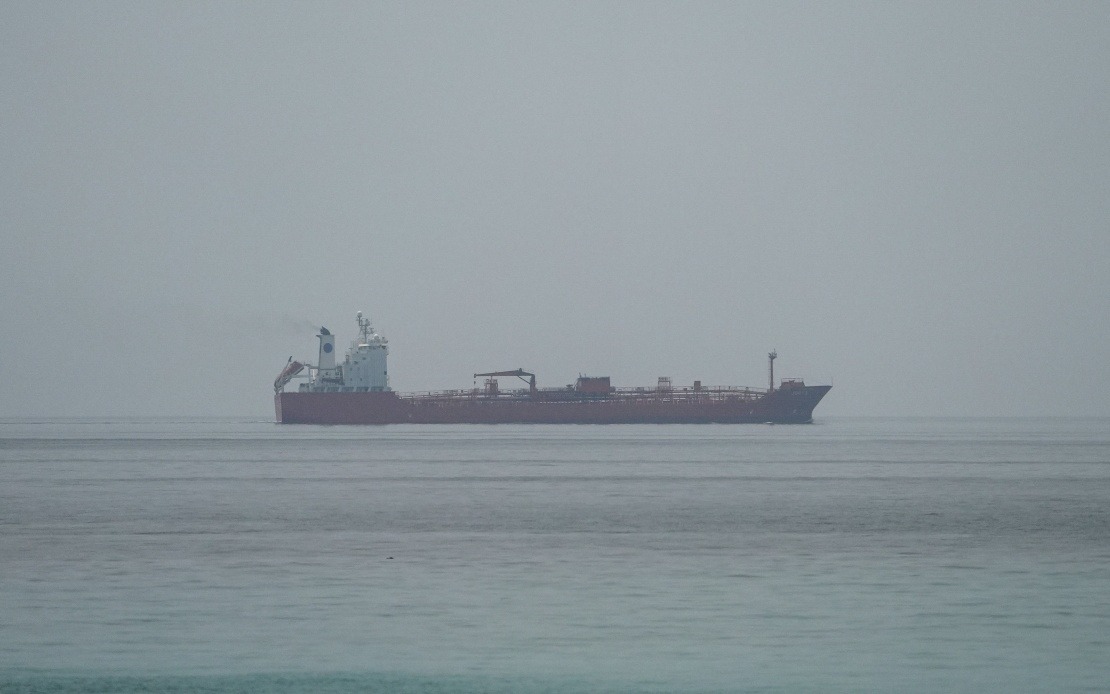
Oman has thrown its diplomatic weight behind the recently concluded memorandum of understanding between the United States and Iran, signalling strong regional support for an agreement designed to ease tensions that have roiled West Asian geopolitics for months. Speaking at a joint ministerial gathering between the Gulf Cooperation Council and Washington convened in Bahrain on Thursday, Omani Foreign Minister Badr Albusaidi underscored Oman's commitment to ensuring the accord's success in fostering peace and guaranteeing unimpeded maritime navigation through the Strait of Hormuz, one of the world's most economically consequential chokepoints.
The timing of Oman's public endorsement carries particular weight given the sultanate's geographical position astride the Strait of Hormuz, the narrow waterway through which roughly one-fifth of global oil shipments pass annually. As a sovereign coastal state with intimate knowledge of regional maritime dynamics, Oman has positioned itself as a custodian of freedom of navigation principles anchored in international law and the United Nations Convention on the Law of the Sea. Albusaidi's remarks at the GCC-US ministerial forum represent an explicit reaffirmation of Muscat's dedication to upholding these principles regardless of broader geopolitical currents.
Crucially, Oman made an unambiguous commitment that any future arrangements governing transit through the strait would not introduce tolls or other financial charges on passing vessels. This assurance directly addresses longstanding anxieties among maritime trading nations that regional conflicts could escalate into shipping restrictions or economic penalties. By publicly pledging the preservation of free passage, Oman has effectively inoculated itself against accusations that it might exploit its strategic location for revenue generation, a concern that has periodically surfaced during phases of heightened regional instability.
The Iran-US understanding, which was electronically executed by Iranian President Masoud Pezeshkian and US President Donald Trump on June 18 following mediation by Pakistan, comprises fourteen substantive points aimed at de-escalating multiple flashpoints simultaneously. Beyond pledging to halt hostilities across multiple theatres including Lebanon, the accord specifically addresses the reopening of the Strait of Hormuz for unrestricted shipping and the lifting of the American naval blockade that Tehran has long viewed as economically suffocating. These maritime provisions touch directly on the interests of trading nations throughout Southeast Asia, including Malaysia, which depends on uninterrupted access to this corridor for its energy security and export commerce.
The broader context for this agreement traces back to an explosive sequence of military actions in late February, when American and Israeli forces conducted strikes against Iranian targets that ignited a cycle of retaliation. Iran responded with direct attacks against Israel and regional countries hosting American military infrastructure, creating a dangerous escalatory spiral that threatened to spread conflict across the wider Persian Gulf region. The intervening months witnessed an armistice in the tit-for-tat exchanges, but tensions remained elevated and the diplomatic path forward remained uncertain until the Pakistan-mediated negotiations produced this framework.
The GCC, comprising Saudi Arabia, United Arab Emirates, Kuwait, Qatar, Bahrain, and Oman, has long maintained regular consultative mechanisms with Washington covering regional security architecture, political coordination, and economic collaboration. These forums have become increasingly important as Middle Eastern dynamics have grown more complex, with traditional alliance structures facing new pressures and rivalries. The fact that this latest ministerial convening proceeded with statements of support for the Iran-US accord suggests a consensus, at least among the GCC's leading voices, that de-escalation serves the collective interests of Gulf states better than continued confrontation.
For Malaysia and other Southeast Asian nations, the implications of restored Hormuz stability are substantial. The strait serves as the critical junction through which Middle Eastern crude oil flows toward Asian markets, making its security essential to regional economic performance. Malaysia's own energy requirements and its role as a crucial global shipping hub mean that any disruption to Hormuz traffic would reverberate through Southeast Asian supply chains, manufacturing networks, and trade finance systems. Oman's explicit commitment to maintaining free transit thus carries direct economic consequences for the broader region.
Oman's diplomatic role in this arrangement extends beyond its geographic position. The sultanate has cultivated a reputation as a credible intermediary and neutral player in regional disputes, partly through conscious avoidance of the sectarian tensions that have fractured other Gulf societies. This standing enabled Oman to facilitate backchannels between Washington and Tehran even when official relations remained frozen, and it helps explain why Pakistan chose Muscat as an appropriate venue for negotiating this understanding. Albusaidi's comments at the GCC-US meeting effectively weaponise Oman's credibility in service of the accord's legitimacy.
The fourteen-point memorandum, while not addressing all outstanding grievances between the United States and Iran, establishes the first comprehensive framework for managing their competition since tensions escalated sharply under previous American administrations. The inclusion of provisions on Lebanon reflects awareness that Iranian-American rivalry extends well beyond the Persian Gulf itself, encompassing regional proxy networks and sectarian conflicts stretching from Iraq through Syria to the Mediterranean. By encompassing multiple geographical domains and conflict theatres within a single agreement, the negotiators attempted to create mutually reinforcing incentives for compliance.
Oman's affirmation that transit fees will remain absent represents reassurance not merely to shipping companies but to consuming nations fearful of economic coercion through maritime channels. This commitment gains significance against the backdrop of recent history, when periodic confrontations in the Gulf have occasionally culminated in temporary shipping disruptions or increased insurance premiums reflecting heightened risk perceptions. By anchoring the principle of free passage in both international law and explicit national commitment, Oman has sought to remove uncertainty from calculations of maritime security.
The GCC-US ministerial framework itself continues a decades-long pattern of institutional cooperation forged during the Cold War era and subsequently adapted to address new security challenges. These consultations serve as venues where the Gulf states collectively signal their positions on major regional developments to American policymakers, while simultaneously using American participation to lend weight to their preferred outcomes. The presence of coordinated GCC support for the Iran-US accord signals that at least publicly, the Gulf monarchies perceive benefits in the agreement's success, though their underlying preferences on Iran policy remain more heterogeneous than such unified public statements suggest.
Looking forward, the test of the Iran-US memorandum will lie in implementation rather than signature. Both parties face domestic constituencies harbouring deep suspicions of rapprochement, and compliance with fourteen distinct provisions across multiple domains creates numerous junctures where disputes might arise. Oman's explicit commitment to maintaining the Strait of Hormuz as a free transit corridor will likely face testing as regional actors probe the boundaries of the accord. The sultanate's willingness to stake its credibility on this pledge reflects confidence that the underlying agreement possesses sufficient durability to shape behaviour, a confidence that will face validation as months turn to years.

