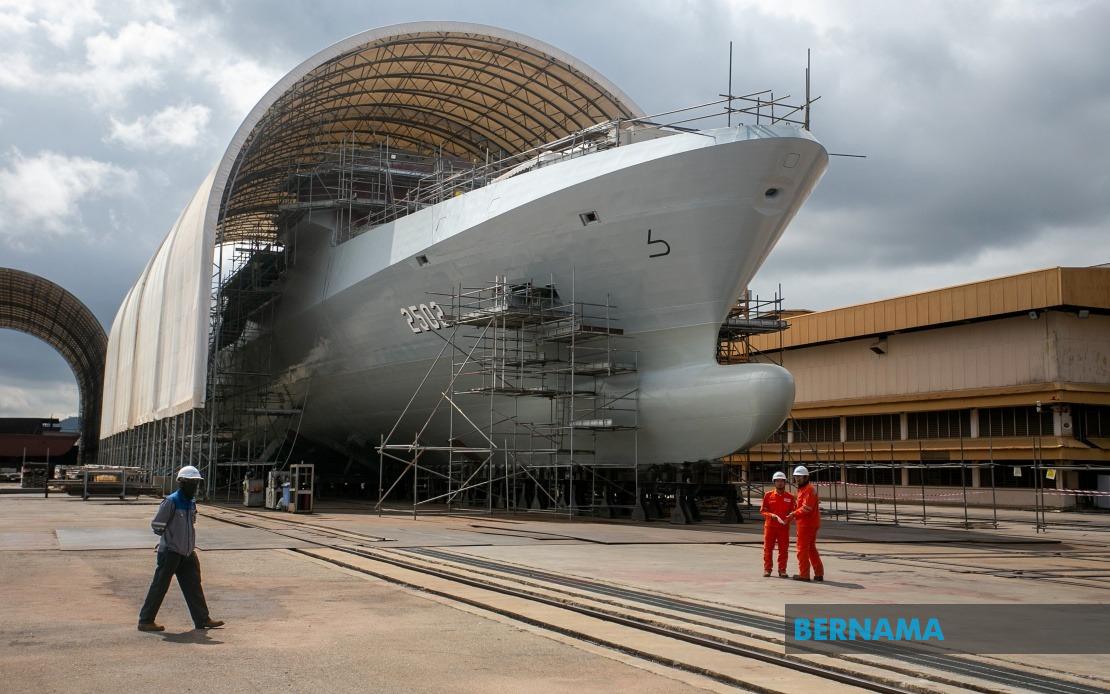
Malaysia's Defence Ministry has moved to defend its handling of a RM571.9 million payment to Norway's supplier of the Naval Strike Missile system, clarifying that the funds were disbursed only after the anti-ship weapons had completed manufacturing and testing—not as an advance. The statement came in response to parliamentary inquiries questioning whether the government had released full payment prematurely and whether the procurement contract adequately protected Malaysia's interests in the Littoral Combat Ship project.
According to MINDEF, the timing of the payment aligned strictly with contractual milestones. When the RM571.9 million was transferred, the ministry stated, all NSM systems destined for the Royal Malaysian Navy had already been fully manufactured and had successfully passed rigorous testing protocols established by the RMN. The equipment was physically ready for delivery to Malaysia at the moment payment was made, establishing a clear causal link between progress and expenditure rather than supporting the advance payment characterisation that parliamentary critics had raised.
The ministry's rebuttal directly addressed allegations that Malaysia had insufficiently protected itself contractually. MINDEF asserted that the procurement agreement includes robust provisions enabling the government to pursue remedies in the event of supplier non-performance or contractual violations. These safeguards explicitly permit Malaysia to pursue recovery of payments and seek damages if the supplier fails to meet its obligations, contradicting the narrative that the contract lacked protective mechanisms for the Malaysian state.
The broader context involves Norway's unexpected revocation of the export licence for the NSM system—a governmental decision that fell outside the control of both Malaysian authorities and the Norwegian defence contractor. This licensing withdrawal created a significant complication for the procurement, as it effectively prevented the supplier from delivering the systems despite their readiness. In response, MINDEF indicated it is leveraging available contractual mechanisms to pursue claims for recovery of the payment and associated damages, treating the supplier as responsible for consequences stemming from the licence revocation.
From an operational perspective, MINDEF sought to reassure stakeholders that the NSM procurement disruption has not compromised the Royal Malaysian Navy's ability to defend the nation's maritime interests. The ministry emphasized that the RMN continues to maintain existing weapons systems and assets sufficient to sustain current operational capabilities and fulfil core maritime security responsibilities. This messaging carries particular weight given Malaysia's vital interest in maintaining robust naval presence across its extensive coastline and exclusive economic zone.
The ministry also provided an update on contingency planning, indicating that the RMN is actively evaluating alternative missile systems that could potentially substitute for the Norwegian NSM platform. This suggests the defence establishment is pursuing diplomatic and procurement channels to identify compatible systems from other vendors, avoiding a prolonged capability gap. The specific timeline for this evaluation and any formal replacement procurement decisions remain undefined, leaving uncertainty about when the LCS vessels would receive comparable anti-ship firepower.
Regarding the LCS delivery schedule specifically, MINDEF confirmed that Norway's export licence withdrawal will not alter the planned timeline for receiving the combat ships themselves. The vessels are expected to arrive according to their existing schedule, though the absence of the NSM systems means they will initially enter service without the originally intended primary anti-ship weapon. This creates an interim operational challenge requiring the RMN to adapt doctrine and tactics until replacement missiles are integrated.
The parliamentary questions originated from Hassan Abdul Karim, representing Pasir Gudang under the Pakatan Harapan banner, who sought clarity on payment timing and contractual protections, and from Mohd Kurniawan Naim Moktar of Kinabatangan, who focused on operational readiness implications. Their inquiries reflect broader legislative scrutiny of major defence acquisitions, particularly where large sums are committed and foreign suppliers control critical capabilities. This oversight function remains essential for ensuring defence spending delivers value and minimises risk.
The NSM controversy underscores vulnerabilities inherent in acquiring advanced weapons systems from suppliers whose governments retain export control authority. Norway's licensing decision, regardless of its rationale, reveals that political considerations at the supplier nation's end can unravel even completed procurement transactions. For Malaysia and other Southeast Asian nations pursuing military modernisation, the case highlights the importance of negotiating contracts that shift risk appropriately when circumstances beyond a supplier's direct control intervene, and of seeking partners with stable, predictable export policies.
Looking ahead, Malaysia's ability to resolve this dispute through contractual remedies and to secure acceptable replacement systems will likely shape future defence procurement strategies. Other regional navies monitoring this situation may similarly reassess their reliance on weapons platforms from nations with restrictive export regimes. The episode also illustrates the strategic value of maintaining diversified supplier relationships and avoiding over-dependence on single-source platforms for critical military capabilities, particularly those sourced from smaller nations whose defence policies can shift with political winds.

