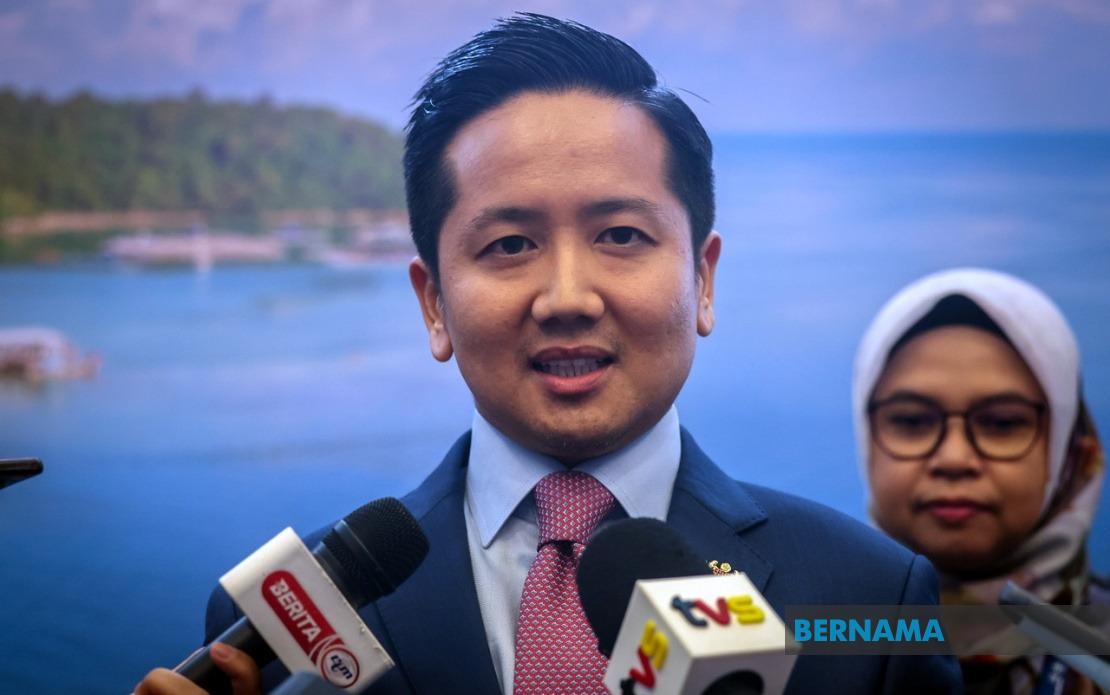
The Ministry of Natural Resources and Environmental Sustainability has committed itself to providing unreserved support to the Malaysian Anti-Corruption Commission in its investigation into the controversial transfer of three Asian elephants from Taiping Zoo to a facility in Japan. Minister Datuk Seri Arthur Joseph Kurup made the pledge on June 23, reinforcing the government's determination to operate within established frameworks of integrity and accountability in all matters pertaining to the nation's wildlife sector.
The three elephants—Dara, Amoi, and Kelat, collectively referred to as DAK—were relocated from Taiping Zoo in Perak to Tennoji Zoo in Osaka, Japan, a transaction that has since become the subject of formal scrutiny by anti-corruption authorities. The MACC formally initiated its investigation after mounting public concerns about the manner in which the arrangement was executed and completed, signalling that institutional safeguards may not have been adequately upheld throughout the process.
Arthur's statement represents a significant institutional posture, positioning the ministry as willing to expose potential weaknesses in its own procedures rather than defend institutional reputation at the expense of due diligence. He emphasized that the ministry stands ready to furnish comprehensive documentation, correspondence, and testimony to facilitate a thorough and transparent investigative process, underscoring a commitment to allowing the facts to emerge without bureaucratic obstruction or protective positioning.
Crucially, the minister indicated that NRES will not shield or provide cover for any individual or entity discovered to have engaged in misconduct, irregularities, or procedural breaches in connection with the elephant transfer. This stance carries particular weight given Malaysia's ongoing efforts to strengthen institutional accountability and address public perception of governance standards across the civil service. The willingness to hold personnel and processes accountable, regardless of seniority or position, sends an important signal about institutional reform.
The integrity of Malaysia's international standing in wildlife management and animal welfare forms a significant backdrop to this commitment. As a signatory to various international conservation agreements and a nation with considerable biodiversity, Malaysia's credibility depends substantially on demonstrating that wildlife management decisions are made through legitimate channels with proper oversight. Any perception that such decisions are compromised by financial irregularities or procedural shortcuts can damage the nation's reputation in international environmental forums and conservation partnerships.
The investigation was triggered by allegations raised on June 18 by Hak Asasi Hidupan Liar Malaysia, commonly known as Hidup, a wildlife rights advocacy organization. The group alleged that the transfer process involved leakages and irregularities, and more seriously, that certain payments connected to the arrangement were not properly channelled to government accounts. These financial irregularities are particularly concerning as they suggest potential diversion of state resources or unauthorized private transactions related to government assets.
According to Hidup's allegations, the financial dimensions of the transfer reached approximately RM53 million, a substantial sum that, if improperly handled, represents significant fiscal misconduct. The organization further claimed connections between named individuals and these transactions, implying that the arrangement may have benefited specific persons rather than serving purely conservation or institutional objectives. Such allegations naturally prompted anti-corruption authorities to initiate formal investigation to establish the factual basis of these claims.
For Malaysian observers, this incident highlights the necessity of robust oversight mechanisms governing decisions involving state assets, particularly those with international dimensions. The transfer of national wildlife to foreign institutions involves considerations beyond animal welfare, encompassing fiscal responsibility, diplomatic protocol, and proper authorization. When such decisions proceed without adequate transparency or accountability structures, they risk creating opportunities for impropriety and undermining public confidence in institutional decision-making.
The MACC investigation will likely examine the decision-making process leading to the transfer, authorization channels, financial flows, and whether proper governmental approvals were obtained at appropriate levels. Officials involved in negotiating the arrangement, handling associated payments, and authorizing the transfer will presumably be interviewed to establish whether procedures were followed and whether all transactions received proper documentation and approval.
Arthur's public commitment to cooperation effectively removes any suggestion that the ministry might obstruct the investigation or attempt damage control through institutional defensiveness. This approach, while potentially exposing shortcomings within the ministry's systems, ultimately serves the institution better by demonstrating commitment to accountability and institutional integrity rather than attempting to contain findings that would likely emerge anyway.
For the broader Malaysian context, this episode underscores the expanding role of anti-corruption institutions in scrutinizing government operations beyond traditional corruption frameworks. The MACC investigation into the elephant transfer reflects growing willingness to examine whether state assets and resources are managed according to established procedures, even in specialized domains like wildlife management. This expansion of accountability mechanisms, provided they operate fairly and transparently, strengthens overall governance standards.
The international dimension adds further complexity, as questions arise about whether appropriate diplomatic consultation occurred and whether obligations under bilateral arrangements with Japan were properly considered. The transfer to a Japanese facility suggests either bilateral agreement or arrangement at institutional level, raising questions about whether foreign affairs considerations were properly integrated into the decision.
Ultimately, the investigation outcome will carry significance beyond the immediate matter of three elephants, potentially influencing how future decisions involving state assets, international partnerships, and significant expenditures are managed across government agencies. The ministry's proactive commitment to cooperation suggests confidence in the legitimacy of documented procedures, though findings may reveal systemic gaps that require addressing.

