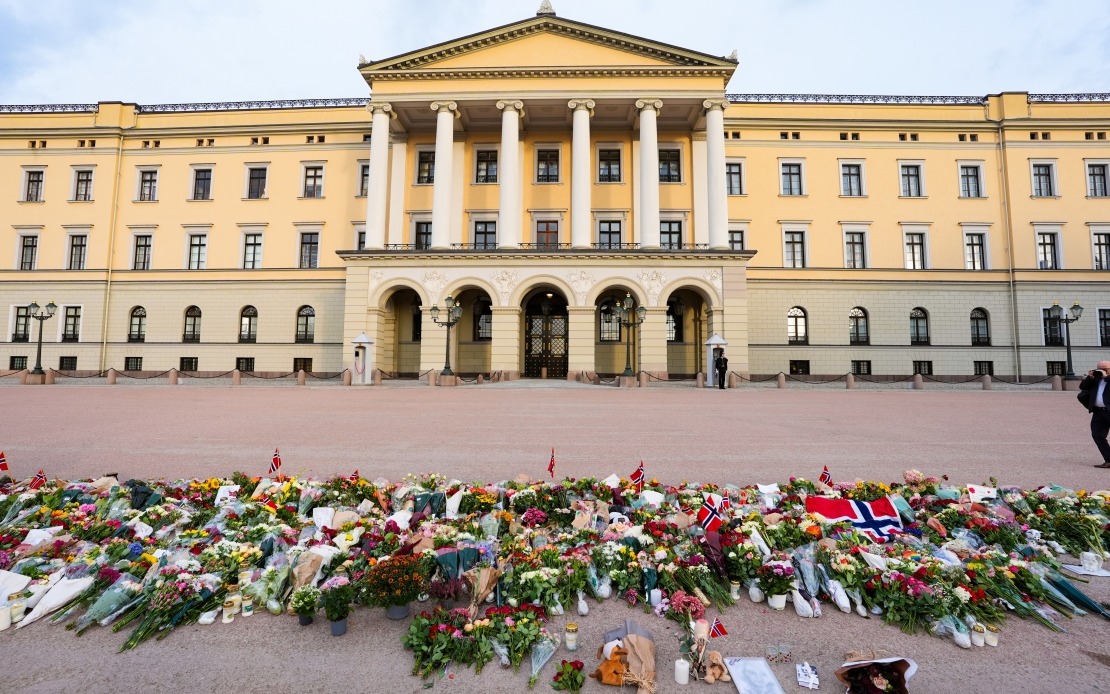
King Harald V of Norway, who had reigned for more than three decades as the Scandinavian nation's constitutional head of state, died peacefully on Friday at the age of 89. The Royal Palace announced his passing at the National Hospital in Oslo at 6:35 am local time, triggering the formal transfer of power to his eldest son, Crown Prince Haakon, who now assumes the throne as Norway's new monarch. The loss marks a significant transition for the Nordic kingdom and closes a chapter spanning more than a generation of stability under Harald's leadership.
The late king had been admitted to the National Hospital in Oslo on August 17 following routine medical examinations. Medical complications subsequently emerged, revealing that he had undergone cortisone treatment for hemolytic anemia, a condition affecting red blood cell production that had caused fluid retention throughout his body. His condition deteriorated markedly when he contracted a bacterial infection in his bloodstream, which ultimately led to his death after several days of hospitalisation. The palace maintained a measured public posture throughout the medical crisis, releasing limited information about the specifics of his treatment until the announcement of his passing.
Harald's position as Europe's oldest reigning monarch at the time of his death underscored the remarkable longevity of his reign. He ascended to the Norwegian throne on January 17, 1991, following the death of his father, King Olav V, and maintained his role continuously for over 35 years without interruption. This extended tenure placed him among Europe's longest-serving recent monarchs and made him a symbol of continuity for Norwegian society through decades of social, economic, and political transformation. His reign witnessed Norway's evolution as a modern European state, its management of oil wealth, and its ongoing negotiations regarding European integration while maintaining its independence from the European Union.
Following his death, Crown Prince Haakon immediately succeeded to the throne under Norway's constitutional succession framework, which provides for automatic transition of power to the next in line. The Norwegian government convened an extraordinary Council of State at the Royal Palace to formally acknowledge the new monarch and ratify the succession. While many European monarchies conduct elaborate coronation ceremonies, Norway's constitutional traditions do not include such ceremonies, instead focusing on parliamentary oaths and formal recognition by governmental institutions. Haakon is now required to take a constitutional oath before the Norwegian parliament, formally binding him to uphold the nation's laws and constitutional order.
The transition of power in Norway reflects the constitutional nature of Scandinavian monarchy, where the sovereign serves as a symbolic figurehead operating within carefully defined legal parameters. Unlike some European kingdoms where coronation ceremonies mark the formal beginning of a monarch's reign, Norwegian constitutional practice emphasises the continuity of the crown and the immediate transfer of sovereign authority. The Council of State meeting serves as the formal moment of acknowledgment rather than a ceremonial initiation. Following this governmental recognition, Haakon's royal title and formal styling will be announced, officially establishing his identity as Norway's new reigning monarch and clarifying the protocols for his reign.
For Malaysian and Southeast Asian observers, Harald's passing and the smooth succession of Crown Prince Haakon offer instructive perspectives on constitutional monarchy in developed democracies. Unlike hereditary systems in the region that sometimes face questions about succession clarity or institutional continuity, the Norwegian model demonstrates how robust constitutional frameworks can facilitate seamless transfers of power across generations. The transparency of the succession process, the immediate nature of the transfer, and the emphasis on parliamentary oaths rather than ceremonial acclamation reflect a mature institutional approach to monarchy's role in modern governance. These principles may resonate with Southeast Asian nations considering how to strengthen democratic institutions while preserving traditional leadership structures.
King Harald's legacy encompasses not only his personal leadership but also Norway's development into a prosperous nation managing vast hydrocarbon resources and maintaining social cohesion through periods of international economic volatility. During his reign, Norway established itself as a model of sustainable wealth management through its sovereign wealth fund, one of the world's largest repositories of oil revenues transformed into long-term investments. His reign also witnessed Norway's complex negotiations regarding European integration, the nation's consistent support for international humanitarian values, and its role as a bridge between Scandinavia and the broader European community. These achievements provide context for understanding how constitutional monarchy can function effectively within democratic societies that prioritise rule of law and institutional stability.
The death of Europe's oldest reigning monarch also prompts reflection on the changing demographics of European leadership and the succession patterns among established democracies. Several other European monarchs have reached advanced ages while continuing their duties, raising questions about institutional planning, health-related absences, and the preparedness of heir apparent for eventual succession. Haakon's assumption of power represents a generational transition that will likely bring fresh perspectives to Norway's leadership while maintaining the institutional continuity that has characterised Scandinavian governance. The timing of his succession provides an opportunity for the new monarch to establish his own approach to the ceremonial, diplomatic, and symbolic functions of the Norwegian crown while operating within constitutional constraints that remain consistent regardless of the individual monarch.

