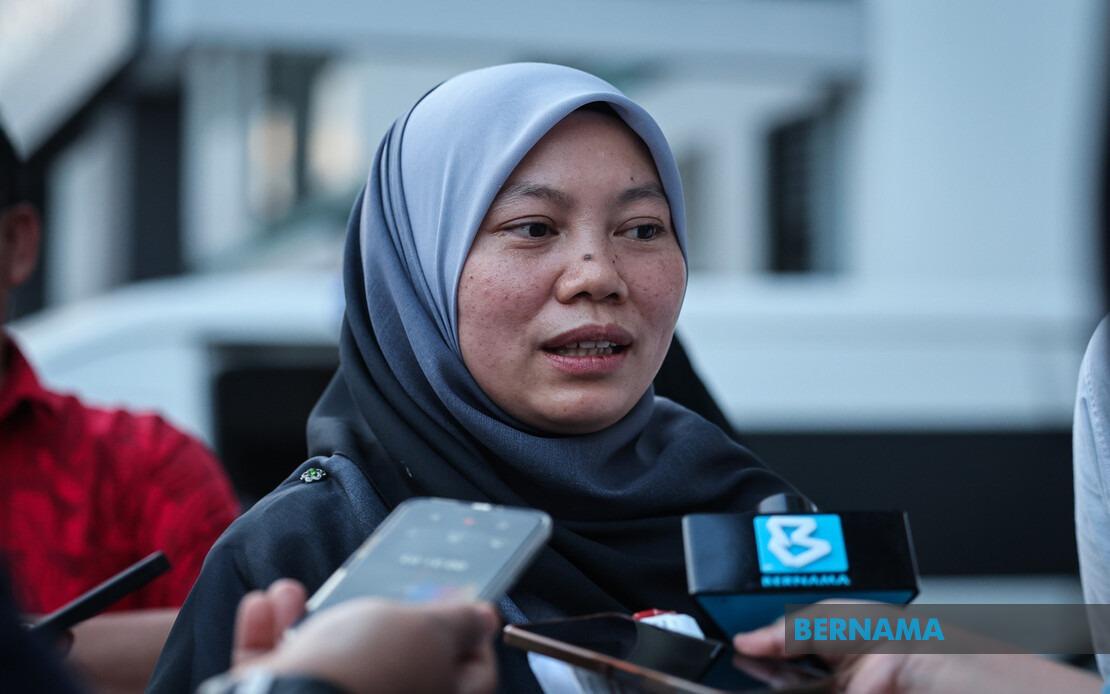
Pakatan Harapan's candidate for the Tiram state seat, Nor Zulaila Abd Ghani, has projected optimism about her prospects in the upcoming Johor state election, buoyed by what she describes as overwhelmingly encouraging feedback during her campaign trail across the constituency. Speaking following a meet-and-greet session with Entrepreneur Development and Cooperatives Minister Steven Sim Chee Keong at Kota Masai on July 5, Nor Zulaila highlighted the marked contrast between the positive reception she has encountered during door-to-door visits and isolated negative comments confined to social media platforms.
The sentiment expressed by the PH candidate underscores a broader narrative emerging from Pakatan Harapan's campaign machinery ahead of the July 11 election. Nor Zulaila's assessment that grassroots support remains robust in her constituency reflects the coalition's confidence heading into polling day, though her observation about limited online hostility versus warm personal interactions speaks to evolving patterns in Malaysian political campaigning. The distinction she drew between ground-level engagement and digital criticism is particularly relevant for understanding voter sentiment in Johor, where traditional face-to-face politics continues to wield considerable influence despite the proliferation of social media discourse.
Nor Zulaila has adopted a notably unconventional campaign approach that prioritises informal community participation over formal political messaging. Her strategy involves actively joining youth in recreational and sporting activities including sepak takraw tournaments, futsal matches, and snooker games—a calculated effort to build rapport with younger voters who traditionally show lower engagement levels with electoral politics. This ground-level engagement serves a dual purpose: it establishes personal connections with potential supporters while simultaneously creating opportunities to discuss civic participation in relaxed, non-confrontational settings.
The underlying philosophy driving her youth-focused outreach reflects growing concerns within Malaysian political parties about declining voter participation among younger demographics. Nor Zulaila has explicitly acknowledged that many youth harbour scepticism towards the country's political landscape, viewing electoral participation as either futile or morally questionable. Her response has been to frame voting not as a political preference but as a fundamental civic responsibility with tangible consequences for daily life. By emphasising that government policies directly shape lifestyle choices and future opportunities, she attempts to reframe political engagement as a practical necessity rather than an ideological commitment.
The candidate's campaign methodology reveals a sophisticated understanding of how different voter segments respond to political messaging. Rather than relying exclusively on rallies or traditional campaigning, her emphasis on casual sporting encounters and community activities creates informal spaces where political discussion can occur naturally. This approach proves particularly effective in constituencies where voter fatigue with formal politics is pronounced and where traditional party machinery faces declining effectiveness. Her participation in local sporting events signals accessibility and genuine interest in community life, qualities that carry considerable weight among Malaysian voters who increasingly demand that political representatives demonstrate tangible commitment to local concerns.
However, the campaign trail has not been entirely smooth. Nor Zulaila expressed dismay over the recent vandalism of her campaign billboard, an incident that highlights persistent tensions in Malaysia's electoral environment. While she did not specify the nature of the vandalism or identify any suspected perpetrators, the incident underscores that despite her largely positive grassroots experience, localised hostility continues to manifest in certain quarters. Her public hope that remaining campaigning days would be conducted in a mature and harmonious manner suggests that maintaining civility throughout the electoral period remains a concern for candidates across the political spectrum.
Nor Zulaila's remarks about the contrast between social media commentary and ground-level support carry broader implications for understanding Malaysian electoral dynamics. The fragmentation of political discourse, with online spaces frequently characterised by vitriol while in-person interactions remain cordial, suggests that social media sentiment may not accurately reflect voter intentions. This divergence has important consequences for campaign strategy, as candidates who focus excessively on responding to online criticism may neglect the ground-level work that ultimately determines electoral outcomes. Her decision to largely disregard digital negativity while concentrating on personal voter engagement appears strategically sound, particularly given her reported positive reception during constituency visits.
The timing of the Johor state election carries particular significance for PH's broader political fortunes. The 16th state election represents a crucial test of the coalition's popularity following the 2022 general election, and performance in Johor—a large and economically important state with a diverse voter base—holds implications for potential future federal alignments. Johor's voting patterns often signal broader electoral trends affecting the peninsula as a whole, making individual constituency contests like Tiram meaningful indicators of voter sentiment beyond the immediate state context.
With early voting scheduled for July 7 and main polling day on July 11, Nor Zulaila has roughly a week remaining to consolidate support and reach undecided voters. Her emphasis on personal connection and civic responsibility appears calibrated to appeal to both swing voters seeking substantive engagement with candidates and younger voters encountering their first or second election cycle. Whether her optimism proves justified will be determined by actual election results, but her campaign approach—emphasising ground-level contact, youth engagement, and practical framing of electoral participation—reflects strategies increasingly adopted by candidates across Malaysia's political spectrum who recognise that traditional campaigning methods alone no longer guarantee success in contemporary elections.

