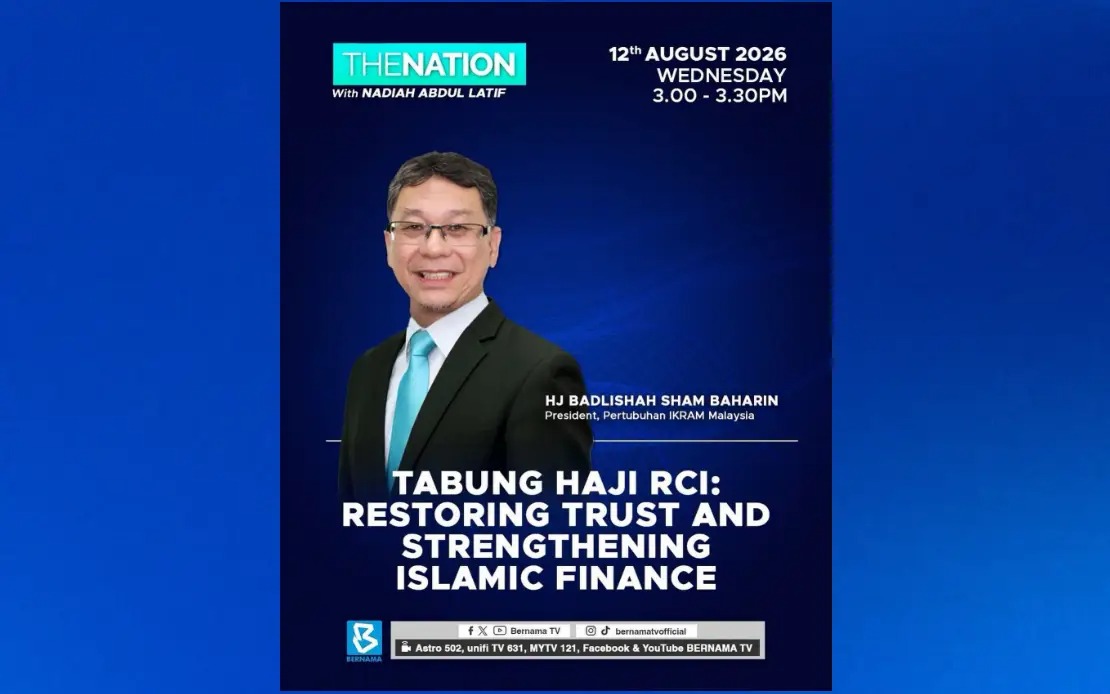
The call for a fresh Royal Commission of Inquiry into Tabung Haji's operations has drawn a cautious response from Malaysia's Islamic finance community. Badlishah Sham Baharin, president of Pertubuhan IKRAM Malaysia, argues that establishing yet another RCI would be redundant and could dilute the mechanism's effectiveness, particularly when existing law enforcement agencies are already pursuing accountability for the troubled pilgrim savings fund.
ICKAM's position reflects broader concerns about the overuse of RCIs as a governance tool. According to Badlishah Sham, royal commissions serve their purpose most effectively when reserved for truly exceptional circumstances rather than deployed as a default response to every institutional scandal. The risk, he contends, is that regular recourse to RCIs gradually erodes public confidence in their conclusions and recommendations. This reasoning carries weight in Malaysian governance circles, where multiple inquiries into the same institution can fragment accountability efforts and muddy responsibility rather than clarify it.
The debate centres on the scope of the existing investigation, which examined Tabung Haji's management from 2014 to 2020. Multiple parliamentarians from both Barisan Nasional and Pakatan Harapan have advocated for the inquiry to be extended forward to cover the 2021-2025 period, seeking comprehensive scrutiny of the fund's entire trajectory of decline. Yet IKRAM's leadership views this expansion as better handled through conventional investigative mechanisms rather than another commission.
The gravity of Tabung Haji's predicament underscores the challenge regulators face. Finance Minister II Datuk Seri Amir Hamzah Azizan revealed that the fund accumulated near-total losses of almost RM13 billion through fourteen severely mismanaged investments. Of this catastrophic sum, the federal government injected RM10.2 billion through a 2018 bailout executed via Urusharta Jamaah Sdn Bhd, whilst the fund itself absorbed RM2.6 billion in asset impairment between 2018 and 2025. These figures represent not merely financial mismanagement but a breach of trust affecting nearly 10 million individual depositors who entrusted their pilgrimage savings to the institution.
The Al-Rawda debacle exemplifies the depth of failures embedded in Tabung Haji's investment decision-making. This single transaction involved the fund paying 1.4 billion Saudi riyals—approximately RM1.5 billion—to intermediaries for lease agreements covering four hotels in Makkah and Madinah between 2015 and 2017. Al-Rawda's subsequent default on rental payments from the first quarter of 2019 onwards compelled Tabung Haji to acknowledge a full impairment loss of RM1 billion in 2024, erasing the entire investment. The episode encapsulates multiple systemic failures: inadequate due diligence, reliance on intermediaries, absent counterparty creditworthiness assessments, and delayed recognition of mounting exposure.
BADLISHAH Sham's alternative proposal deserves consideration as a potentially more nimble response. He advocates for a multi-agency task force bringing together relevant authorities to investigate investments at imminent risk of losses whilst simultaneously implementing preventive mechanisms. This approach would preserve the investigative intensity of a full RCI whilst avoiding its bureaucratic overhead and extended timeframes. Crucially, it would enable real-time intervention in high-risk investments before they metastasise into billion-ringgit catastrophes.
The IKRAM president emphasised that robust due diligence must become the cornerstone of Tabung Haji's reformed investment governance. Before capital deployment, investments must undergo rigorous assessment against ethical standards and procedural requirements, with particular attention paid to ground-level verification rather than reliance on desk-based analysis or intermediary representations. For Malaysian investors observing this institution's collapse, the lesson is unambiguous: institutional safeguards must be embedded before transactions occur, not retrospectively excavated through inquiries after losses crystallise.
The existing RCI report, released on July 29, documented extensive weaknesses spanning the 2014-2020 period and advanced 25 specific recommendations for systemic reform. By July 30, Tabung Haji had implemented three-quarters of these proposals, suggesting institutional receptiveness to corrective action. This progress provides some empirical foundation for IKRAM's contention that the investigative track is yielding tangible results rather than remaining stuck in endless inquiry cycles.
Yet the call for extended temporal coverage reflects legitimate parliamentary anxiety. The 2021-2025 window encompasses post-bailout dynamics when one might expect enhanced oversight and discipline, yet the RM2.6 billion in additional impairment losses suggest that operational dysfunction persisted well beyond the crisis remediation of 2018. Parliamentarians and depositors alike harbour justified questions about whether institutional culture shifted genuinely or merely superficially following the government rescue.
BADLISHAH Sham also delivered pointed criticism of opposition MPs who walked out during parliamentary debate on the TH RCI report, characterising the boycott as dereliction of legislative duty. He emphasised that elected representatives carry an obligation to provide robust parliamentary scrutiny regardless of partisan preferences, particularly when the interests of 10 million ordinary citizens hang in balance. The criticism carries force: parliament functions optimally when opposition voices remain engaged and vocal rather than performatively absent, even—or especially—on matters involving institutional failure and public funds.
The IKRAM position ultimately reflects pragmatism tempered by principle. Rather than demanding yet another time-consuming inquiry with inherent delays and potential political complications, the organisation advocates for intensive, ongoing investigative work coupled with preventive governance architecture. For Malaysian policymakers and the broader Islamic finance sector, the lesson is that institutional repair requires not merely accountability mechanisms but proactive structural safeguards. The challenge ahead lies in converting the recommendations already accepted into genuinely embedded cultural and procedural change across Tabung Haji's investment decision-making apparatus, ensuring that depositors' savings receive protection proportionate to the sacred trust they represent.

