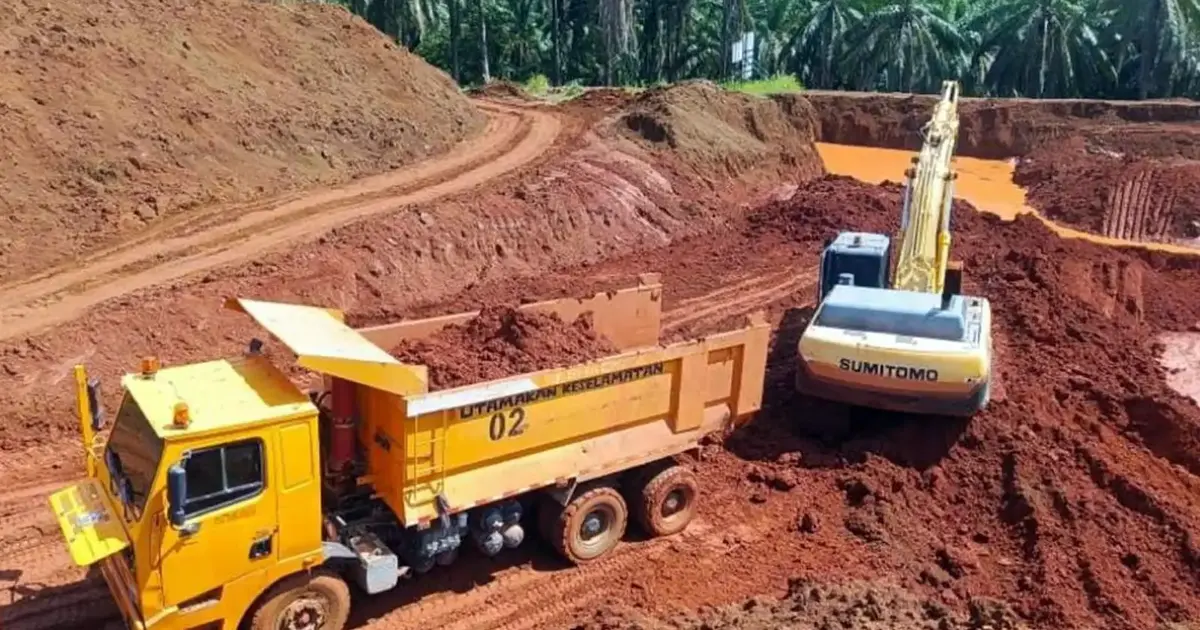
Malaysia's General Operations Force has intensified its crackdown on illicit resource extraction following the arrest of nine individuals, including several foreign nationals, in a coordinated raid on a Felda plantation. The operation resulted in the seizure of RM3.75 million in assets and equipment, marking one of the more substantial interventions against organised illegal mining activities in recent months.
The suspects were taken into custody based on credible intelligence suggesting their involvement in systematic bauxite mining operations conducted without proper licensing or environmental approval. The scale of seized materials indicates this was not a small-scale opportunistic venture but rather an established extraction network with significant financial resources and operational capability. The presence of foreign nationals among those arrested underscores the transnational dimension of Malaysia's illegal mining problem, reflecting how criminal syndicates recruit and deploy international labour to exploit mineral resources.
Bauxite mining in Malaysia has emerged as a persistent enforcement challenge, particularly in peninsular states where large plantation zones provide cover for clandestine operations. The mineral, a primary ore for aluminium production, commands strong market demand in Southeast Asia and beyond, creating financial incentives for organised criminal groups to operate outside regulatory frameworks. Felda plantations, which span considerable land areas across multiple states, have periodically become focal points for illegal extraction due to their remote terrain and complex land management structures.
The General Operations Force's intervention highlights the growing sophistication of enforcement responses to resource theft. The recovery of RM3.75 million in assets—comprising machinery, vehicles, stockpiled ore, and financial resources—represents both the scale of these operations and their profitability. Each major seizure disrupts supply chains that feed into regional commodity markets, though authorities acknowledge that dismantling the criminal infrastructure requires sustained, multi-agency coordination.
Illegal bauxite mining carries severe environmental and social costs that extend beyond simple resource theft. Unregulated extraction destroys topsoil, contaminates water sources, and leaves permanent scarring of agricultural land. In Felda areas, where smallholder farmers depend on soil quality for their livelihoods, such mining compromises community sustainability. Additionally, the operations often involve inadequate safety protocols, exposing workers—frequently migrants with limited legal protections—to hazardous conditions without compensation mechanisms.
The involvement of foreign nationals signals the global nature of organised resource crime in Southeast Asia. Criminal networks frequently establish operations across border regions, utilising workers from Cambodia, Myanmar, Indonesia, and Bangladesh, who are often trafficked or coerced into employment with false promises. This dimension makes the issue interconnected with human trafficking and labour exploitation concerns, requiring responses that address both environmental crime and worker protection.
Malaysia's regulatory framework for bauxite mining has been contentious. Licensed operations require state government permits, environmental impact assessments, and commitment to restoration protocols, yet enforcement has historically been inconsistent. The proliferation of illegal mining suggests that penalties and detection rates remain insufficient deterrents for well-capitalised criminal organisations. The RM3.75 million seizure, while impressive in absolute terms, may represent only a fraction of annual revenues generated by broader illegal mining networks across the country.
The timing and success of this operation may reflect improved intelligence-sharing between enforcement agencies and possibly between Malaysia and neighbouring countries. Regional cooperation through the ASEAN framework has gradually enhanced information exchange on organised crime, though implementation remains uneven. Sustained pressure on bauxite smuggling routes and end-markets requires not only arresting individuals but also disrupting the financial networks and export channels that make these operations economically viable.
For Malaysian stakeholders, this raid illustrates both the commitment of security forces and the ongoing challenge of combating entrenched illegal mining. Felda, as a statutory body managing significant land resources, faces recurring pressure to strengthen plantation security and reporting mechanisms. The agricultural sector more broadly benefits when illegal extraction is curtailed, as it prevents land degradation and maintains commodity export competitiveness. However, sustainable solutions depend on addressing root causes: poverty in source communities, limited rural employment opportunities, and the high profitability differential between licensed and unlicensed operations.
Authorities have indicated that investigations into the arrested individuals continue, with emphasis on identifying upstream organisers and downstream buyers. Such investigations often reveal complex supply chains linking Malaysian extraction sites to processing facilities and export points across Southeast Asia and beyond. Dismantling these networks requires tracing financial flows and identifying facilitators in customs, transport, and commerce sectors who enable illegal trade.
The broader enforcement landscape suggests that resource crime will persist as long as global commodity prices remain elevated and regulatory capacity gaps exist. While high-profile operations generate important momentum and deter some participants, structural solutions require long-term investment in alternative rural livelihoods, enhanced environmental monitoring technology, and stronger penalties calibrated to the financial scale of offences. For Malaysian readers concerned with national resource security and environmental integrity, this seizure represents progress but also underscores that the underlying problem remains substantially unresolved.

