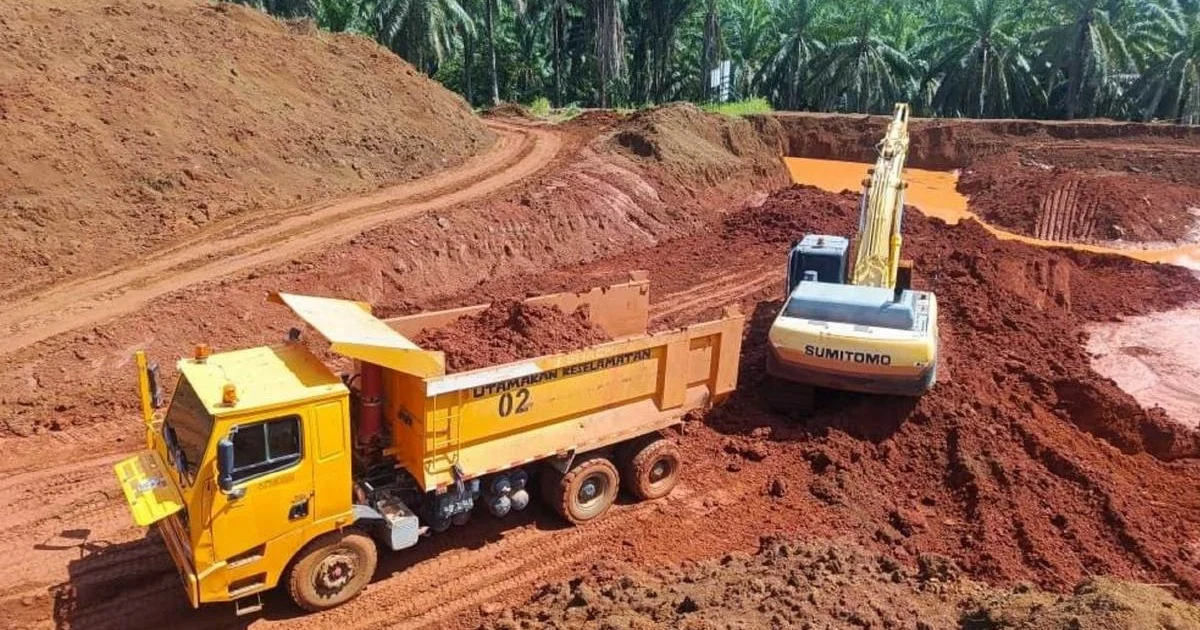
Nine people have been arrested after authorities conducted a crackdown on an unlicensed bauxite mining operation operating from a Felda plantation in Bukit Goh, Kuantan. The enforcement action resulted in the seizure of resources valued at approximately RM3.75 million, marking a significant blow against the illegal mining sector in Pahang.
The operation uncovered an extensive extraction site where approximately 10,000 tonnes of bauxite-bearing soil had been stockpiled, alongside an array of excavation equipment and transport lorries. These assets were recovered as part of the coordinated raid, which targeted what appears to be an organised illegal mining enterprise operating within agricultural concession areas.
Bauxite, the primary ore from which aluminium is extracted, remains a valuable commodity in Southeast Asia, where rapid industrialisation and construction growth have fuelled demand for aluminium products. Malaysia possesses substantial bauxite reserves, particularly in eastern peninsula states like Pahang and Terengganu. However, unregulated extraction activity poses environmental risks including soil degradation, water contamination, and ecosystem disruption in sensitive agricultural and forested regions.
The Felda (Federal Land Development Authority) plantation system represents a significant landholding across Malaysia, traditionally designated for agricultural development and smallholder farming. Illegal mining operations encroaching on these areas represent not only a regulatory violation but also an intrusion into spaces managed for food security and rural livelihoods. The Bukit Goh location, within Kuantan's industrial periphery, appears to have attracted criminal mining networks due to its proximity to transportation networks and processing facilities.
The seizure of heavy machinery and transport vehicles indicates an operation functioning at substantial scale rather than artisanal or subsistence-level extraction. The economic value attributed to the confiscated equipment—combined with the volume of extracted material—suggests the enterprise was generating considerable illicit revenue, likely channelling bauxite through informal processing networks or directly to industrial buyers operating without proper scrutiny.
Illegal mining throughout Southeast Asia remains endemic despite regulatory frameworks and periodic enforcement campaigns. The sector attracts organised criminal networks drawn by high profit margins, minimal startup requirements for basic extraction, and weak detection mechanisms in remote or peripheral areas. For Malaysian authorities, sustaining enforcement pressure requires not only raid operations but also intelligence gathering to dismantle supply chains, identify financiers, and disrupt end-markets.
The nine arrests represent a single operational success, yet the persistence of illegal mining suggests either insufficient deterrence, inadequate inspection capacity, or potential complicity within the supply chain. Successful mining operations typically require local knowledge, equipment access, and market connections—factors suggesting involvement of individuals with established networks rather than opportunistic individuals.
For Malaysia's broader mining governance, such incidents underscore tensions between resource extraction demands and environmental stewardship. Bauxite mining, even when legally licensed, generates substantial ecological impacts. Illegal operations, by definition, bypass environmental assessments and remediation requirements, intensifying soil loss, water course contamination, and habitat degradation across affected regions.
The Pahang and Terengganu corridor has experienced heightened attention from enforcement agencies in recent years, reflecting concerns about accelerating illegal extraction. Regional governments and federal agencies periodically announce intensified monitoring, yet supply continues reaching informal processing networks and export channels. This pattern suggests enforcement operates reactively—responding to discovered sites—rather than through preventive intelligence work targeting criminal mining networks before operations commence.
The arrested individuals will face prosecution under Malaysia's mining statutes, which provide penalties including fines and imprisonment. However, precedent suggests sentences often remain modest, and financial penalties may be absorbed as business costs rather than genuine deterrents to major operators. Effectiveness would require not only incarcerating individuals but also blocking access to equipment, disrupting financial flows, and creating credible risks for buyers purchasing illegally extracted material.
For Malaysian stakeholders—from agricultural operators to environmental advocates to industrial consumers—the implications are significant. Allowing illegal mining to proliferate undermines legitimate operators competing fairly, damages regulatory credibility, and accumulates environmental liabilities transferred to communities and future generations. The RM3.75 million seizure represents not triumph but evidence that enforcement remains catching individual operations rather than preventing systematic illegal extraction.
Moving forward, authorities may recognise that effective intervention requires not just raid operations but comprehensive strategies addressing supply chain vulnerabilities, financing mechanisms, and end-market demand. Regional cooperation with neighbouring jurisdictions facing similar challenges, transparency in bauxite supply chains, and stronger penalties for facilitators—not merely field operators—would constitute more substantive responses to what remains an endemic challenge across Southeast Asia's extractive sectors.

