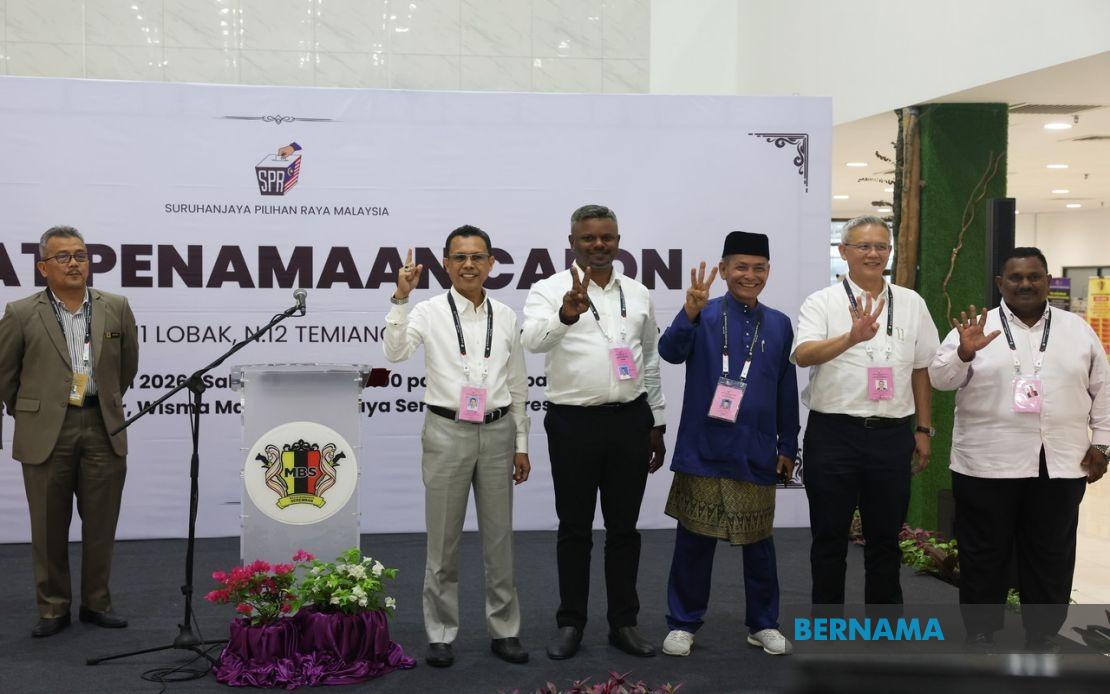
The Nilai state assembly seat is shaping up as one of the most competitive battlegrounds in the forthcoming Negeri Sembilan state election, with DAP National vice chairman J. Arul Kumar facing an unusually crowded field of challengers. The incumbent representative from Pakatan Harapan will defend his seat against four other candidates, a scenario that presents fresh complications for the ruling coalition's chances in this long-held stronghold.
Candidate nominations for the Nilai seat closed on July 18, with the returning officer confirming a field comprising incumbent Arul Kumar, Zamani Ibrahim from Berjasa, Barisan Nasional's Datuk Lai Chien Kong, Bersatu's Datuk V. Saravana Kumar, and independent Omar Mohd Isa. The multiplication of candidates reflects intensifying competition across Negeri Sembilan's political landscape, where opposition parties and splinter groups are mounting serious challenges to the established order. For PH, the dilution of voter support across multiple candidates presents a genuine risk, particularly if opposition votes consolidate around a single challenger.
Elsewhere in the state, the Sikamat constituency is set for a three-way encounter featuring Nor Azman Mohamad, the Menteri Besar's political secretary representing Pakatan Harapan, against Perikatan Nasional's Datuk Razali Abu Samah and Bersatu's Datuk Tun Faisal Ismail Aziz. An independent candidate, Bujang Abu, withdrew from the contest at the final hour, potentially benefiting one of the established contenders. The last-minute withdrawal highlights the fluid nature of state-level politics in Malaysia, where local considerations and factional manoeuvres often determine final candidate configurations.
The Lenggeng constituency presents a three-candidate race where PH has nominated Zarinna Abu Zarin to challenge BN incumbent Datuk Mohd Asna Amin, with Bersatu's Zool Amali Hussin completing the field. Meanwhile, Lobak is emerging as a two-candidate straight fight between defending PH assemblyman Chew Seh Yong and Perikatan Nasional's Dr P. Kumar, a scenario that should theoretically favour whichever coalition can mobilise its base more effectively.
The Temiang seat will see a three-way contest between PH's Ho Weng Wah, identified as political secretary to the Transport Minister, against BN's Datuk Leaw Kok Chan and Bersatu's Fazly Hamid. Similarly, Ampangan will host a three-cornered battle featuring Muhammad Nazri Kassim, director of Yayasan Negeri Sembilan and PH's candidate, squaring off against Perikatan Nasional's Datuk Dr Mohamad Rafie Malek and Bersatu's Noor'azah Harun.
The participation of multiple candidates across numerous seats underscores the splintering of Malaysia's opposition landscape following the collapse of Perikatan Nasional's federal alliance with Barisan Nasional. Bersatu's presence in many contests signals the party's determination to establish itself as a credible alternative despite its exit from the PN coalition. For Pakatan Harapan, this fragmentation presents both opportunities and obstacles—whilst it may prevent any single opposition force from consolidating anti-government sentiment, the multiplication of candidates also creates vote-splitting scenarios that could deny PH seats it might otherwise retain.
The 36-seat Negeri Sembilan state assembly was dissolved on June 5, initiating the electoral cycle. The Election Commission has designated July 28 for early voting, with the main polling day scheduled for August 1. The compressed timeline gives candidates limited time to campaign and build momentum, potentially advantaging incumbents with established machinery and name recognition.
For Malaysian observers and political analysts, the Negeri Sembilan election functions as a critical barometer of voter sentiment under the current political configurations. The state has traditionally leaned towards Barisan Nasional, though Pakatan Harapan has made significant inroads in recent years. The performance of PH candidates in crowded contests like Nilai will provide valuable data about whether the coalition can retain gains made in previous electoral cycles, or whether the fragmentation of the opposition presents genuine challenges to its governance model.
The presence of so many candidates also raises questions about resource allocation and campaign effectiveness. In a five-way race, even a victorious candidate might win with significantly reduced vote shares, potentially undermining their mandate. This fragmentation may force political parties to reconsider their strategies for future elections and the sustainability of coalition arrangements that fail to deliver consolidated opposition forces.
For voters in these constituencies, the expanded choice represents both opportunity and complexity. Whilst greater candidate diversity theoretically enhances democratic choice, it also complicates decision-making and potentially reduces the deliberative quality of electoral contests. The inability of the opposition to coalesce around unified candidates in many seats suggests that ideological and organisational differences remain unresolved despite shared interests in opposing the incumbent government.

