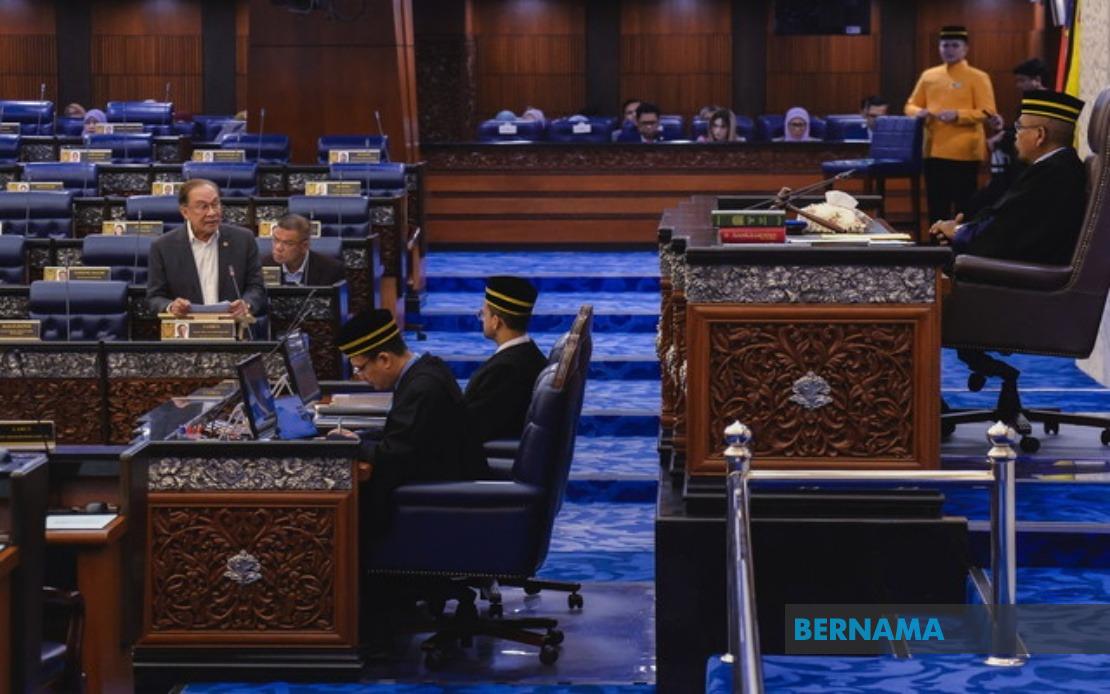
Prime Minister Datuk Seri Anwar Ibrahim has restated the longstanding legal prohibition against announcing new government projects or introducing fresh policies during election campaigns, underscoring that such restrictions remain firmly enforced under Malaysia's electoral framework. Speaking during Minister's Question Time in the Dewan Rakyat, Anwar made clear that once nomination day is officially declared, the campaign period commences with a strict set of rules that all levels of government must observe without exception.
The legal foundation for this restriction originates from Section 24B of the Election Offences Act 1954, a legislative provision designed to ensure fair electoral competition and prevent governing parties from leveraging state machinery to gain unfair electoral advantages. Anwar's clarification follows a query from Datuk Seri Dr Shahidan Kassim, the Perikatan Nasional member for Arau, who sought confirmation that the prohibition remains applicable ahead of the forthcoming state elections in Johor, Melaka, and Negeri Sembilan. The timing of this reiteration is significant given Malaysia's pattern of frequent state-level electoral contests and the recurring tension between governments' desire to announce popular initiatives and electoral regulations designed to level the playing field.
The Prime Minister emphasised that government machinery at all tiers—including city councils, state governments, and the Federal Government—must refrain from using their administrative apparatus to broadcast new project announcements during the designated campaign window. This prohibition encompasses not only the explicit announcement of fresh undertakings but also any promise or commitment of new policies that would apply to the state undergoing elections. The breadth of this restriction reflects a deliberate policy choice to prevent incumbent administrations from deploying government resources to strengthen their electoral position through the strategic timing of popular announcements.
However, Anwar introduced an important qualification to this blanket prohibition, noting that projects previously approved or allocated funding through earlier federal budget cycles fall outside the restriction's scope. This distinction preserves the government's capacity to proceed with pre-existing commitments and previously budgeted initiatives without being frozen during campaign periods. The clarification serves a practical purpose: it prevents election rules from becoming so rigid that they paralyse ongoing governance and infrastructure development. Under this interpretation, announcements concerning the commencement, progression, or completion of already-approved works remain permissible, provided they do not involve new commitments or previously unbudgeted allocations.
This nuance is particularly relevant for Malaysian administrations that manage multiple tiers of government activity simultaneously. A state government undertaking pre-election elections cannot simply halt all development announcements for weeks; instead, it may continue communicating progress on initiatives that were already in motion before nomination day. Yet distinguishing between genuinely pre-approved projects and those merely repackaged as prior commitments presents an enforcement challenge that election monitoring authorities must navigate carefully. The interpretation requires competent authorities to maintain detailed records of budget allocations and project approval dates to verify claims of prior approval when challenges arise.
The enforcement mechanism for ensuring compliance with these electoral restrictions remains an implicit component of Malaysia's election administration framework, though Anwar did not elaborate on specific monitoring procedures or penalties during his parliamentary response. Nevertheless, the existence of legal authority for enforcement through the Election Offences Act suggests that violations carry consequences, typically involving investigation by the Election Commission and potential prosecution of responsible officials. The deterrent value of such enforcement depends heavily on consistent and visible application of penalties when breaches occur, signalling to all government levels that these restrictions carry genuine weight.
For Malaysian voters and political observers, these election regulations represent an attempt to counterbalance the inherent advantages that incumbent governments possess through their control of state resources and administrative machinery. Without such restrictions, ruling parties could potentially overwhelm opposition campaigns through the strategic announcement of popular projects timed to maximum electoral benefit. By establishing a level playing field through prohibitions on new announcements during campaigns, the electoral framework aims to ensure that electoral outcomes reflect genuine public preference rather than tactical deployment of government largesse.
The upcoming state elections in Johor, Melaka, and Negeri Sembilan will provide a test case for how effectively these restrictions function in practice. Election observers and civil society organisations typically monitor compliance with such rules, documenting instances where government announcements may violate the prohibition. The political sensitivity surrounding these elections—given Malaysia's shifting electoral landscape and the importance of these state-level contests—means that any perceived violations could generate significant controversy and become subjects of parliamentary questioning and public debate.
Anwar's reiteration of these prohibitions also reflects the government's commitment to maintaining public confidence in the integrity of the electoral process. By explicitly confirming that all government levels, including the federal administration itself, will comply with Section 24B restrictions, the Prime Minister attempts to demonstrate that the ruling coalition views election fairness as a principle applicable even to itself. This stance, whether born from genuine commitment to electoral integrity or motivated by political calculation, serves to reinforce the normative expectation that all parties—regardless of their governance status—must abide by election rules.
The distinction between previously approved projects and new announcements will likely remain a source of technical disputes as various state and federal governments navigate the campaign period. Officials may interpret the boundaries of this distinction generously, claiming prior approval for initiatives that were only tentatively considered before nomination day. Conversely, opposition parties and election observers may challenge such claims, arguing that the project represents a new commitment disguised as prior approval. This interpretive tension, while potentially contentious, reflects the inherent difficulty of creating bright-line rules to govern complex government decision-making processes that span months or years of planning and approval cycles.
Moving forward, Anwar's clarification serves to place all government officials on notice regarding election campaign conduct standards. State governments preparing for electoral contests must exercise careful documentation of their budget allocations and project approvals to establish a clear historical record justifying any announcements during the campaign period. This administrative burden, while modest in principle, may affect the speed and flexibility with which governments can communicate development initiatives to constituents during the intense activity of an election campaign. Nevertheless, such constraints represent the price of maintaining electoral systems that function fairly across competing political forces.

