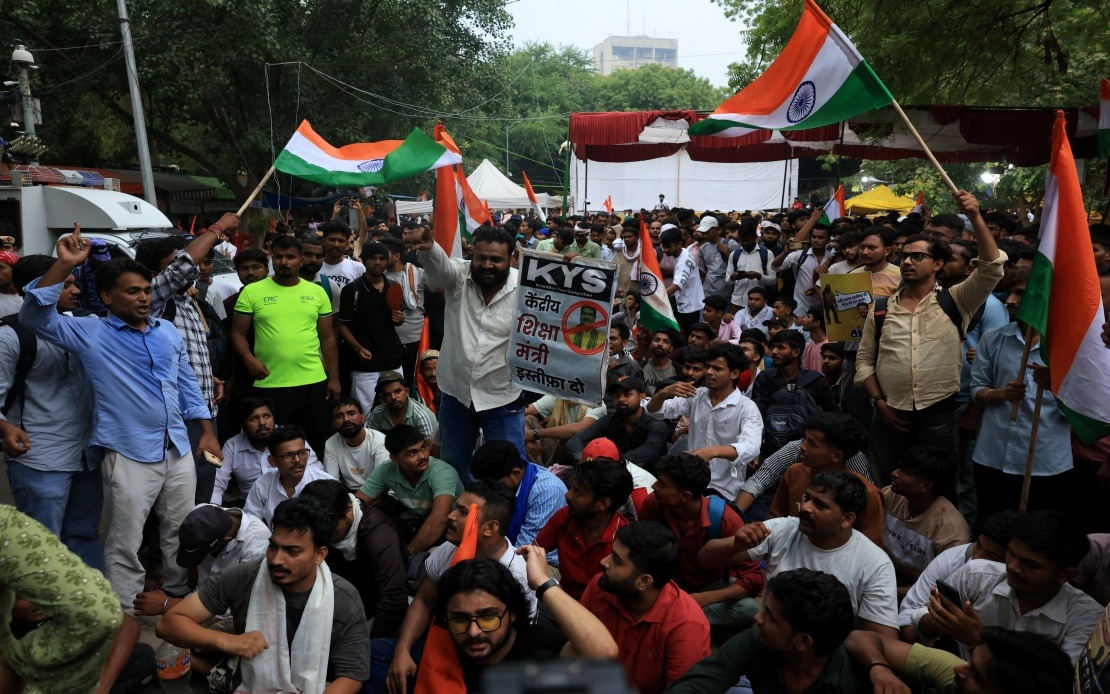
Thousands of protesters converged on New Delhi's parliament precinct on Monday in a demonstration organised by an emerging youth-led movement that claims substantial digital reach. The march, termed "Sansad Chalo" (move towards parliament), saw participants attempt to breach police cordons surrounding the legislative building, prompting authorities to deploy crowd-management tactics to maintain order and prevent the demonstration from reaching its intended destination.
The timing of the rally coincided with the opening of Parliament's Monsoon Session, a significant legislative calendar event in India's democratic calendar. Prime Minister Narendra Modi departed the parliament complex via motorcade as law enforcement personnel managed the burgeoning crowds assembling in the surrounding streets and open spaces. The convergence of parliamentary activity and public agitation underscored growing tensions between institutional governance and grassroots demands for systemic change.
The movement spearheading the protest represents a significant new entrant in India's political activism landscape, leveraging digital platforms to cultivate millions of online supporters. This organisational model reflects broader global trends in which young citizens mobilise primarily through social media networks rather than traditional organisational structures, presenting both opportunities and challenges for democratic engagement. The movement's ability to translate online support into physical mobilisation suggests considerable organising capacity and messaging resonance among India's youth demographic.
Education system reform stands as the primary grievance motivating the demonstration. India's academic framework has faced mounting criticism from students, educators, and civil society organisations over concerns ranging from curriculum relevance to examination pressure, pedagogical approaches, and career preparedness. The protesters' focus on this issue signals recognition that educational structures require fundamental recalibration to serve contemporary economic and social realities. The movement's framing of education as a central political concern places it within broader regional conversations across South Asia regarding how institutions prepare younger generations for an uncertain future.
Police imposed restrictions on public gatherings in advance of the rally, yet demonstrators proceeded with their march in defiance of these limitations. The police response utilised crowd-control measures without reports of major violence or significant confrontations, indicating an attempt to manage the situation through established protocol rather than escalatory tactics. However, the restrictions themselves generated friction, highlighting tensions between state security considerations and citizens' constitutional rights to assembly and petition.
SecurityNet enhanced security protocols across multiple strategic locations throughout the national capital following the demonstration. This response reflected official concern regarding potential for larger mobilisations, copycat demonstrations, or expanded public agitation. The concentration of security resources in sensitive areas disrupted normal urban functioning and signalled government vigilance toward the emerging movement's potential trajectory and support base expansion.
The emergence of this youth-centric movement carries implications extending beyond immediate education policy discussions. In India's competitive political environment, successful grassroots mobilisation by new actors can reshape electoral dynamics and policy priorities. The movement's digital infrastructure and youth orientation position it as a potential vector for influencing political discourse and demanding accountability from established parties and institutions. The particular focus on education resonates across South Asia, where governments across the region grapple with similar pressures to transform educational systems.
For Malaysian observers, the New Delhi protests offer instructive parallels regarding youth political engagement and education system debates. Southeast Asia has witnessed similar youth-led movements demanding education reforms, curriculum modernisation, and greater student voice in institutional decision-making. The Indian movement's ability to mobilise significant numbers through digital means demonstrates strategies and tactics that may influence regional activism patterns, particularly among educationally aware and digitally connected younger cohorts.
The parliamentary context of the march carries particular significance. By targeting the legislature directly, protesters signalled that elected representatives bear responsibility for educational outcomes and systemic inadequacies. This framing positions parliament as accountable to the broader public, particularly younger citizens who experience education's deficiencies most immediately. The Monsoon Session's concurrent timing maximised pressure and visibility, ensuring parliamentary members encountered constituent demands during active legislative deliberations.
The movement's success in mobilising thousands despite police restrictions suggests organisational sophistication and strong underlying sentiment supporting education transformation. Whether this demonstration represents a singular event or launching point for sustained campaigning remains uncertain, but the apparent structural capacity and digital infrastructure indicate potential for continued activism. The trajectory of this movement will likely influence how Indian policymakers, opposition parties, and civil society institutions respond to youth demands for educational and institutional reform.
As India's parliament reconvened for its Monsoon Session, the demonstrations underscored that legislative priorities increasingly encounter public challenge and scrutiny. The education focus reflects genuine frustration with system outcomes and graduates' employment prospects. If the movement sustains momentum and expands its organising footprint, education policy could emerge as a significant electoral and governance issue in India's subsequent political cycles, reshaping how parties and candidates address student and youth concerns during campaigns and governance.

