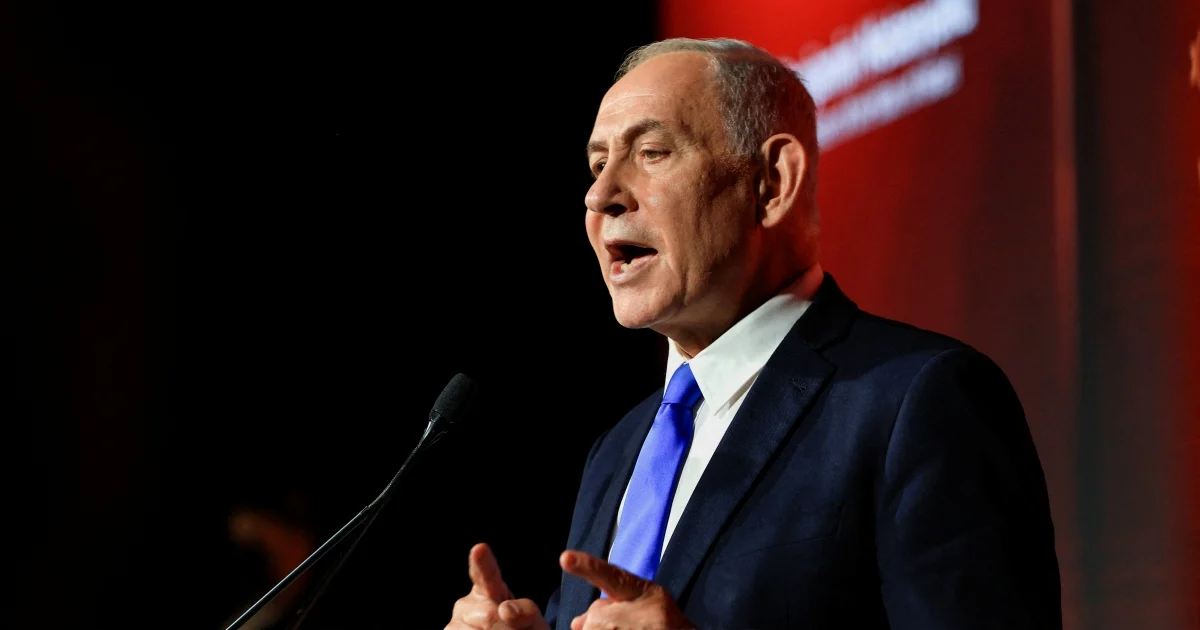
Israeli Prime Minister Benjamin Netanyahu has indicated that military forces under his command will maintain an open-ended deployment in southern Lebanon, signalling a commitment to extended regional operations that could reshape the security landscape in the Middle East for years to come. The statement, delivered on Sunday, underscores the complexity of the current conflict and the Israeli government's strategic calculations regarding long-term stability along its northern frontier.
The pledge to sustain troop levels in Lebanon reflects escalating tensions that have characterised Israeli-Hezbollah relations over recent months. Rather than setting a specific timeline for withdrawal, Netanyahu's formulation of "as long as necessary" delegates the question of departure to undefined circumstances, leaving open the possibility of an indefinite presence. This approach grants the Israeli military considerable operational flexibility while simultaneously maintaining diplomatic ambiguity that could be adjusted based on evolving ground realities and diplomatic developments.
For Malaysia and Southeast Asia, this development carries significance beyond immediate Middle Eastern concerns. The protracted militarisation of the Israel-Lebanon border threatens to destabilise an already fragile region where multiple global powers maintain strategic interests. Any broader escalation could affect global energy markets, shipping routes through the Suez Canal, and international security equilibriums that indirectly influence regional geopolitics and trade patterns affecting Southeast Asian economies.
Netanyahu's concurrent assertion regarding preventing Iran from acquiring nuclear weapons represents a second pillar of Israeli strategic doctrine. This dual commitment reveals the interconnected nature of security challenges facing the Israeli government, which simultaneously manages immediate military operations along its borders while confronting what it perceives as existential threats from adversarial state actors. The Iranian nuclear question has occupied centre stage in Middle Eastern politics for decades, generating international concern that transcends regional boundaries.
The Israeli position on Iran's nuclear programme reflects longstanding security anxieties that predate the current military operations in Lebanon. International diplomatic efforts, including the Joint Comprehensive Plan of Action negotiated in 2015, have represented previous attempts to address these concerns through multilateral engagement. However, the sustainability and effectiveness of such arrangements remain contested, with different stakeholders maintaining divergent interpretations of Iran's compliance and intentions.
For Malaysian policymakers and regional observers, understanding these Israeli security imperatives provides context for Middle Eastern developments that increasingly ripple across global systems. Malaysia's membership in the United Nations and its participation in international forums means that developments in the Israel-Lebanon conflict inevitably surface in multilateral discussions affecting broader foreign policy considerations. The nation's substantial Muslim population also maintains humanitarian and religious interests in Palestinian and Lebanese affairs, creating domestic dimensions to international developments.
The extension of Israeli military operations into southern Lebanon raises questions about international humanitarian law and civilian protection. Prolonged military occupation, even when described as necessary for security purposes, typically generates significant humanitarian challenges and displacement concerns. International organisations and human rights bodies have consistently emphasised the responsibility of occupying forces to minimise civilian harm and facilitate the functioning of essential services, issues that will likely intensify if Israeli operations continue indefinitely.
The timing of Netanyahu's statements occurs within a broader context of regional recalibration following shifts in Middle Eastern alignments. Recent normalisation agreements between Israel and various Arab states have altered traditional alliance patterns, while simultaneously leaving other tensions unresolved. The Israeli-Lebanese situation exists alongside unresolved Israeli-Palestinian questions, creating a complex tapestry of overlapping disputes that regional actors and international community members must navigate simultaneously.
Diplomatically, Netanyahu's commitment to extended operations may complicate efforts by international mediators seeking to broker ceasefires or establish frameworks for conflict resolution. Statements about indefinite military presence can harden negotiating positions and signal reduced flexibility regarding compromise arrangements. Regional powers, including neighbouring Arab states and international actors including the United States and European nations, will likely attempt to influence Israeli calculations regarding the timeline and terms for any eventual withdrawal.
The economic dimensions of prolonged military operations deserve consideration as well. Sustained military deployments require substantial resource allocation, affecting budget priorities and domestic economic policy. For Israel, maintaining extended operations in Lebanon involves opportunity costs that could be redirected toward development, social services, or other national priorities. Understanding these trade-offs illuminates the genuine constraints that sometimes govern strategic decisions despite rhetorical commitments.
Regional stability ultimately depends on identifying mutually acceptable arrangements that address legitimate security concerns while respecting international norms and humanitarian principles. The Israeli government's framing of its presence as temporary and contingent upon circumstances leaves theoretical space for negotiated outcomes, though achieving such arrangements requires engagement from all relevant parties. The Lebanese government, Hezbollah, and international community members will all play roles in determining whether current military situations evolve toward resolution or entrenchment.
For Malaysia and Southeast Asian nations observing these developments, the principal takeaway involves recognising how regional conflicts in distant theatres can acquire broader significance through multiple pathways. Global energy security, international law evolution, humanitarian concerns, and great power competition all intersect in Middle Eastern disputes. Maintaining informed perspectives on such situations serves Malaysian strategic interests by enabling more sophisticated engagement with international issues and informed participation in multilateral forums addressing regional and global security questions.
The statements by Netanyahu regarding Israel's intentions in Lebanon and toward Iran represent important indicators of Israeli strategic thinking at a significant inflection point. Whether current military operations eventually conclude through negotiated settlement, unilateral Israeli decisions, or continued indefinite presence remains uncertain. What appears clear is that the region faces an extended period of elevated tension requiring careful international management to prevent further escalation and humanitarian deterioration.

