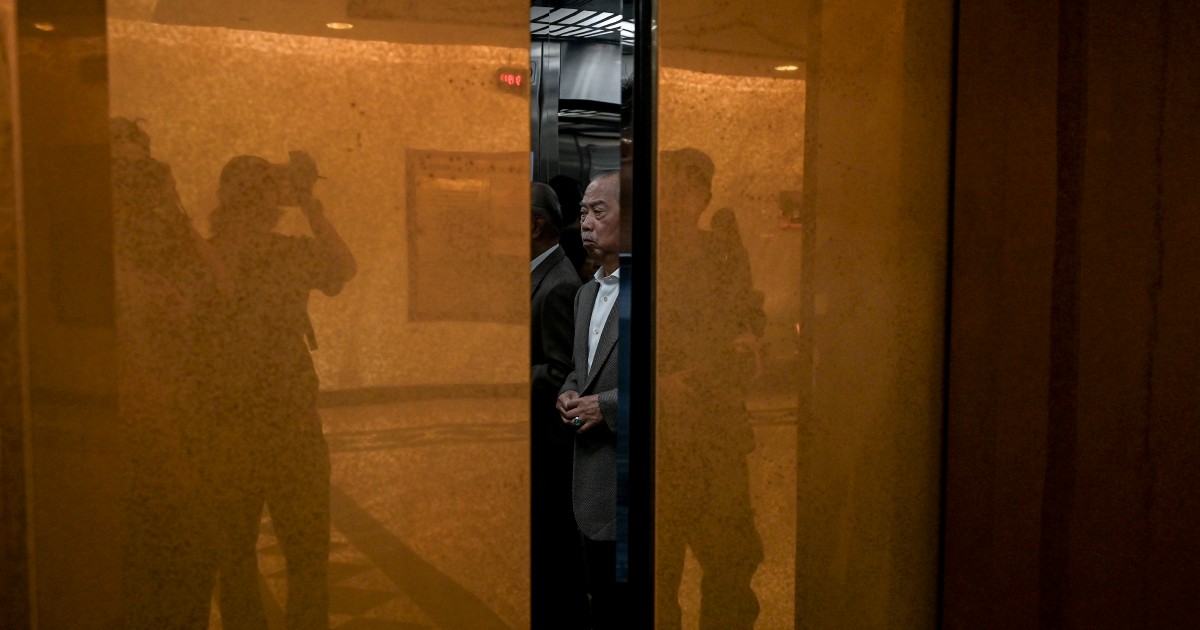
The High Court in Kuala Lumpur heard testimony on Monday that Nepturis Sdn Bhd had issued a cheque worth RM1 million made out to Bersatu, the political party formerly led by Muhyiddin Yassin. The evidence emerged during the ongoing trial of the ex-Prime Minister, who faces charges related to his tenure in office and alleged breaches of political funding regulations.
The revelation of Nepturis' financial transaction with Bersatu represents a significant development in a case that has attracted considerable public attention given Muhyiddin's standing in Malaysian politics. As someone who served as Prime Minister from March 2020 to August 2021, his legal proceedings carry implications beyond the courtroom, touching on questions of political accountability and the mechanisms through which Malaysian political parties source their funding. The introduction of corporate financial records into the trial underscores the prosecution's apparent strategy of tracing money flows to establish the nature of alleged misconduct.
Nepturis Sdn Bhd, as a commercial entity involved in the transaction, raises questions about the business relationships and networks that may exist between private corporations and political organisations in Malaysia. While the company name itself may not be immediately recognisable to the general public, the fact that it channelled such a substantial sum toward a political party suggests connections that warrant scrutiny. The RM1 million amount is considerable and points to either a significant business arrangement or a transaction that authorities deemed suspicious enough to investigate thoroughly.
The context of Muhyiddin's trial involves multiple allegations spanning his period as Prime Minister and potentially his earlier tenure as Defence Minister. Political funding has become an increasingly contentious issue in Malaysian governance, particularly following various reforms and heightened public expectations around transparency. The case touches on a broader concern about how corporate interests may gain access to political influence through financial contributions, and whether appropriate oversight exists to prevent corruption or undue influence over policy decisions.
Bersatu, which was cofounded by Muhyiddin in 2016, has been a significant player in Malaysian politics since its establishment. The party's financial records and sources of funding have come under scrutiny in recent years as part of wider questions about political finance across the country. This particular transaction with Nepturis, therefore, fits into a larger pattern of investigation that prosecutors appear to be constructing around the former Prime Minister's political and business associations.
The High Court proceedings are expected to continue as prosecutors build their case through witness testimony and documentary evidence. Each piece of financial documentation introduced as evidence serves to either strengthen or weaken the state's allegations, making the careful examination of such transactions essential to understanding the full scope of the charges. Malaysian legal observers note that cases involving political figures of Muhyiddin's stature often require extensive investigative work and multiple layers of corroborating evidence to prove wrongdoing.
From a Southeast Asian perspective, Malaysia's handling of high-profile corruption cases demonstrates the region's varying approaches to political accountability. While some observers view the prosecutions as evidence of improving governance, others question whether the legal system has been weaponised for political purposes. The outcome of Muhyiddin's trial will likely influence public confidence in Malaysia's anti-corruption institutions and the judiciary's perceived independence.
The trial also carries implications for corporate entities in Malaysia that engage with political parties. Businesses must now consider the potential legal exposure associated with donations or financial transactions involving political organisations, particularly when the recipients face scrutiny. This may lead to greater caution in corporate-political relationships, though it could also create ambiguity around legitimate political participation and funding that fuels democratic processes.
As the trial progresses through various witnesses and documentary evidence, the complete picture of the alleged misconduct should become clearer. The introduction of the RM1 million cheque from Nepturis to Bersatu adds a concrete financial element to the charges, moving beyond abstract allegations to specific transactions that can be traced, analysed, and explained. Muhyiddin's defence team will have opportunities to present counter-evidence and challenge the prosecution's interpretation of these financial flows.
The proceedings remain closely watched by Malaysian political observers, civil society organisations, and the general public, all of whom are keenly interested in whether the legal system can fairly adjudicate cases involving senior political figures. The careful documentation and presentation of financial evidence, as exemplified by the Nepturis cheque testimony, forms the foundation upon which such complex cases are ultimately decided. Malaysia's commitment to seeing this trial through to a fair conclusion will signal important messages about the rule of law to both domestic and international audiences.

