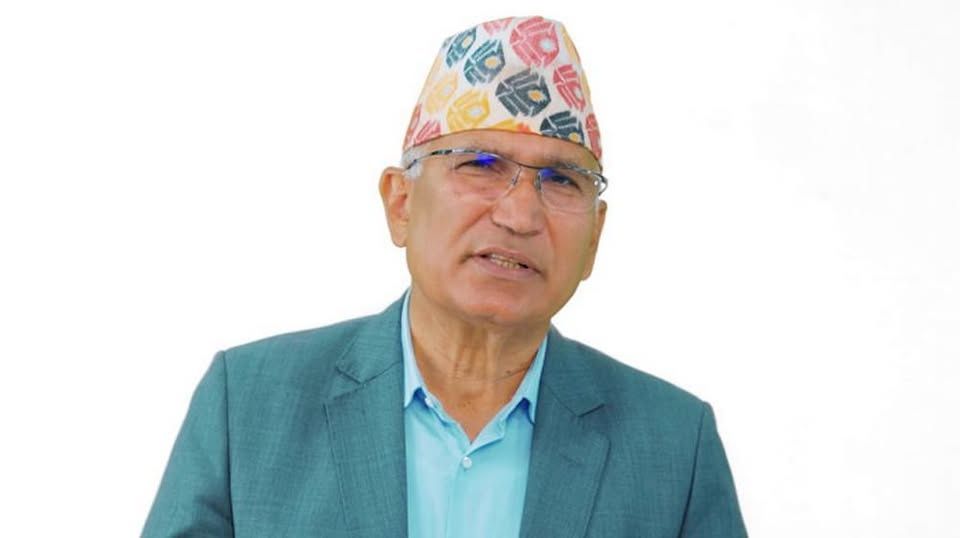
Nepal's police force has arrested Bishnu Paudel, a former finance minister and vice-chair of the opposition Communist CPN-UML party, as part of an expanding money-laundering investigation. The arrest, made on Monday and announced publicly on Tuesday, represents the latest in a series of senior official detentions since the country's political upheaval last year.
Paudel held significant positions within the government of former Prime Minister KP Sharma Oli, whose administration fell from power during the September 2025 uprising. As a senior figure in the CPN-UML, Paudel's detention underscores the deepening political divisions that have characterised Nepal's transition following that turbulent period. Nepal Police spokesman Abhi Narayan Kafle confirmed investigators would examine Paudel's suspected involvement in money-laundering activities, though specific allegations remain under review.
The current administration, led by Balendra Shah—a musician-turned-political leader who was elected Prime Minister in March—made anti-corruption enforcement a cornerstone of its election mandate. Shah's government has moved swiftly to investigate figures from the previous regime, signalling a determined approach to addressing the graft that fuelled public anger leading up to the 2025 protests. This enforcement agenda reflects broader public sentiment demanding accountability from political elites.
Oli, who lost his parliamentary seat to Shah, has characterised Paudel's arrest as politically motivated, claiming the government is engaging in authoritarian conduct rather than genuine anti-corruption work. The former Prime Minister's response highlights the polarisation within Nepal's political landscape, where opposition parties view recent arrests through a lens of partisan persecution. CPN-UML spokesperson Niraj Acharya stated the party would respect legal processes but argued the government was applying discriminatory standards in its investigations, signalling the party's intent to mount a vigorous political defence.
The timing of these arrests coincides with Shah's government intensifying scrutiny of previous administrations. In March, immediately following Shah's inauguration, police detained both Oli and former Interior Minister Ramesh Lekhak for questioning regarding their alleged involvement in the violent suppression of 2025 protests. Both men were subsequently released after two weeks in custody without facing formal charges, and each has denied responsibility for the bloodshed. Their release without prosecution suggests investigative complexities or potential evidentiary challenges that may also affect the Paudel case.
The 2025 uprising that catalysed Nepal's political transformation began with public demonstrations against a temporary social media ban but rapidly evolved into a broader reckoning with systemic corruption and economic deterioration. The crackdown on protesters proved deadly, claiming at least 76 lives and injuring more than 2,500 people during a concentrated two-day period. That violence crystallised public demand for institutional reform and led directly to the electoral outcome that brought Shah to power.
Beyond the Paudel case, Nepal's anti-corruption apparatus is pursuing multiple parallel investigations. The Commission for Investigation of Abuse of Authority has filed charges against 16 individuals, including the passport department's chief administrator, in connection with an alleged embezzlement scheme involving $66 million in e-passport procurement funds. Suresh Neupane, spokesman for the commission, characterised the case as concerning systematic theft during the procurement process for digital passport technology.
These overlapping investigations reveal the scope of alleged malfeasance within Nepal's bureaucratic and political systems. The e-passport case particularly suggests corruption extended into technical procurement and implementation processes, affecting infrastructure projects with substantial financial implications. The simultaneous pursuit of multiple high-profile cases indicates Shah's administration is applying sustained pressure across different institutions and at various hierarchical levels.
For Nepal and the broader South Asian region, these developments carry significant implications. The country's ability to establish credible anti-corruption mechanisms while maintaining judicial independence will influence both domestic stability and international perceptions of governance. Malaysia and other Southeast Asian nations monitoring Nepal's institutional evolution can observe the challenges of transitional justice—balancing genuine accountability with the political tensions arising from prosecuting predecessor administrations.
The opposition's claims of selective prosecution raise substantive questions about whether Nepal's anti-corruption campaign will be perceived as legitimate or merely as victor's justice. The absence of charges against Oli and Lekhak despite their detention suggests the government faces genuine evidentiary hurdles in some cases, potentially limiting its overall credibility if high-profile cases collapse without conviction. This dynamic could undermine public confidence in anti-corruption efforts regardless of their underlying legitimacy.
Moving forward, the crucial test for Shah's administration lies in demonstrating that anti-corruption investigations follow consistent legal standards rather than partisan calculations. The Paudel case and parallel inquiries will significantly shape Nepal's political climate and institutional development. If prosecutions succeed and result in convictions applied equitably across party lines, Nepal could establish stronger democratic norms. Conversely, if investigations appear selective or collapse due to weak evidence, they may entrench cynicism about governance reform and deepen the polarisation already evident in opposition responses.

