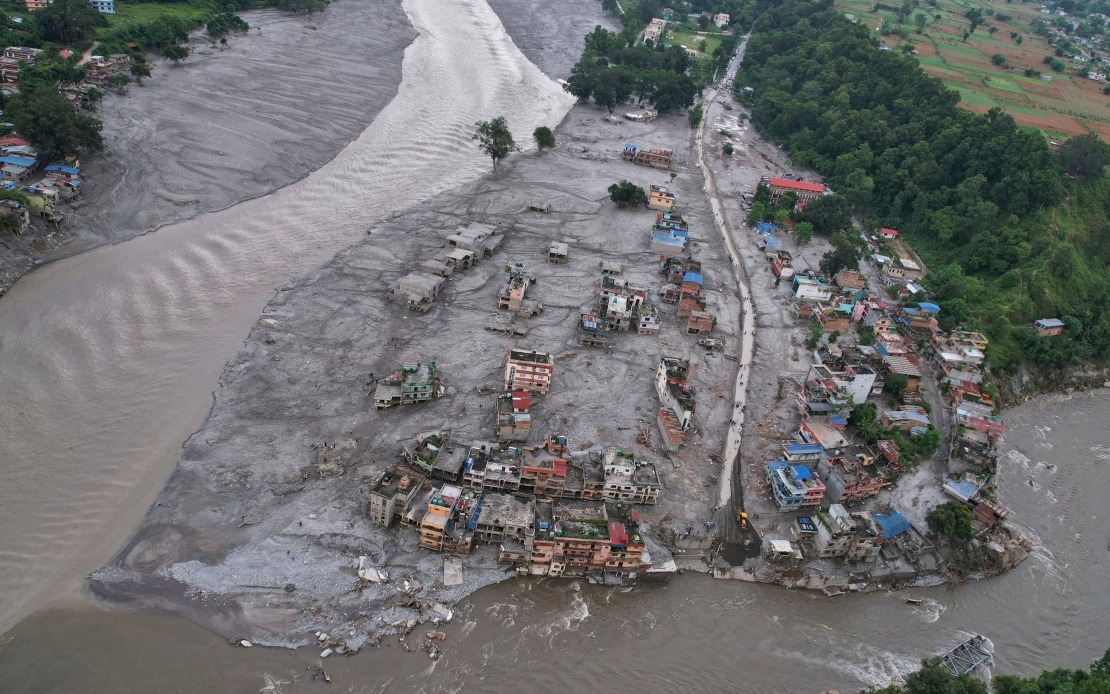
Nepal is proceeding cautiously in accepting international search and rescue assistance following the catastrophic flooding that struck its central and northern regions on Wednesday, with authorities first assessing the full extent of the disaster before inviting further foreign deployments. The decision reflects both the unprecedented scale of the emergency unfolding across the country and the practical constraints of coordinating multiple international teams in challenging terrain, according to Malaysian Embassy officials stationed in Kathmandu.
The disaster that swept through Rasuwa district and surrounding areas resulted from the simultaneous overflow of the Bhote Koshi and Trishuli rivers, unleashing destructive floodwaters across hydroelectric installations and populated lowlands. Currently, Nepal has already accepted search and rescue operations from Australia, China, India, and South Korea—four nations whose citizens are employed at the affected hydropower facilities across the region. This selective approach allowed Nepal to prioritise assistance from countries with direct stakes in the emergency, whose workers were trapped or missing in the immediate aftermath of the flooding.
Malaysia is among the countries extending offers of assistance, with Prime Minister Datuk Seri Anwar Ibrahim previously announcing that Malaysia stands ready to assist Nepal while simultaneously coordinating the broader delivery of humanitarian aid. The Malaysian government has specifically flagged the availability of the Malaysian Special Search and Rescue Team (SMART), a highly trained unit with extensive experience in regional disaster response operations. The charge d'affaires of the Malaysian Embassy in Kathmandu, Mohd Firdaus Azman, communicated to Malaysian media on Saturday that Nepalese officials have indicated they will complete their initial assessment before responding to additional international rescue offers from countries including Malaysia.
The scale of the humanitarian crisis appears particularly acute at the region's hydroelectric infrastructure, where hundreds of workers face dangerous conditions. More than 900 workers employed across eleven hydropower projects—several still under active construction—became trapped in tunnels and underground powerhouses when the floodwaters surged through the valleys. The concentration of personnel in these subsurface facilities, combined with the sudden nature of the flooding, created an exceptionally difficult rescue environment requiring highly specialised skills and equipment to access and evacuate trapped individuals safely.
The human cost of the disaster has proven staggering across the Nepal-China border region. By Saturday, confirmed fatalities had reached at least 633 people across both nations, while official reports indicated nearly 3,000 individuals remained unaccounted for, including hundreds of foreign nationals. These figures underscore the severity of the flooding and the ongoing uncertainty surrounding the fates of many missing persons still unlocated days after the initial inundation.
Malaysian citizens constitute a portion of those unaccounted for in the affected region. As of Saturday evening, the Malaysian Foreign Ministry reported that 55 Malaysians in Nepal and 36 Malaysians in China remained uncontactable, meaning their status and whereabouts following the flooding remained uncertain. The Malaysian government, through its diplomatic missions and coordination mechanisms, has been working to account for its citizens and ensure their safety during the ongoing emergency.
The decision by Nepal to evaluate additional assistance before formally accepting it reflects the complex logistics of international disaster response. Each incoming rescue team requires coordination with existing efforts, local authorities, and operational infrastructure—coordination that becomes increasingly complicated as the number of simultaneous operations multiplies. By conducting a thorough assessment first, Nepalese officials can better understand where international expertise and resources can be deployed most effectively to maximize lives saved.
For Malaysia and other nations positioned to contribute, the waiting period highlights the delicate balance between rapid response and strategic deployment. While every hour counts in rescue operations, premature deployment of teams without clear coordination could create bottlenecks or duplicate efforts that waste precious resources. Malaysia's SMART unit, as a specialized high-capability resource, would likely be evaluated carefully to determine whether additional flood rescue capacity would genuinely enhance prospects in specific locations, or whether existing international teams can effectively handle the current needs.
The involvement of Australia, China, India, and South Korea in active rescue operations demonstrates how regional cooperation emerges organically during transnational disasters. The presence of their nationals in the hydropower sector provided both motivation and operational justification for their teams' rapid deployment. This model of crisis-driven cooperation, while effective in immediate response, also raises questions about whether Nepal might benefit from broader international engagement as rescue operations extend beyond the initial emergency phase into longer-term recovery and identification efforts.
For Malaysia specifically, the situation presents both humanitarian and diplomatic dimensions. Beyond the moral imperative to assist a neighbour facing catastrophe, Malaysia's potential contribution through SMART deployment could strengthen bilateral relations with Nepal while demonstrating Malaysian capacity in regional emergency response. The Foreign Ministry's tracking of Malaysian nationals affected by the disaster serves as both a consular duty and a reminder of the interconnected nature of the region, where Malaysian citizens work across multiple countries and sectors vulnerable to natural disasters.
As Nepal conducts its assessment, the international community remains positioned to respond rapidly once formal requests are made. The coming hours and days will prove critical, as rescue windows in flooding disasters narrow quickly and search efforts become progressively more difficult as floodwaters recede and structural damage stabilises. Malaysia's readiness to deploy SMART, contingent on Nepalese authorities' request, reflects the commitment Southeast Asian nations have increasingly demonstrated toward collective disaster response and mutual aid during environmental emergencies.

