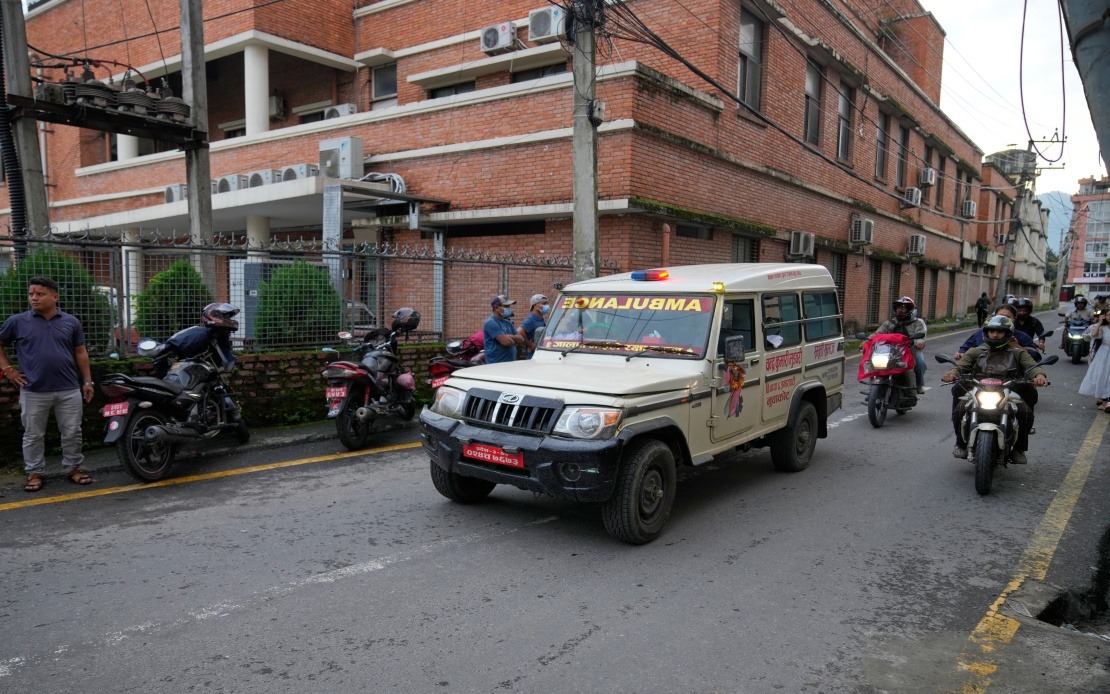
Nepal's search and rescue teams have successfully extracted 121 foreign nationals from areas ravaged by devastating floods that swept through the Himalayan nation following the collapse of a glacial mass. The rescued individuals represent a snapshot of the international community caught in what has become one of the region's most severe natural disasters, highlighting both the scale of the emergency and the complex coordination required in disaster response across borders.
The composition of those rescued underscores the international scope of the tragedy. By late Friday afternoon, rescue authorities had documented 85 Indian citizens among the evacuated, alongside 16 Chinese nationals and nine South Koreans. Additional survivors hailed from the United States, Russia, and Italy, with two citizens each, while Belgium, Bulgaria, Portugal, Spain, and Switzerland each had one national rescued from the affected areas. This diversity reflects Nepal's significance as a destination for trekking expeditions, pilgrimage tourism, and infrastructure projects that draw workers from across the globe.
The catastrophe began when Wednesday's torrential waters engulfed the Bhote Koshi and Trishuli river valleys following a dramatic glacial rupture high in the Himalayas. The resulting flash floods proved particularly devastating due to the speed and volume of water flowing through populated regions and along critical infrastructure corridors. The confirmed death toll has climbed to approximately 550 individuals, with the disaster spreading devastation across both Nepalese territory and adjacent regions in China where some trekkers and pilgrims were located.
Nepalese authorities face mounting logistical challenges as recovery operations intensify. Medical facilities in Chitwan and Pokhara, typically the primary hospitals serving the affected valleys, have become overwhelmed beyond capacity. Local reports indicate that officials struggle not only with identifying the mounting number of deceased but also with locating adequate storage facilities for recovered bodies. Search teams continue methodically working downstream through multiple locations where survivors might be sheltering or where additional bodies might be recovered, a process hampered by difficult terrain and ongoing weather risks.
Prime Minister Balendra Shah convened his Cabinet on Friday to assess the unfolding crisis and coordinate response measures. In a gesture of institutional commitment to relief efforts, Shah announced that he and his Cabinet members would each contribute one month's salary to the Prime Minister's Natural Disaster Relief Fund. This decision signals the government's determination to mobilize resources for humanitarian assistance, though it also underscores the immense financial burden already apparent in the immediate aftermath.
India, Nepal's closest neighbour and home to the largest contingent of missing nationals, has mobilized significant humanitarian assistance. New Delhi has dispatched two separate shipments of relief materials totalling 47.5 tonnes, with a third aircraft scheduled to depart Friday with additional supplies. However, the scale of Indian involvement reflects serious concern about the number of Indian nationals unaccounted for. According to India's Ministry of External Affairs spokesman Randhir Jaiswal, approximately 320 Indian citizens had lost contact with authorities, representing a substantial portion of the missing persons.
Investigations into the location and status of those missing have revealed complex circumstances. Among workers engaged in constructing the Trishuli hydropower project, 63 Indian nationals were confirmed safe, while another 21 individuals rescued from the disaster zone have already been transported to India. However, Jaiswal emphasized an additional concern: roughly 100 people of Indian origin holding passports from other nations remained unaccounted for, complicating casualty tracking. These individuals may have been participating in the Kailash Mansarovar pilgrimage in the Xizang region of China when the disaster struck, placing them beyond immediate communication networks. Reassuringly, approximately 400 Indian nationals known to be in the Chinese region have since reported their safety.
The regional response extends beyond India's borders, reflecting broader South Asian solidarity in times of crisis. Pakistani Prime Minister Shehbaz Sharif telephoned his Nepalese counterpart on Friday to convey condolences and pledge support. Through his office, Sharif announced that Pakistan would dispatch emergency relief materials to Nepal, demonstrating how natural disasters transcend political boundaries in generating humanitarian responses.
For Malaysian observers and regional analysts, this disaster carries several implications. The event underscores the vulnerability of popular trekking routes and pilgrimage paths in the Himalayas—destinations frequented by Malaysian tourists and adventure seekers. The challenge Nepal faces in managing mass casualty situations, coordinating international assistance, and tracking missing persons across multiple nationalities offers lessons for Southeast Asian nations preparing disaster response protocols. Furthermore, the incident highlights how climate-related phenomena, including glacial instability, pose emerging threats to populated areas and tourism-dependent economies throughout the region. The effectiveness of Nepal's rescue operations, despite resource constraints, and the swift international coordination demonstrated by neighbouring countries provide both a model and a cautionary tale for disaster preparedness in Asia's most geologically active zones.

