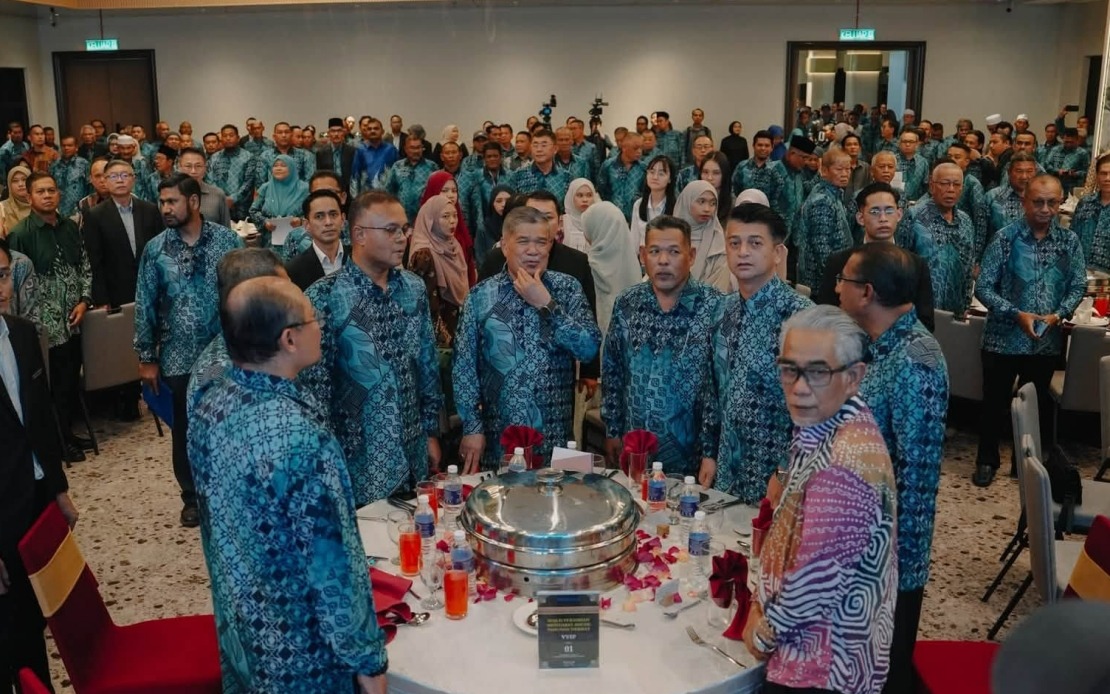
The National Fishermen's Association (NEKMAT) has demonstrated substantial financial progress, posting profits exceeding RM25 million for 2025, a remarkable leap from RM11 million the year prior. This doubling of returns signals a turning point for the organisation, which serves as a critical intermediary between Malaysia's fishing communities and government policy frameworks. Speaking at the 41st NEKMAT Annual General Meeting in Kuala Lumpur on July 28, Agriculture and Food Security Minister Datuk Seri Mohamad Sabu highlighted the achievement as concrete evidence of robust institutional management and the association's deepening engagement with the nation's fisheries development agenda.
The minister's remarks carry particular weight given Malaysia's ongoing efforts to modernise and stabilise the fishing industry, a sector employing tens of thousands of Malaysians and contributing meaningfully to export revenues. NEKMAT's financial trajectory suggests that strategic diversification and operational tightening are beginning to yield tangible results, a development with implications extending beyond the association itself. The profit surge reflects not merely accounting efficiency but potentially signals growing market demand for services NEKMAT provides, from fuel distribution to aquaculture production, indicating broader confidence in domestic fisheries infrastructure.
A defining characteristic of NEKMAT's approach has been the systematic reinvestment of earnings into the fishing community's welfare and education. Rather than concentrating profits in organisational reserves, the association has channelled gains directly into support mechanisms benefiting individual fishermen and their families. This strategy underscores a philosophy that sustainable sector growth requires simultaneous investment in human capital, ensuring that communities dependent on fishing possess the resources and knowledge to adapt to evolving market conditions and environmental constraints. Minister Mohamad specifically commended this orientation, framing it as evidence that NEKMAT's management operates with genuine commitment to sectoral advancement rather than mere profit extraction.
The structural drivers behind this year's performance are worth examining in detail. NEKMAT board chairman Abdul Hamid Bahari attributed the improved results to the expansion of business lines spanning wholesale and retail diesel sales, ice production, shrimp farming, transportation services, marketing operations, and fishermen's housing initiatives. This portfolio approach diversifies revenue streams and reduces dependence on any single commodity or service, insulating the organisation from sector-specific downturns. For Malaysian fishermen facing volatile catch volumes, fuel price fluctuations, and market volatility, having a financially stable institutional partner offering services across multiple categories provides valuable stability and reduces operational uncertainties.
The association's enhanced profitability has translated into direct benefits for downstream fishing organisations across Malaysia's states. NEKMAT raised the dividend distribution to State Fishermen's Associations (PNK) from nine per cent to fifteen per cent, representing a sixty-seven per cent increase in payouts to regional bodies. This cascading benefit structure ensures that improved national performance translates into strengthened local capacity, enabling state-level associations to invest in their own development initiatives, member services, and community programmes. The amplification effect demonstrates how well-managed central organisations can multiply impact across geographic and organisational layers.
Beyond financial metrics, NEKMAT's collaboration with the Social Security Organisation (PERKESO) reflects evolving thinking about fishermen's welfare in Malaysia. The newly introduced protection scheme dramatically reduces individual contribution burdens, with fishermen now paying only RM70 annually instead of the standard RM231.20 contribution rate, with government subsidising the difference. Notably, this scheme carries no age restrictions and provides meaningful protections including RM3,000 death compensation. For an ageing fishing population increasingly vulnerable to work-related injuries and health complications, access to affordable social security represents significant material improvement to livelihood security and family protection.
Minister Mohamad signalled government receptiveness to NEKMAT's development proposals during discussions regarding Budget 2027. The association's management recently submitted initiatives involving allocations worth tens of millions of ringgit directed toward fishermen's associations nationwide. These proposals represent NEKMAT's assessment of priority needs within the fishing community and reflect dialogue between sectoral institutions and policymakers. By positioning these proposals as ministerial priorities during budget negotiations, Mohamad indicated that the government views NEKMAT's recommendations seriously and intends to incorporate sectoral perspectives into its broader fisheries policy framework.
The meeting also witnessed the formalisation of a memorandum of understanding between NEKMAT and Green Borneo Eco Land Sdn Bhd, signalling potential expansion into environmental or sustainability-focused initiatives. While details remain sparse, such partnerships often reflect recognition that modern fisheries management must integrate conservation considerations alongside economic productivity. Malaysia's position as a major seafood producer in Southeast Asia invites scrutiny regarding sustainability practices, and collaborative arrangements with environmental entities may signal NEKMAT's responsiveness to these pressures.
The presentation of contributions to the Malaysian Fishermen's Foundation (YANEM) during the annual meeting underscores the institutional ecosystem supporting fishing communities. Multiple organisations operating at different levels—NEKMAT at the apex, state associations, and specialised foundations—create overlapping safety nets and development channels. NEKMAT's financial contributions to YANEM strengthen this ecosystem's overall capacity to address member needs comprehensively, from emergency assistance to long-term capacity development.
Board chairman Abdul Hamid expressed confidence that 2025's performance would be exceeded in the current year, suggesting momentum rather than plateau. This outlook depends partly on factors beyond organisational control—commodity prices, catch volumes, fuel costs—yet reflects apparent confidence in management's ability to navigate ongoing operational challenges. For Malaysian policymakers, NEKMAT's trajectory offers a proof-of-concept that well-structured sectoral organisations, properly capitalised and managed, can generate sustainable returns while advancing broader development objectives.
The broader Southeast Asian context adds dimension to NEKMAT's evolution. Regional competitors including Thailand, Vietnam, and Indonesia operate massive fishing industries where government-linked entities play crucial coordinating roles. Malaysia's fish production supports domestic consumption while generating export revenues, competing in regional and global markets. NEKMAT's role in strengthening domestic supply chains, stabilising producer incomes, and improving sector infrastructure thus carries implications extending beyond national borders, influencing Malaysia's competitive position in regional seafood markets and its capacity to supply both domestic and export demand sustainably.
For Malaysian fishermen directly, NEKMAT's financial performance and expanded welfare provisions represent tangible improvements in the economic foundations supporting their livelihoods. Access to reliable fuel supply, affordable ice, alternative income opportunities through shrimp farming ventures, and enhanced social protection collectively reduce systemic vulnerabilities characterising fishing as an occupation. Whether such improvements prove sufficient to attract younger generations into fishing, or to arrest rural-urban migration patterns, remains uncertain, but they represent material progress toward making fishing economically viable for those committed to the sector.
The political dimension also merits noting. A government agriculture minister publicly celebrating sectoral institution performance signals continued priority toward fisheries development at ministerial levels. Budget negotiations ahead present opportunities for translating NEKMAT's proposals into resource allocations, and Mohamad's statements suggest receptiveness to such requests. How these policy intentions translate into actual funding and implementation will determine whether 2025's financial achievements become foundations for sustained sectoral strengthening or prove instead to be cyclical peaks dependent on temporary favourable conditions.

