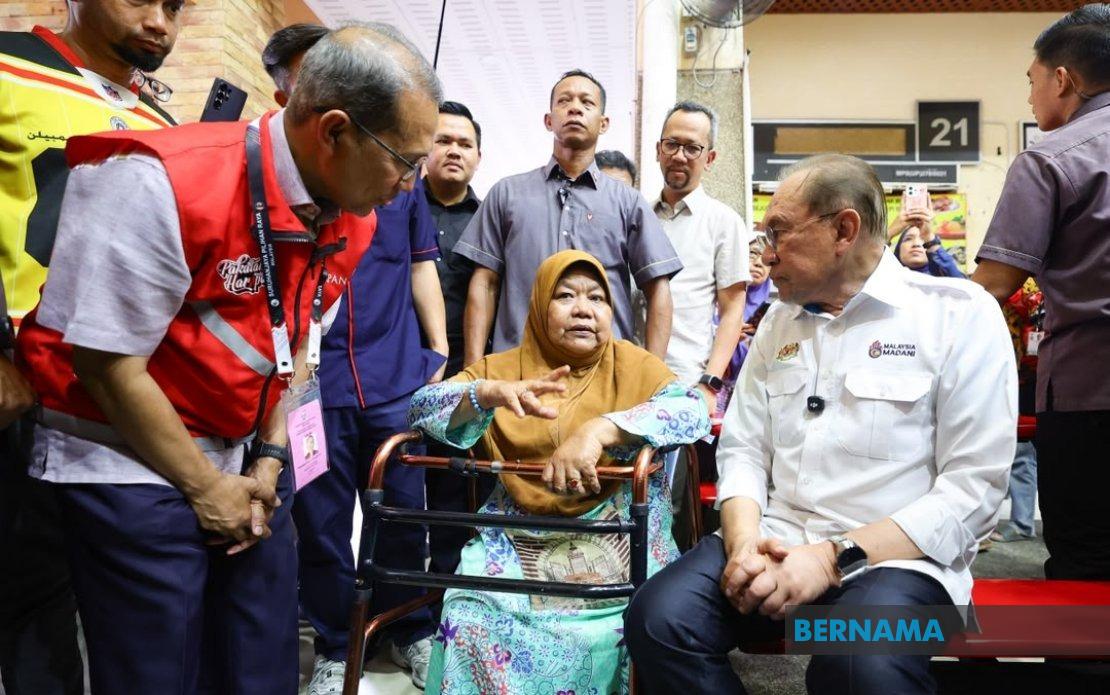
Prime Minister Datuk Seri Anwar Ibrahim visited Negeri Sembilan on Monday to campaign for Pakatan Harapan ahead of the state election on August 1, using infrastructure developments in the Ampangan area to demonstrate his coalition's governance philosophy. Speaking at a community engagement session in the constituency, Anwar underscored how the reciprocal river widening and deepening projects currently underway represent a model of development that prioritises both addressing practical problems and ensuring resources flow transparently to benefit ordinary people rather than enriching vested interests.
The river projects in Ampangan exemplify this approach, according to the Prime Minister. Beyond their primary function of mitigating flooding risks that have long plagued the area, these initiatives incorporate a resource recycling mechanism that generates revenue for maintaining and upgrading related infrastructure. Sand extracted during the deepening process is repurposed to fund ongoing maintenance and improvements to riverine areas, creating what amounts to a self-sustaining cycle that reduces reliance on external budget allocations whilst demonstrating fiscal prudence.
Anwar's emphasis on these projects reflects a deliberate campaign strategy to contrast PH's governing model with previous administrations that faced persistent allegations of mismanagement and resource diversion. By showcasing tangible infrastructure work coupled with transparent resource utilisation, the PH chairman seeks to convince Negeri Sembilan voters that his coalition has absorbed lessons from past governance failures and implemented structural safeguards. This messaging carries particular weight in the state, where development projects have historically been subject to public scrutiny regarding their equitable distribution and actual benefit to communities.
The Prime Minister further reinforced his integrity-centred governance theme by recounting his involvement in negotiating a hotel development project in Port Dickson. In that instance, he explained, project planning extended beyond mere commercial considerations to encompass the welfare of the surrounding fishing community, with deliberate provisions addressing educational opportunities and home improvements for local residents. This anecdote serves to illustrate his broader contention that development undertaken responsibly incorporates social dimensions and does not treat indigenous communities as peripheral to progress.
Anwar's visit underscores the strategic importance Pakatan Harapan attaches to the Negeri Sembilan election, which will determine the composition of the 36-seat state assembly. The coalition is mounting a comprehensive challenge, fielding candidates across all seats: sixteen from PKR, eleven from DAP, and nine from Amanah. This full-slate approach signals confidence in PH's capacity to expand its influence in the state whilst building momentum in the run-up to eventual federal contests.
The timing of the campaign event reflects the compressed election schedule. Early voting commenced on July 28, with general polling set for August 1, providing parties only days to crystallise voter preferences. For Pakatan Harapan, this condensed timeline necessitates rapid consolidation of messaging around core themes of integrity, transparent governance, and equitable resource distribution—precisely the narrative Anwar articulated during his Ampangan visit.
The Prime Minister's appeal during the community session carried an explicit call for voters to exercise discernment in their choice of representatives. Anwar urged constituents to select candidates of integrity and dignity across all ethnic communities, suggesting that trustworthiness rather than parochial considerations should guide voting decisions. This inclusive framing attempts to position PH as a multiethnic coalition committed to cross-community governance, contrasting implicitly with alternative political arrangements the electorate might consider.
For Malaysian and Southeast Asian observers, the Negeri Sembilan election holds broader significance as a test of whether anti-corruption and transparent governance messaging resonates with voters following periods of documented governance failures. The state represents a microcosm of national political dynamics: a region where development imperatives intersect with demands for accountability, where coalition management determines policy coherence, and where voter sentiment regarding institutional integrity shapes electoral outcomes. PH's performance in the state will provide indicators of whether the coalition's reform agenda maintains traction or has yielded to fatigue among the electorate.
Anwar's specific focus on river projects and resource recycling mechanisms also reflects a recognition that rural and semi-urban constituencies respond positively to concrete infrastructure evidence rather than rhetorical promises. The Ampangan location—a flood-prone area where residents experience tangible infrastructure problems—provides an ideal setting to demonstrate government action addressing immediate constituent concerns. By grounding his campaign messaging in specific, locally-relevant development initiatives, Anwar attempts to shift voter attention from abstract governance principles to observable improvements in daily livelihood conditions.
The Negeri Sembilan campaign represents a critical juncture for Pakatan Harapan's political trajectory. Expansion in the state would consolidate the coalition's position as a genuinely competitive national force capable of winning elections in diverse territorial contexts. Conversely, stagnation or contraction would invite questions about whether PH's reformist agenda has exhausted its electoral appeal or whether governance challenges have undermined confidence in coalition competence. Anwar's emphasis on demonstrable results—rivers widened, flood risks mitigated, resources transparently managed—suggests the coalition intends to ground its political case firmly in tangible governance outcomes rather than aspirational rhetoric about institutional transformation.

