The 16th Negeri Sembilan state election has officially commenced, with the nomination process underway simultaneously across eight centres throughout the state starting from 9 am. Prospective candidates have a one-hour window to lodge their nomination papers with the Returning Officer before the deadline at 10 am, after which the Election Commission will publicly announce the verified list of eligible contenders. This marks the beginning of what promises to be a closely contested race to determine which political coalition will lead Malaysia's central state for the next term.
Following the announcement of eligible candidates, the election calendar transitions into a structured 14-day campaign period that will run until July 31 at 11.59 pm, as stipulated by the Election Commission. Early voting is scheduled for July 28, providing voters with an alternative before the main polling day on August 1. This timeline was set into motion after the Negeri Sembilan State Legislative Assembly was dissolved on June 5 with the formal consent of the Yang Dipertuan Besar of Negeri Sembilan Tuanku Muhriz Tuanku Munawir.
Interest in contesting the 36 available state seats has been substantial, with the Election Commission reporting that 464 nomination forms had been distributed by yesterday, and 70 prospective candidates had already submitted their election deposits to formally confirm their participation in the race. This level of early commitment suggests competitive contests across multiple constituencies, reflecting the significance political actors attach to Negeri Sembilan's governance.
The electoral franchise in Negeri Sembilan is substantial, encompassing 889,490 eligible voters distributed across several categories. The voting population comprises 867,151 ordinary voters alongside 16,884 military personnel and their spouses, and 5,455 police personnel and their spouses. This mixed electorate means that candidates must appeal not only to civilian populations but also to uniformed service members and their families, who may have distinct concerns regarding security, employment conditions, and welfare provisions.
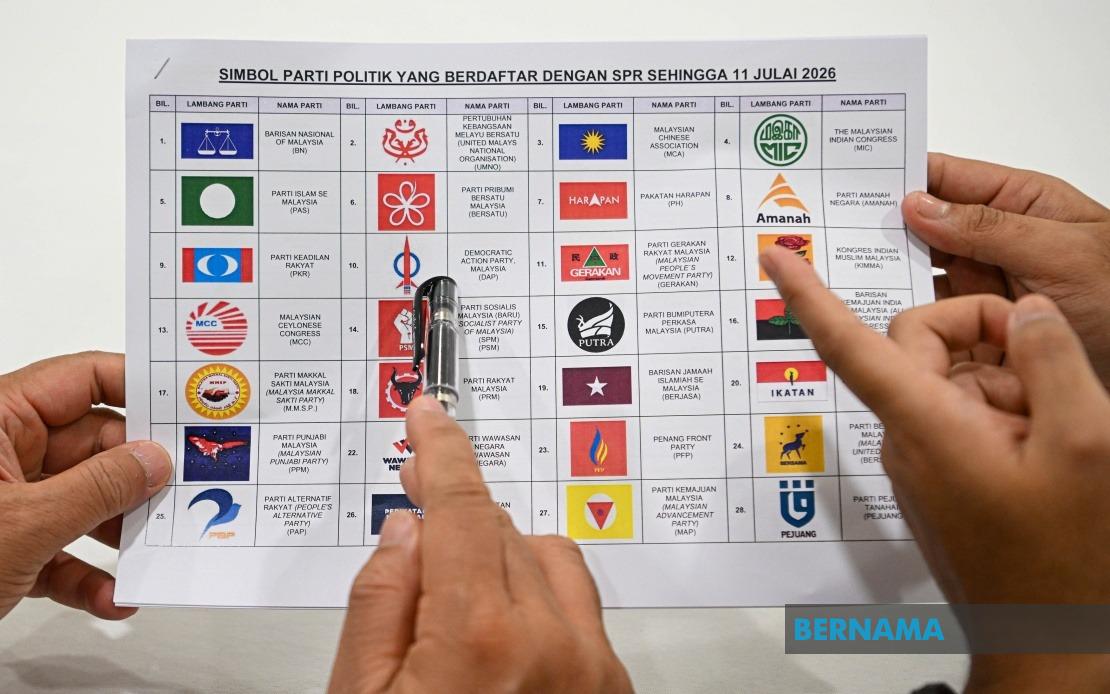
Pakatan Harapan has committed to contesting all 36 state seats, positioning itself as competing for a complete mandate to govern the entire state. Barisan Nasional has adopted a more selective strategy, fielding candidates in 25 seats, while Perikatan Nasional will contest 11 seats. Beyond these major coalitions, smaller parties including Parti Orang Asli Malaysia, the Socialist Party of Malaysia, and Parti Barisan Jemaah Islamiah Se-Malaysia will each field individual candidates, reflecting the diverse political landscape in Malaysian electoral competition. Notably, Parti Pribumi Bersatu Malaysia will contest 24 seats, including two positions where candidates from Parti Bersepakat Hak Rakyat Malaysia will run under the Bersatu banner, indicating coalition arrangements within the broader electoral framework.
The candidate slates unveiled by these various parties represent a mixture of experienced incumbents seeking to retain their seats and fresh political entrants attempting to establish themselves in state politics. This pattern of mixing seasoned legislators with newcomers is typical of Malaysian electoral strategy, as parties seek to balance continuity with rejuvenation and generational renewal. The specific composition of each party's slate will likely influence campaign narratives, with incumbent-heavy tickets emphasizing track records of service while candidate-heavy slates stress new ideas and fresh approaches.
Security arrangements for the election have been substantially enhanced, with the Negeri Sembilan police force deploying 4,800 officers and personnel to manage the electoral process. This deployment is supplemented by an additional 1,373 officers and personnel from the federal Bukit Aman headquarters, bringing the total security presence to over 6,100 law enforcement personnel. This sizeable commitment reflects the importance Malaysian authorities place on maintaining order and ensuring that the electoral process proceeds peacefully without disruption or violence.
Nomination day itself is anticipated to generate considerable activity, with large crowds of party supporters, political leaders, and senior figures expected to accompany their respective candidates to the eight nomination centres across the state. The Election Commission has issued explicit reminders that all candidates and their supporters must strictly adhere to electoral regulations and refrain from any provocative conduct that could disrupt the nomination process. These cautionary statements underscore the potential for electoral passion to occasionally translate into conduct that could compromise the integrity of democratic proceedings.
Weather conditions may influence turnout and activity levels on nomination day, with the Malaysian Meteorological Department forecasting generally fair conditions across most areas during morning hours, though Port Dickson and Seremban specifically are expected to experience rain. Afternoon forecasts indicate widespread thunderstorms across the state, which could affect the movement of campaign supporters and spectators between nomination centres. Such meteorological considerations, while seemingly minor, can impact electoral participation and the logistics of political mobilisation.
The outcome of this election holds significance beyond Negeri Sembilan itself, as state-level contests frequently serve as indicators of broader national political trends and voter sentiment. In the previous 2023 state election, Pakatan Harapan secured 17 of the 36 seats, with Barisan Nasional winning 14 and Perikatan Nasional capturing five. The changes in candidate selection, campaign messaging, and voter registration patterns since that election will likely prove decisive in determining whether these seat distributions shift significantly or consolidate.
For Malaysian observers monitoring state electoral dynamics and their relationship to federal-level politics, the Negeri Sembilan contest provides valuable data on how well the different coalitions can mobilise support and articulate their governing visions. The inclusion of smaller parties in contention adds complexity to potential post-election coalition negotiations, as winning parties may require working with minor political actors to secure legislative majorities. The campaign period ahead will reveal whether the major coalitions have strengthened their grassroots organisations and whether voter sentiment has shifted since the 2023 contest.

