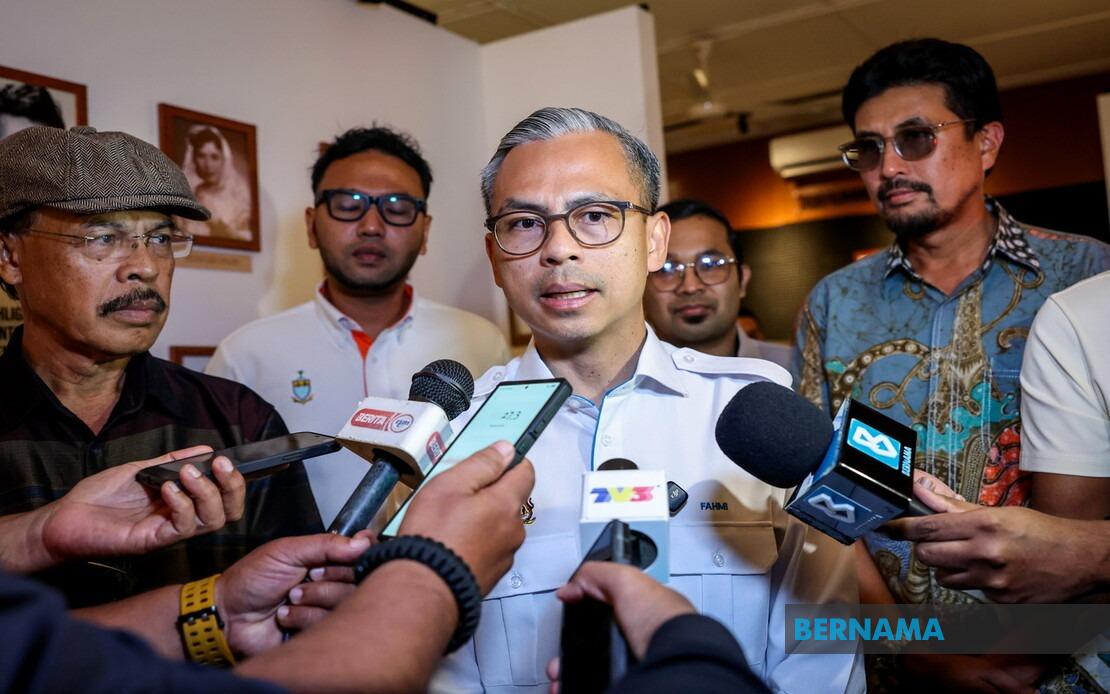
The battle against misinformation has intensified in Negeri Sembilan as voters head to the polls, with Communications Minister Datuk Seri Fahmi Fadzil sounding the alarm about the proliferation of false and misleading content spreading across digital platforms. Speaking at the Nordin Ahmad Karyawan Gallery in Bukit Mertajam, Fahmi urged residents to exercise heightened vigilance when consuming election-related information online, emphasising that verification through established news outlets should become a reflexive habit rather than an afterthought. The minister's intervention reflects growing concern that social media's speed and reach have outpaced public capacity for critical evaluation, particularly during politically sensitive periods when misinformation can distort electoral outcomes.
The warning arrives as the Malaysian Communications and Multimedia Commission has recorded a worrying pattern of false claims since campaigning began. The MCMC has received sixteen reports documenting fake news allegations and internet connectivity complaints, suggesting a coordinated or opportunistic effort to muddy the information landscape during a critical democratic moment. This data point underscores a larger regional trend visible across Southeast Asia, where election cycles routinely coincide with surges in disinformation. The timing is deliberate: voters operating under time pressure and heightened emotions are more susceptible to persuasive falsehoods, particularly those engineered to reinforce existing prejudices or anxieties about political opponents.
Fahmi highlighted a particularly insidious form of misinformation: the recycling of old content repackaged as breaking news. This technique exploits the algorithm-driven nature of social media feeds, where novelty signals override temporal accuracy. A photograph from a previous incident, a quote from years past, or even fabricated footage can accumulate credibility simply through repetition and social endorsement. Voters encountering such material may feel they have encountered corroboration when in fact they are witnessing viral amplification of the same falsehood across multiple accounts. The practice reveals how digital literacy deficits compound the problem: many Malaysians lack the skills to verify source dates, cross-reference claims, or identify manipulated imagery.
WhatsApp emerged as a particular vulnerability in Fahmi's analysis, with the minister noting that many users receive information through the encrypted messaging platform without pausing to authenticate its origin or accuracy. Unlike public social media platforms where misinformation can be tagged or flagged by multiple observers, WhatsApp groups operate as closed ecosystems where false claims can circulate with minimal external scrutiny. A claim forwarded through family or community chat groups carries an implicit endorsement from the sender, making recipients more trusting. This dynamic has proven particularly potent in Malaysian politics, where cultural respect for elder authority figures and strong in-group bonds can override rational scepticism. The medium itself—messaging rather than public posting—creates a psychological permission structure for sharing unverified claims.
Beyond cautioning citizens, Fahmi extended an appeal to Malaysia's media institutions to assume greater responsibility in real-time fact-checking. Mainstream news organisations, he suggested, should proactively identify and debunk viral claims circulating on social platforms, inserting authoritative corrections into the information stream before false narratives calcify. This reflects an emerging consensus among communications experts that passive fact-checking—waiting for users to seek verification—has proven insufficient. Instead, media outlets positioned as trusted institutions must actively contest misinformation in the spaces where it spreads, meeting audiences where they actually consume information rather than hoping they will voluntarily seek authoritative sources. Such intervention requires resource investment and rapid-response capability that many smaller news operations struggle to sustain.
The Negeri Sembilan state election presents a microcosm of challenges facing Malaysian democracy in the digital age. Unlike general elections that generate national media scrutiny, state-level campaigns often receive fragmented coverage, leaving information vacuums that misinformation eagerly fills. Voters in smaller states may have fewer trusted local news sources, making them more dependent on state-level or national outlets. Additionally, social media algorithms tend to prioritise sensational or emotionally provocative content, meaning extreme claims about candidates or policies gain disproportionate visibility compared to substantive policy discussion. The result is an information environment that poorly serves voters attempting to make informed electoral decisions.
The minister's intervention also reflects broader government concern about foreign interference in Malaysian elections. While Fahmi's statement focused on domestic misinformation, regional geopolitical competition has created incentives for external actors to amplify divisive narratives during Malaysian electoral contests. Bot networks and coordinated inauthentic behaviour originating outside the country can amplify homegrown misinformation, multiplying its reach and perceived legitimacy. Tracking such interference remains technically challenging, and public attribution remains rare, but analysts have documented patterns consistent with deliberate amplification campaigns during previous Malaysian elections.
Moving forward, Fahmi's remarks point toward an emerging strategy: distributing responsibility across multiple stakeholders. Citizens must develop stronger information hygiene practices, particularly when consuming content from intimate communication channels like WhatsApp. Media organisations must balance editorial efficiency with aggressive fact-checking. Platforms like Facebook, Instagram, and TikTok, which generate substantial revenue from Malaysian users, bear responsibility for moderating content on their networks and resisting financial incentives to amplify sensational falsehoods. Government communicators must provide frequent, accessible corrections without resorting to heavy-handed censorship that erodes democratic legitimacy.
The Negeri Sembilan campaign ultimately serves as a testing ground for how Malaysian society manages information integrity during democratic contests. Success in this state election could generate models applicable to future federal elections, where misinformation's impact would be magnified across a vastly larger electorate. Conversely, failure—allowing false narratives to drive electoral outcomes—would signal that Malaysia's information ecosystem remains vulnerable to manipulation. For voters in Negeri Sembilan and observers across Southeast Asia, the stakes extend beyond a single state contest to encompass the viability of democratic governance in an age of industrialised misinformation.

