The 16th Negeri Sembilan State Election scheduled for August 1 is shaping up to be one of Malaysia's most fragmented electoral contests, with competing political coalitions splintering constituencies into increasingly complex battlegrounds. The 36 available seats will be contested across a spectrum of configurations ranging from straightforward two-candidate races to unprecedented five-way contests, reflecting both a weakening of traditional two-party dynamics and the rising influence of smaller political movements in the state.
The transformation is stark when compared to the previous election cycle. While 27 of the 36 constituencies featured straight fights in 2023, this number has collapsed to just 11 seats this time around. Conversely, three-cornered contests have surged dramatically from seven seats to 21, representing a complete inversion of electoral patterns. This structural shift suggests that traditional coalition structures—particularly the longstanding competition between Pakatan Harapan and Barisan Nasional—are increasingly challenged by Bersatu and other splinter movements offering voters alternative political options. The emergence of two four-cornered races and, most notably, two five-way contests marks a departure from recent Malaysian electoral history and underscores the volatile nature of Negeri Sembilan's political landscape.
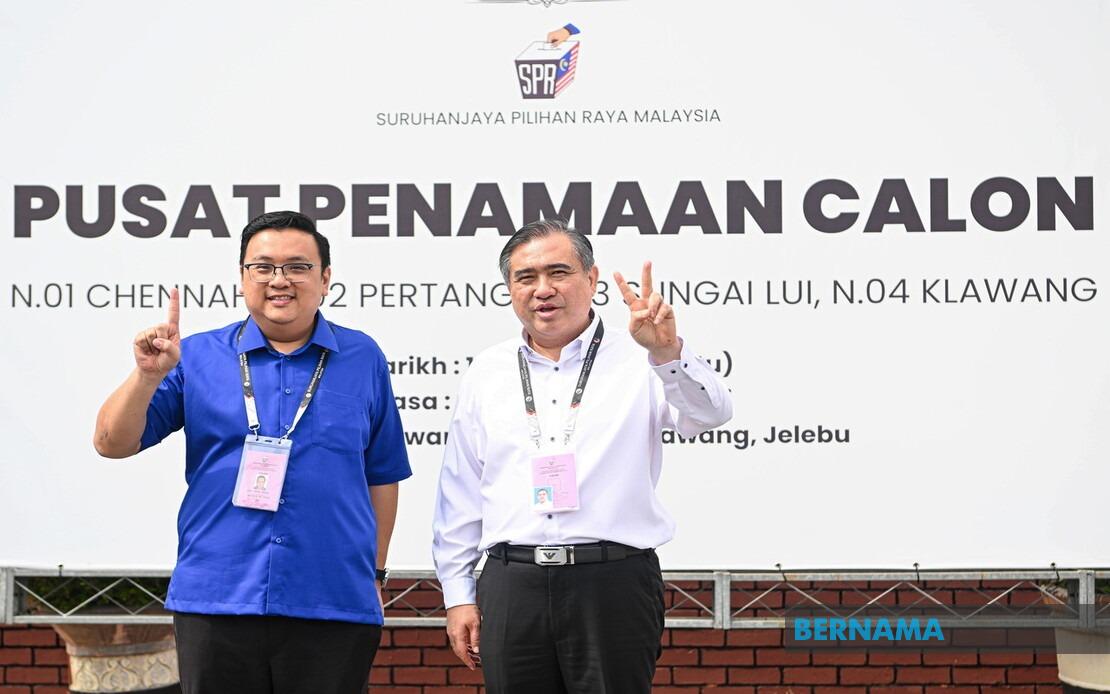
Several high-profile politicians will anchor straight fights in the state, showcasing the most competitive battlegrounds. In Chennah, DAP secretary-general and Transport Minister Anthony Loke will lead Pakatan Harapan's charge against Barisan Nasional's Siow Kong Choon in what amounts to a direct test of PH's urban coalition strength in the state. Simultaneously, the Rantau seat carries particular significance as UMNO deputy president and Foreign Minister Datuk Seri Mohamad Hasan defends his position against PH's Dr Azizul Hakim Mahdi, making this contest a bellwether for UMNO's performance and BN's capacity to retain traditional strongholds against an invigorated opposition.
The proliferation of three-cornered contests illustrates a deeper fragmentation within state politics, particularly the growing assertiveness of Bersatu as a force capable of splitting votes across multiple constituencies. In Linggi, the state's most prominent seat, incumbent Menteri Besar Datuk Seri Aminuddin Harun of PKR will navigate not only BN's Datuk Mohd Faizal Ramli but also Zamri Md Said of Bersatu, complicating the path to victory for the chief minister and potentially threatening PH's control of the state administration. Similarly, in Pertang, Negeri Sembilan UMNO Liaison Committee chairman Datuk Seri Jalaluddin Alias faces a divided opposition with both PH and Bersatu fielding candidates, theoretically improving BN's chances in what might otherwise be a competitive three-way race.
The Klawang constituency exemplifies how Perikatan Nasional is attempting to carve space within the state's competitive matrix. Danni Rais, son of veteran politician Tan Sri Rais Yatim and representing PN, will challenge incumbent Datuk Bakri Sawir of PH alongside Bersatu's Muhammad Adib Musa. This configuration suggests that PN sees opportunity in fragmenting seats held by PH incumbents, potentially capitalizing on voter dissatisfaction or attracting candidates with family political credentials that may still carry weight in certain constituencies.
The two four-cornered contests reveal the emergence of even more marginal political actors into state electoral proceedings. In Jeram Padang, incumbent BN candidate Datuk Mohd Zaidy Abdul Kadir will contend against PH's G. Manivannan, Bersatu's R. Sri Sanjeevan, and Parti Orang Asli Malaysia's Dayana Dal, demonstrating how Indigenous representation has begun gaining traction as a distinct electoral category. The Rahang seat similarly showcases the reach of smaller movements, with Parti Sosialis Malaysia's S. Thinagaran joining the traditional PH-BN-Bersatu competition, indicating that ideological alternatives continue to find niches even in state-level elections.
Most strikingly, two constituencies will feature five-cornered contests, a first for Negeri Sembilan in recent electoral history. The Nilai seat pits incumbent J. Arul Kumar of PH against BN's Lai Chien Kong, Bersatu's Datuk V. Saravana Kumar, Barisan Jemaah Islamiah Se-Malaysia's Zamani Ibrahim, and Independent candidate Omar Mohd Isa. This fragmentation creates scenarios where a winning candidate could potentially claim victory with less than 25 percent of the vote, fundamentally altering the dynamics of representation and legitimacy. Sri Tanjung presents an even more byzantine configuration with incumbent Datuk Dr G. Rajasekaran of PH facing BN's A. Achuthan, Bersatu's M. Leevineshwaraan, and two Independent candidates, Datuk A. Saravanan and Islah Wahyudi Zainudin, introducing unpredictability into what might traditionally have been a straightforward PH-held seat.
The democratization of candidacy reflected in these configurations has implications beyond Negeri Sembilan. The rise of Independent candidates and smaller parties suggests that voters or candidates themselves increasingly perceive genuine alternatives to established coalition structures, or that traditional gatekeeping mechanisms have weakened. This trend could presage broader shifts within Malaysian electoral politics if replicated across other states, potentially destabilizing the two-coalition framework that has dominated national politics since 2018.
The Election Commission has scheduled early voting for July 28, with polling day on August 1. A total of 889,490 electors are eligible to participate, comprising 867,151 ordinary voters, 16,884 military personnel and their spouses, and 5,455 police personnel. This substantial electorate will determine not only which coalition controls Negeri Sembilan's state assembly but also whether the trend toward electoral fragmentation represents a temporary phenomenon or signals a durable realignment within Malaysian state politics.
For constituencies where straight fights prevail, traditional coalition logic likely still applies, with supporters mobilizing along familiar party lines. However, in three-cornered and multi-candidate contests, the outcome becomes less predictable and more sensitive to localized factors, personality politics, and tactical voting decisions. The unprecedented number of five-way races introduces additional complexity, potentially advantaging well-organized ground operations and incumbent recognition while disadvantaging newcomers seeking to break through in fragmented contests. The Negeri Sembilan election will therefore serve as a crucial test of how Malaysian voters navigate an increasingly complex electoral landscape where traditional binary choices have fragmented into multifaceted competitions.

