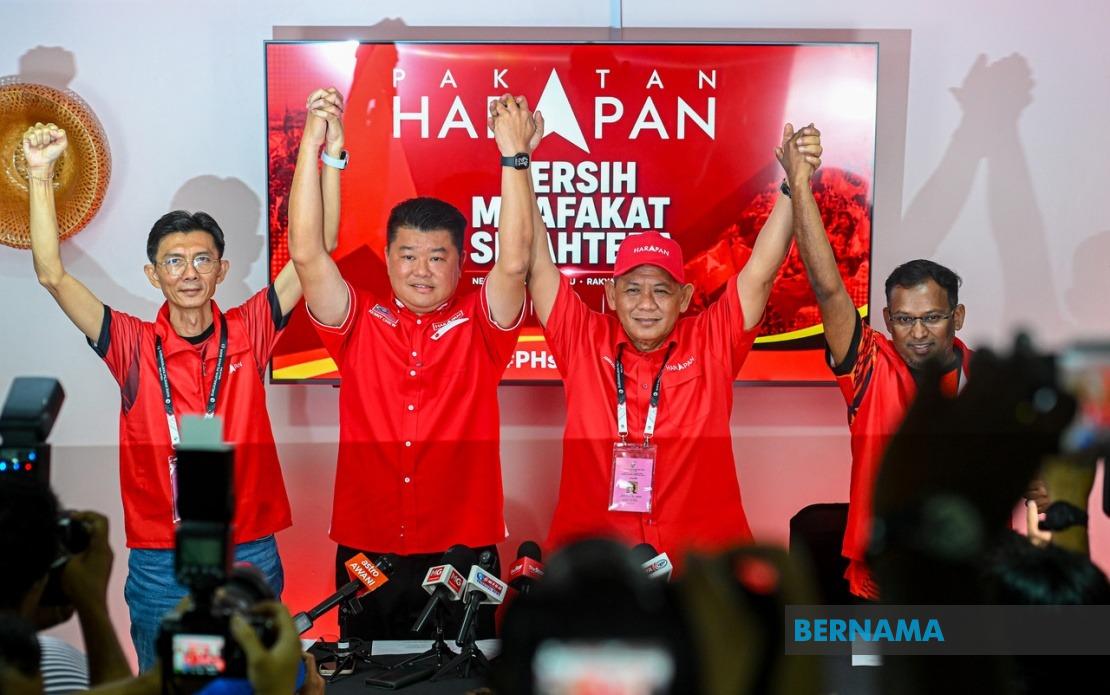
Negeri Sembilan's Pakatan Harapan leadership has moved decisively to dismiss suggestions of fractures within the coalition as voting approaches in the state election. Datuk Seri Aminuddin Harun, who serves as both menteri besar and PH chairman for the state, sought to reassure the public that the partnership remains solid despite recent chatter on social media questioning the commitment and unity of key party figures ahead of contests in five state constituencies within the Port Dickson parliamentary seat.
The timing of such denials carries particular weight in Malaysian electoral politics. When senior coalition figures feel compelled to publicly address rumours of internal disagreement, it typically reflects genuine concern that organisational cohesion—the bedrock of any political alliance—may be perceived as vulnerable. In Negeri Sembilan, where Pakatan Harapan has cultivated a growing political presence, any appearance of disunity could be exploited by opposition forces seeking to recapture ground lost in recent electoral contests.
Aminuddin's comments centred on resolving tensions surrounding the renomination of the Chuah state seat incumbent, Datuk Yew Boon Lye, an issue that surfaced prominently in online discussions and reportedly involved Port Dickson PKR deputy division chief Datuk Kenny Chiew Chi Kin. The menteri besar emphasised that such matters had been settled through internal mechanisms rather than left to fester publicly, a signal that party discipline and conflict resolution processes remain functional despite external perceptions.
The Chuah seat represents considerable symbolic importance within the Port Dickson parliamentary constituency. In the 2023 state election, Yew successfully defended his position against Perikatan Nasional challenger Tang Jay Son with a commanding majority of 6,298 votes, establishing his credibility as an electoral asset for the coalition. His retention as PH's candidate for the current election underscores the party's confidence in his ability to hold the seat, though the decision to renominate him apparently encountered some internal resistance that required careful management.
Chiew's position adds nuance to the coalition dynamics. As deputy division chief of the Port Dickson PKR constituency, he represents grassroots party structures that often feel marginalised when candidate selection decisions favour incumbents or established figures. Aminuddin's public acknowledgement of Chiew's service and his assurance that the deputy chief has pledged full support for all PH candidates suggests a deliberate effort to ensure that disappointed aspirants do not allow personal frustrations to undermine campaign efforts.
The coalition's strategic interest in five state seats—Chuah, Lukut, Sri Tanjung, Bagan Pinang, and Linggi—demonstrates the geographical spread of PH influence across the Port Dickson parliamentary zone. This distribution of candidates reflects both the coalition's ambition to consolidate electoral gains and the potential vulnerability inherent in fielding multiple candidates across interconnected constituencies. Strong performance in all five seats would significantly enhance PH's overall position in the state assembly, making unified campaign efforts essential.
Aminuddin, himself contesting the Linggi seat as PH's candidate, carries personal electoral stakes that reinforce his investment in presenting a picture of coalition harmony. When senior party figures stand for election while simultaneously managing coalition affairs, their electoral prospects become intertwined with perceptions of internal stability. Success in projecting unity can indirectly support individual campaign efforts by boosting broader coalition momentum.
The menteri besar's assertion that speculation had been deliberately generated by certain quarters to undermine PH's electoral positioning reflects a common Malaysian political narrative. Opposition actors, including both Barisan Nasional and Perikatan Nasional competitors, have clear incentive to amplify any real or perceived cracks within the coalition. The Port Dickson area has been a competitive zone, with BN's Pau Jeou Ching positioned to challenge Yew in Chuah, suggesting that opposition forces are actively seeking vulnerabilities to exploit.
Electoral timing adds pressure to coalition management. With early voting scheduled for July 28 and polling day set for August 1, the window for resolving internal tensions publicly has compressed significantly. Any perception that the coalition remains divided could suppress voter enthusiasm among PH supporters, who might question whether backing divided candidates represents a strategic choice. Conversely, demonstrating that internal disagreements have been processed and resolved can bolster supporter confidence that the coalition maintains organisational discipline.
For Malaysian and Southeast Asian observers, the Negeri Sembilan situation illustrates broader challenges facing multi-party coalitions in regional politics. In Malaysia's federal system, state-level coalitions must balance diverse party interests, accommodate regional factions, manage aspirational party members who compete for limited candidate slots, and project unified messaging to voters. When these elements conflict—as they inevitably do—how effectively coalitions navigate resolution directly influences electoral performance.
The Port Dickson parliamentary zone holds strategic importance within Negeri Sembilan's political economy and demographics. As a semi-urban area with manufacturing and service sector employment, it attracts voters concerned with cost of living, employment stability, and local infrastructure development. Coalition performance in this zone signals broader capacity to connect with suburban Malaysian voters who increasingly determine election outcomes across the peninsula.
PH's investment in projecting unity in Negeri Sembilan reflects recognition that the state represents genuine competitive ground rather than secure territory. Unlike some states where one coalition has established dominance, Negeri Sembilan remains genuinely contested, with multiple actors capable of winning multiple seats. This uncertainty necessitates disciplined campaign execution where internal disagreements cannot be allowed to distract from the core messaging required to attract voters.
Moving forward, the coalition's ability to successfully campaign in these five constituencies will provide a real-world test of whether the unity Aminuddin proclaimed can translate into sustained electoral performance. Voter decisions in Chuah, Lukut, Sri Tanjung, Bagan Pinang, and Linggi will ultimately determine whether internal management proved effective or whether underlying organisational tensions resurface. For PH, victory across all five seats would represent not merely electoral success but vindication of its internal conflict resolution mechanisms.

