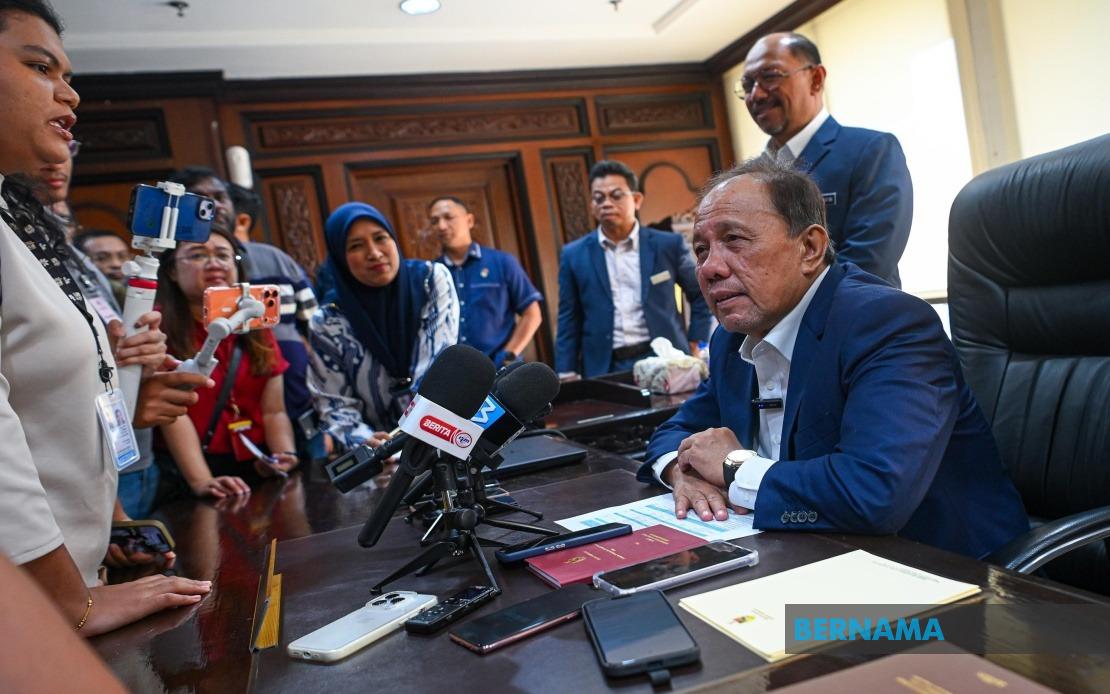
Negeri Sembilan's administration is preparing to reshape its executive structure by introducing Deputy Executive Council positions across several portfolios, according to Menteri Besar Datuk Ismail Lasim. Speaking at Wisma Negeri on August 4, the newly installed leader outlined plans to distribute additional responsibilities among state assemblymen from the ruling coalition, signalling an effort to deepen governance capacity as the administration takes hold across the state.
The proposal reflects a pragmatic response to structural constraints within Negeri Sembilan's cabinet system. With a finite number of full Exco appointments available under the state's constitutional framework, the creation of deputy positions would allow more assemblymen to participate in policy-making and administration without requiring major constitutional amendments. This approach resembles administrative models adopted in other Malaysian states seeking to balance political representation with functional governance demands.
Datuk Ismail emphasized that the deputy positions would be distributed across portfolios considered strategically important to the state's development agenda, though he did not specify which areas would receive this treatment. The deliberate vagueness suggests ongoing negotiations within the ruling coalition—comprising Barisan Nasional, PAS, and Parti Wawasan Negara—over how responsibilities should be allocated. Such coalition politics often require careful calibration to ensure all partners feel adequately represented in the executive hierarchy.
The Menteri Besar acknowledged that the precise number of deputy positions remains undetermined, underscoring that this represents a novel institutional experiment for Negeri Sembilan rather than a predetermined blueprint. This incremental approach allows the government to pilot the structure and adjust based on practical experience before potentially expanding or consolidating it further. For observers of Malaysian state administration, this represents an interesting case study in how coalition governments innovate to accommodate multiple partners without compromising administrative coherence.
Parallel to the deputy position initiative, Datuk Ismail indicated that Senior Exco appointments also remain under review. While the state constitution permits such senior designations—typically reserved for the most senior cabinet members—the timing and distribution of these posts has not been finalized. This dual restructuring suggests the incoming administration intends to create a more layered executive hierarchy than its predecessor, potentially offering clearer lines of seniority and responsibility within the cabinet.
The full Exco line-up announcement was expected to materialize by August 7 or August 9 at the latest, providing assemblymen and the public with clarity on the actual portfolio assignments within this new structure. The delay in announcement itself reflects the complexity of coalition negotiation in Negeri Sembilan, where Barisan Nasional's 18 seats, combined with Perikatan Nasional's seven seats, produce a two-thirds majority. Yet internal dynamics across these coalition partners—particularly balancing BN's dominance against the interests of PAS and Wawasan—require careful political choreography.
Datuk Ismail, the assemblyman for Juasseh, began his tenure formally on August 4, arriving at the Menteri Besar's Office at 9 am to commence official duties. His arrival was marked by the customary welcoming ceremony involving State Secretary Datuk Mohd Zafir Ibrahim and departmental heads, establishing the procedural formality that characterizes Malaysian state administration transitions. He had been sworn in before Yang Dipertuan Besar Tuanku Muhriz Tuanku Munawir at Istana Besar Seri Menanti on August 2, completing the constitutional requirements for his appointment.
The Negeri Sembilan state election results that enabled this transition reflected a decisive swing toward the Barisan-Perikatan alliance. The BN coalition captured 18 of 36 state assembly seats, while Perikatan Nasional secured seven, together commanding the overwhelming supermajority necessary to form government without further negotiations. Pakatan Harapan, the previous administration's base, retained 11 seats, providing opposition representation but limited capacity to challenge government initiatives through legislative procedures.
For Malaysian political observers, Negeri Sembilan's executive restructuring carries implications beyond the state itself. The innovation of formalizing deputy exco positions addresses a recurring tension in Malaysian state governance: the desire to include more lawmakers in decision-making without violating constitutional constraints on cabinet size. Should the Negeri Sembilan model prove administratively effective, other states—particularly those with coalition governments—might adopt similar frameworks. This could gradually reshape how state governments in Malaysia distribute executive power and responsibility.
The timing of these institutional changes also matters within Malaysia's broader political context. With state administrations increasingly serving as proving grounds for governance innovations, Negeri Sembilan's approach to coalition management and administrative structuring will be watched by other state governments navigating similar multi-party arrangements. The success or difficulties encountered in implementing deputy exco positions could influence how future state governments, particularly those formed by coalitions rather than single-party dominance, organize their executive functions.
For Negeri Sembilan's citizens and business community, these administrative adjustments promise either improved responsiveness across multiple governance areas or potential confusion if role boundaries between exco and deputy-exco holders become muddled. The effectiveness of the new structure will largely depend on how clearly the Menteri Besar's office defines responsibilities and ensures coordination across this expanded executive tier. The coming months will reveal whether this innovation strengthens state administration or creates additional bureaucratic layers that complicate decision-making processes.

