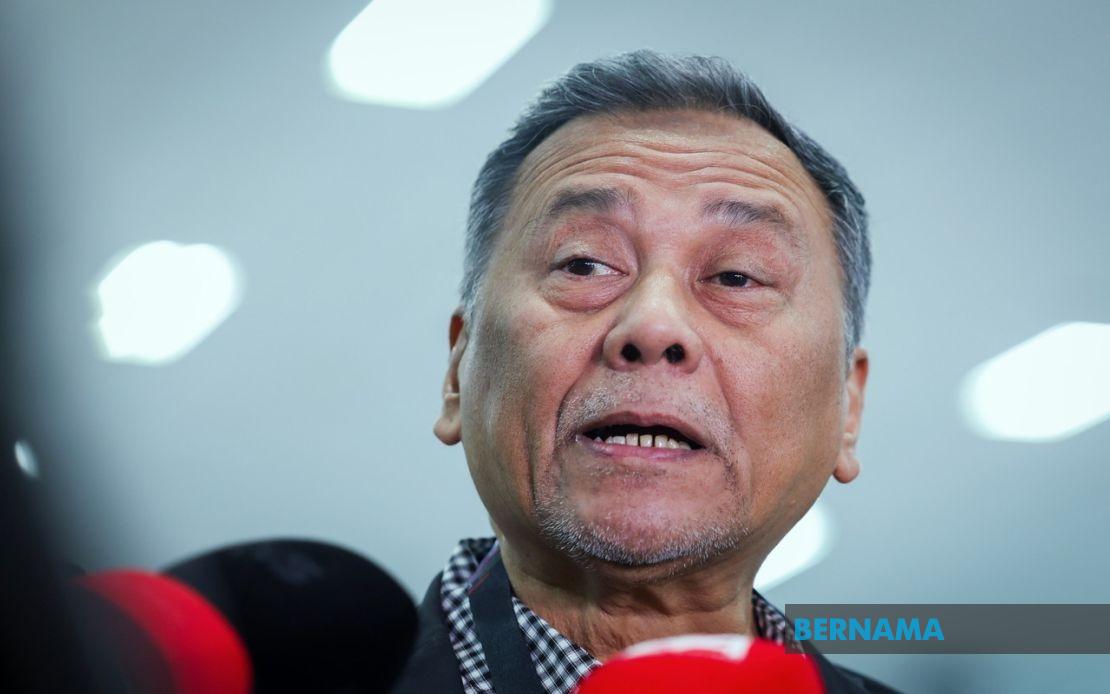
The Malaysian Election Commission has given the all-clear on electoral propriety ahead of polling day in Negeri Sembilan, with its chairman Datuk Seri Ramlan Harun confirming that no official complaints of money politics or bribery have been lodged during the campaign period that began on July 18. The statement, delivered during an inspection of voting preparations at the Official Vote Counting Centre in Dewan Perdana Tampin on July 31, provides cautious reassurance to voters and observers that the election has proceeded without the serious corruption allegations that have occasionally marred Malaysian campaigns in the past.
Ramlan's remarks distinguish between the types of infractions the Election Commission itself handles and those that require intervention from specialised anti-corruption bodies. While the EC has maintained its own operational watch, the chairman stressed that allegations of vote-buying or bribery—classified as corruption offences—fall strictly under the remit of two agencies: the Malaysian Anti-Corruption Commission (MACC) and the Royal Malaysian Police (PDRM). This clarification underscores the institutional division of labour in Malaysia's electoral framework, where the EC focuses on procedural compliance and the conduct of polling, while dedicated law enforcement units investigate criminal conduct linked to elections.
Despite the absence of formal corruption complaints, the election campaign was not entirely free of violations. The EC recorded 267 election offences across the campaign period, a figure that reflects routine breaches of electoral regulations rather than organised vote-buying schemes. These minor infractions—ranging from improper campaign materials to procedural irregularities—are within the EC's purview and have already prompted corrective action. The distinction between these procedural lapses and substantive corruption allegations reveals a campaign that, while monitored closely, has not descended into the kind of systematic money politics that would normally trigger the attention of MACC or the police.
The Negeri Sembilan election represents one of several state polls Malaysia has conducted in recent years, and the relative calm surrounding its conduct reflects lessons learned from previous elections and enhanced oversight mechanisms. For observers tracking electoral integrity in Southeast Asia, the absence of vote-buying complaints in a state election involving nearly 860,000 voters suggests that Malaysia's election administration, whatever its critiques on other fronts, has maintained reasonable control over the most egregious forms of electoral malpractice. This does not necessarily mean none occurred—underreporting and difficulty in detecting such activities remain challenges—but rather that no pattern serious enough to generate formal complaints emerged.
Logistical readiness became a parallel concern as polling day approached. Ramlan announced that all 859,760 registered voters in Negeri Sembilan, including 7,391 postal voters, would be accommodated across polling centres opening at 8 am. The state's 36 State Legislative Assembly seats were at stake. Behind this voter figure stood a substantial election machinery: 15,344 election officers deployed to ensure operations remained orderly and transparent. This army of electoral workers, stationed across the state's polling stations, represents both the administrative heft required to run a credible election and the distributed supervision that makes large-scale vote-buying operationally more difficult, though not impossible.
The Commission's confidence in a smooth voting process rested on detailed preparation that extended to the mechanics of ballot security and counting. Officials had already begun inspecting ballot boxes and setting up counting procedures at the Tampin Perdana Hall and parallel locations across Negeri Sembilan. These measures, conducted in advance and under supervision, aim to eliminate vulnerabilities in the ballot chain and reduce opportunities for fraud. For Malaysian voters accustomed to procedural variations across state elections, such visible preparation signals competence, even if some may question whether the safeguards are sufficient given Malaysia's political environment.
Projected timelines for result announcement reflected the EC's assessment that procedures would proceed without major hitches. Ramlan expected preliminary results by 10 pm on polling day, with complete tallies before midnight. This compressed timeframe, possible only when counting proceeds efficiently and without disputed ballots or recounts, indicated the EC's expectation that the election would be straightforward to administer. In the context of recent Malaysian elections, where some contests have stretched counting into the following morning, such optimism suggested confidence that the Negeri Sembilan campaign would avoid the complications that sometimes arise when results remain uncertain.
The absence of vote-buying allegations in Negeri Sembilan offers a useful baseline for assessing electoral health in Malaysia more broadly. Federal elections and the more populous state contests in Selangor and Johor have occasionally drawn scrutiny for money politics allegations, particularly in constituencies where competition is fierce. That a state election, even one of moderate size, proceeded without formal corruption complaints suggests either that such practices have genuinely declined or that they operate below the visibility threshold. The reality likely involves both factors: some abatement through enforcement, combined with greater sophistication in methods that escape detection or formal complaint.
For observers in the region, Malaysia's electoral administration occupies an interesting middle position. It commands resources and institutional capacity far exceeding those of several Southeast Asian neighbours, yet it operates within a political landscape where allegations of impropriety, whether substantiated or not, remain routine. The Negeri Sembilan election's apparent cleanliness on the vote-buying front does not settle broader debates about Malaysian electoral fairness, which encompass gerrymandering, media access, and the role of money in campaigns through legal channels. However, it does indicate that at least on the most visible and criminally prosecutable form of electoral corruption, oversight mechanisms appear to be functioning.
The Election Commission's transparency in disclosing both the absence of corruption complaints and the 267 minor offences recorded reflects a communication approach aimed at building public confidence. By distinguishing between the types of problems encountered and explaining which agencies handle which issues, Ramlan attempted to position the EC as a competent administrator managing a complex undertaking. Whether voters viewed such statements as reassuring or merely procedural depended on their prior trust in Malaysian institutions—a variable that extends well beyond any single state election.
As the Negeri Sembilan polls moved toward voting day, the election commission's readiness assessments and cleanliness assurances set expectations for what observers should monitor. Real-time scrutiny of voting procedures, transparency in counting, and the subsequent investigation of any allegations would ultimately determine whether the campaign's apparent integrity held through to a credible result. The EC's preliminary optimism provided a baseline; verification by independent observers and political parties would complete the picture.

