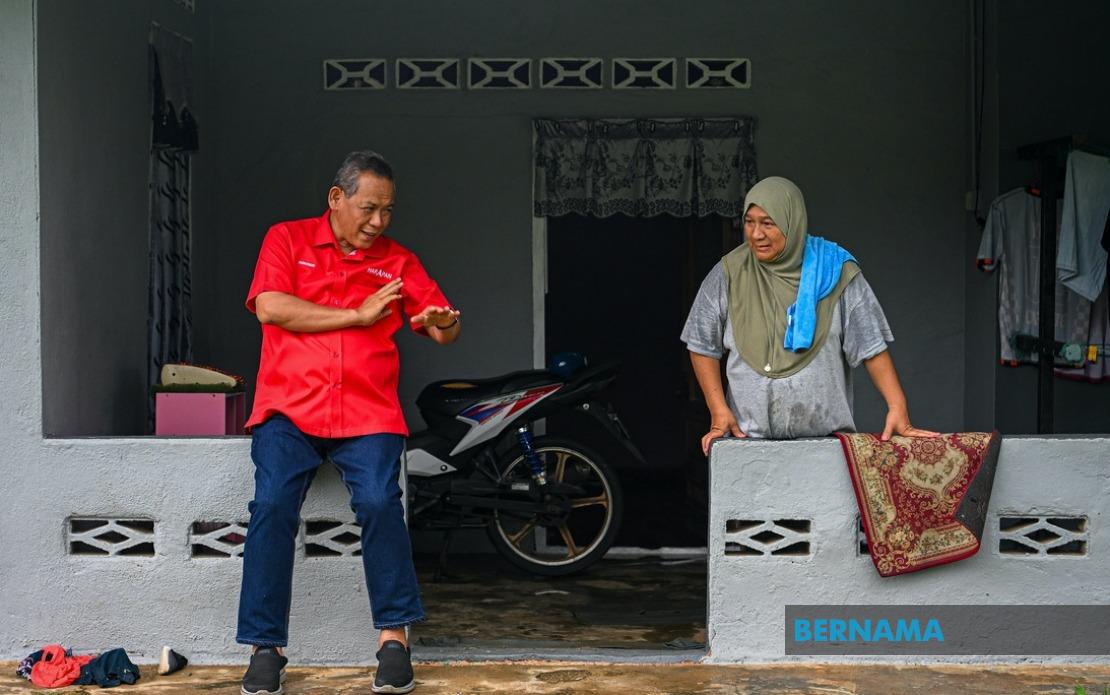
Pakatan Harapan is making administrative competence and clean governance the centrepiece of its election strategy in Negeri Sembilan, betting that Menteri Besar Datuk Seri Aminuddin Harun's nearly two-year tenure and scandal-free record will persuade voters to return the coalition to power. The approach reflects a deliberate pivot away from grand policy announcements toward emphasizing stability and trustworthiness—qualities PH believes distinguish it from opposition challengers in an election that will test the coalition's ability to consolidate recent electoral gains.
According to Pakatan Harapan's election director Datuk Seri Amirudin Shari, who doubles as Selangor's Menteri Besar, the message has gained traction in the first phase of campaigning. Party workers report strong grassroots enthusiasm for Aminuddin's leadership model, which combines fiscal discipline with service delivery across healthcare, education, and rural development. Amirudin emphasized that voters in his interactions have expressed satisfaction with the status quo rather than articulating demands for radical change—a finding that suggests complacency among the electorate or, alternatively, genuine contentment with the current administration's performance.
The absence of major corruption allegations or administrative failures has become a selling point for PH in Negeri Sembilan, marking a sharp contrast with the political turmoil that characterized earlier state administrations. Amirudin stressed that Pakatan Harapan's governance from its inception has avoided the scandals that undermined public confidence in previous governments, implying that continuity under Aminuddin offers voters predictability and institutional competence. This messaging strategy appears designed to appeal to middle-class professionals and business owners who prioritize economic stability and institutional credibility over ideological positioning.
Beyond Aminuddin's personal standing, Pakatan Harapan is relying on its organizational machinery to translate grassroots sentiment into votes. The coalition's structure across Negeri Sembilan—comprising PKR, DAP, Amanah, and allied partners—has consolidated operations in recent months to ensure effective ground presence in all 36 state constituencies. This investment in organizational capacity reflects lessons learned from previous elections where superior machinery proved decisive, particularly in marginal seats where victories were decided by narrow margins.
The coalition is also leveraging Prime Minister Datuk Seri Anwar Ibrahim's national profile as an asset in the campaign. Amirudin cited the Johor state election as evidence that public confidence in Anwar's federal leadership translates into support for PH candidates at the state level, suggesting that federal-state political dynamics will play a material role in the outcome. This connection between national government performance and state-level electoral fortunes means that any deterioration in public perception of federal policies—whether economic or social—could undermine PH's campaign momentum in Negeri Sembilan.
Partly offsetting these advantages is Pakatan Harapan's need to articulate a forward-looking agenda beyond governance credentials. The coalition plans to unveil a manifesto combining existing initiatives with fresh proposals aimed at sustaining development and strengthening household purchasing power throughout Negeri Sembilan. The emphasis on economic growth and people-centred policies reflects awareness that voters, despite current satisfaction, will expect visible improvements in living standards, employment opportunities, and public infrastructure over the coming years.
The electoral context shapes both PH's confidence and vulnerabilities. In the 2023 state election, Pakatan Harapan secured 17 of 36 seats, providing a workable but not commanding majority. Barisan Nasional captured 14 seats while Perikatan Nasional claimed five, leaving the opposition fragmented but capable of mounting targeted challenges in specific constituencies. The distribution of seats means that PH's hold on power, while real, is not immune to swing dynamics, particularly if either opposition bloc successfully consolidates support in marginal areas.
Demographic changes and voter registration patterns will influence the campaign's trajectory. With approximately 889,490 registered voters eligible to participate—comprising 867,151 ordinary voters plus military and police early voters—the election encompasses a substantially enlarged electorate compared to previous cycles. This expansion could benefit different parties differently depending on where new voter concentrations emerge and how effectively campaigns mobilize previously unengaged populations. Early voting scheduled for July 28 precedes the main polling day on August 1, a timeline that requires campaigns to build momentum quickly.
The decision to dissolve the state assembly on June 5 triggered this election cycle, with the campaign period compressed relative to some expectations. For opposition parties, this compressed timeline presents both challenge and opportunity: challenge in that less time exists to shift narrative momentum, but opportunity in that any unpopular government decisions made shortly before dissolution could still animate voter dissatisfaction. Pakatan Harapan's strategy assumes that the early campaigning period will establish a positive narrative frame that persists through voting day despite any late-stage developments.
Regionally, the Negeri Sembilan election carries significance beyond the state's borders. The result will signal whether Pakatan Harapan has consolidated support in the critical central corridor linking Selangor and the federal capital, or whether opposition movements are successfully mobilizing in territories PH had assumed were secure. A decisive PH victory would reinforce the coalition's position heading toward potential federal-level developments, while a narrower result or surprise opposition gains could embolden challengers and complicate Anwar's political calculations at the national level.
For Malaysian voters observing this contest, the election offers a test case in whether governance quality and administrative competence—rather than partisan ideology or personality-driven politics—can sustain electoral coalitions over successive election cycles. Pakatan Harapan's gamble that Aminuddin's record of scandal-free, service-oriented leadership will overcome any voter appetite for change reflects confidence that electoral politics in Malaysia is gradually maturing toward emphasis on institutional performance. The August 1 result will clarify whether that confidence is warranted or whether deeper currents of voter sentiment remain undetected by the campaign's grassroots assessments.

