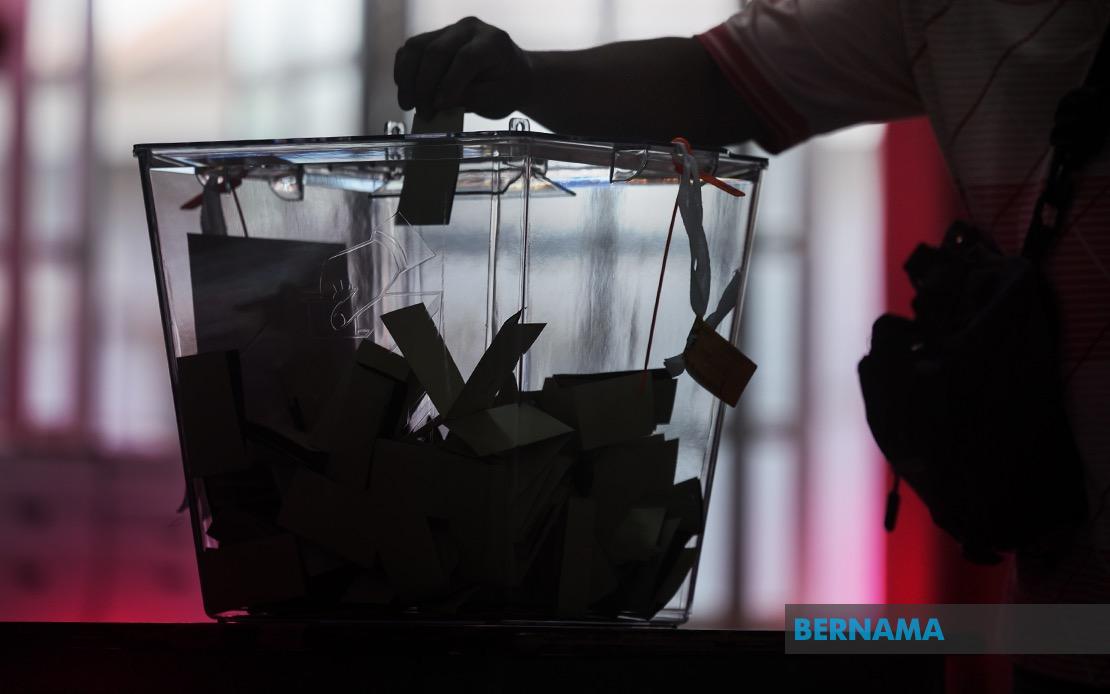
Negeri Sembilan will conduct early voting on July 28 across 38 polling centres, with all facilities opening at 8 am but closing at different intervals throughout the day depending on location and voter eligibility. The staggered closure arrangement, outlined in a Federal Government Gazette dated July 23, creates three distinct waves as the election machinery prepares for the 16th state legislative assembly election on August 1. This phased approach reflects the logistical demands of managing early voting for security personnel and their dependents across the sprawling state.
The first batch of 18 early polling centres will shut down at noon, creating the earliest closure window. These facilities are distributed across 17 state constituencies—Chennah, Pertang, Jeram Padang, Lenggong, Nilai, Seri Menanti, Johol, Labu, Rahang, Rantau, Kota, Chuah, Lukut, Bagan Pinang, Linggi, Gemas, and Gemencheh. The locations themselves reflect the security forces' presence across the state, housed within police headquarters, individual police stations, and the 508th Army Reserve Regiment at Jalan Rasah Camp. By concentrating these early closures at military and police installations, electoral officials can efficiently process the voting completion before midday.
Two additional centres warrant separate mention within the early voting schedule. The polling facilities in Bahau and one location in Paroi will remain open two hours longer, closing at 2 pm. This intermediate timing suggests these constituencies may accommodate slightly larger volumes of early voters or serve as regional hubs where security personnel from surrounding areas congregate. The rationale for extending operations until 2 pm appears to address specific operational needs in these districts without extending to full afternoon operations.
The majority of early voting centres—18 in total—will maintain operations until 5 pm, providing the longest voting window for eligible early voters. These facilities span considerably across the state landscape: Repah, Gemas, Sri Tanjung, Linggi, Rantau, Chembong, Paroi, Rahang, Bukit Kepayang, Pilah, Sikamat, Temiang, Nilai, Serting, Klawang and Sungai Lui each host one centre, while Bagan Pinang operates two. The extended closing time at these locations may indicate they process the bulk of early voting traffic or serve constituencies with greater concentration of military and police personnel.
The early voting arrangement caters specifically to 16,884 military personnel and their spouses, alongside 5,455 police officers—a combined total of 22,339 individuals who require ballot access before the general polling day. This substantial bloc of voters necessitates dedicated early voting infrastructure, reflecting standard practice in Malaysian elections where security forces are granted advance voting opportunities due to operational requirements on polling day itself. The military and police contribution represents a meaningful segment of the state's electorate and their voting behaviour has historically influenced results.
When the main polling exercise unfolds on August 1, the machinery scales dramatically upward. A total of 395 polling centres will open their doors from 8 am through 6 pm across the state, utilising educational institutions, community facilities, tertiary institutions, sporting venues, and public gathering spaces. This massive expansion from the 38 early voting centres demonstrates the substantial election administration required for the full electorate participation. The venues themselves—schools, halls, colleges, and sports complexes—represent the institutional backbone of Malaysian electoral infrastructure.
The broader voting population engaging on August 1 comprises 867,151 regular voters eligible to participate in selecting new state representatives. This figure underscores Negeri Sembilan's significance as a mid-sized Malaysian state with considerable political weight, though dwarfed by larger states like Selangor or Johor. The voter rolls have likely expanded since the previous 2023 state election, reflecting natural population growth and new voter registration among eligible citizens.
The dissolution of the Negeri Sembilan State Legislative Assembly on June 5 formally triggered this electoral cycle, approved by Tuanku Muhriz Tuanku Munawir, the Yang Dipertuan Besar of Negeri Sembilan. This constitutional process represents the standard mechanism for returning government authority to the electorate following the expiration or early termination of a legislative term. The ceremonial approval by the state's constitutional ruler carries ceremonial and constitutional significance within Malaysia's constitutional monarchy framework.
The outgoing assembly reflected a fragmented political landscape following the 2023 state election results. Pakatan Harapan secured dominance with 17 seats from the 36-seat chamber, maintaining a working majority though without overwhelming parliamentary control. Barisan Nasional captured 14 seats, positioning itself as the principal opposition force. Perikatan Nasional's five seats granted it meaningful parliamentary presence and potential kingmaker status in closely contested legislative scenarios. The upcoming election will test whether these power dynamics persist or whether the political terrain has shifted among Negeri Sembilan's voting population.
For Malaysian observers and particularly those in Negeri Sembilan, this early voting arrangement represents the practical expression of how state electoral commissions balance competing demands: accommodating security personnel whose duties may prevent standard polling participation, managing the logistical complexity of staggered voting operations, and ensuring administrative efficiency across geographically distributed constituencies. The three-wave closure structure reflects months of planning by electoral authorities coordinating with military and police leadership to identify likely early voter concentrations and deploy resources accordingly. The system's success depends on clear communication to early voters about their respective centre closure times, accurate identification of eligible security personnel, and smooth administrative processing throughout the day.

