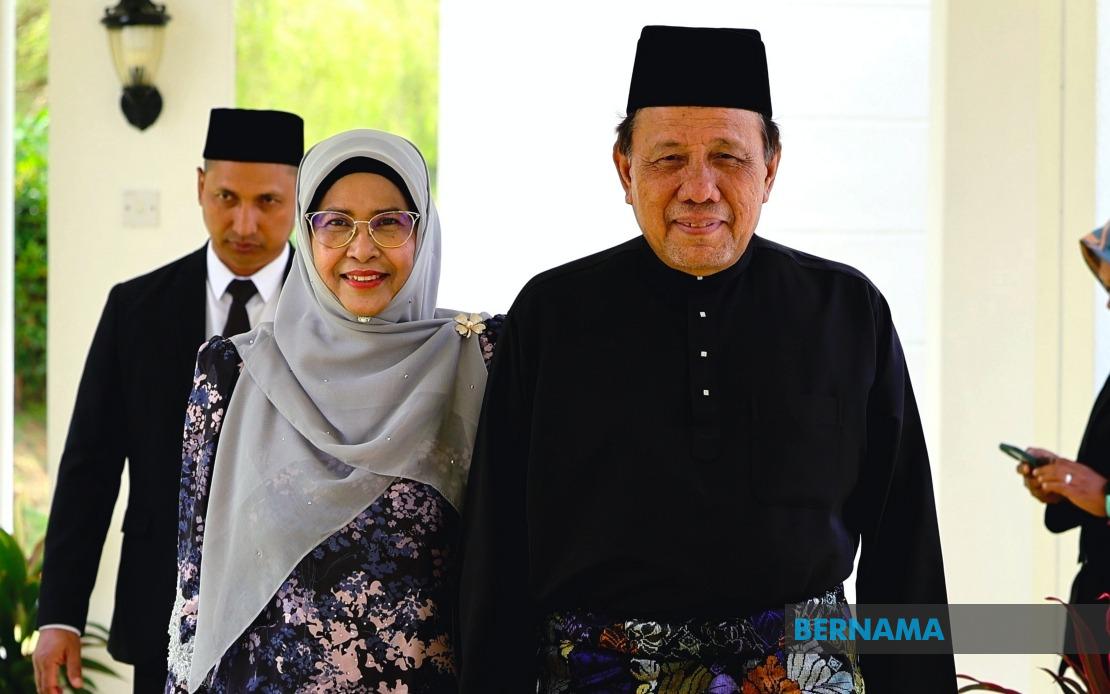
Negeri Sembilan's newly appointed Menteri Besar Datuk Ismail Lasim announced on August 2 that the state government would observe the following day as an occasional public holiday, a decision framed as an appreciation gesture toward the people of the state and all stakeholders who participated in the smooth running of the 16th state election, which had concluded just hours earlier. The announcement was made during Ismail's first press conference in his new role, held in Kuala Pilah shortly after his formal swearing-in ceremony before Tuanku Muhriz Tuanku Munawir, the Yang Dipertuan Besar of Negeri Sembilan.
The timing of the public holiday decision reflects a common practice in Malaysian state politics whereby newly elected administrations seek to build goodwill during their initial days in office. By granting citizens a day of rest, the Negeri Sembilan government signalled recognition of the effort expended during the election campaign and voting process. Ismail specifically cited the fatigue experienced by many across the state, suggesting that the August 3 holiday would provide a necessary respite for the general population following the intensity of electoral activity.
Ismail, aged 67, formally took his oath of office before the Yang Dipertuan Besar at Istana Besar Seri Menanti in Kuala Pilah. His appointment marked the conclusion of the post-election government formation process in Negeri Sembilan. In his remarks, Ismail expressed gratitude to Tuanku Muhriz for granting royal consent not only to his appointment as Menteri Besar but also for endorsing the special holiday proclamation. This emphasis on royal blessing underscores the constitutional monarchy's continuing role in state governance, particularly in the formal appointment of chief executives following electoral processes.
The 16th Negeri Sembilan state election, held on August 1, produced results that enabled two major political coalitions to govern the state conjointly. Barisan Nasional secured 18 seats in the State Legislative Assembly, while Perikatan Nasional won seven seats, together yielding a combined total of 25 seats—sufficient to command a two-thirds majority in the legislative chamber. This outcome provided both coalitions with substantial parliamentary strength to implement their governance agenda without reliance on independent assemblymen or fragmented opposition support.
The election itself involved 36 state legislative seats, with a total of 103 candidates contesting across various constituencies. The scale of the contest reflected the significance of state-level politics in Negeri Sembilan, where voters were selecting representatives across a geographically dispersed electorate spanning multiple parliamentary divisions. The successful completion of voting and counting procedures without significant disruption contributed to the government's framing of the election as a well-executed democratic exercise deserving of celebration.
Barisan Nasional's dominant showing with 18 seats positioned the coalition as the principal governing force within the state administration. This result continued Barisan Nasional's stronghold in Negeri Sembilan, a state that has historically leaned toward the coalition since Malaysia's independence. The party's electoral machinery, which includes the United Malays National Organisation (UMNO), Malaysian Chinese Association (MCA), and Malaysian Indian Congress (MIC), proved effective in mobilising voters across diverse communities within the state.
Perikatan Nasional's acquisition of seven seats, whilst substantially fewer than Barisan Nasional's tally, nonetheless provided the alliance with meaningful representation within the state legislature. This distribution of seats reflected the complex political dynamics across Negeri Sembilan's constituencies, where different regions exhibited varying degrees of support for the two major coalitions. The opposition's capacity to win seats demonstrated that despite the coalitions' commanding position, pockets of electoral contestation remained.
The decision to declare a public holiday carries implications beyond mere symbolic gestures. It provides the newly formed government with an opportunity to reset the political atmosphere following the conclusion of what are typically contentious and divisive electoral campaigns. Public holidays following elections serve to punctuate the electoral period as a discrete event, allowing both winners and losers time to recalibrate and reorient themselves toward the governance phase. For Negeri Sembilan's population, the holiday offered practical relief from the disruptions inevitably associated with election-related activities.
For Malaysian observers of state-level politics, the Negeri Sembilan outcome and the subsequent formation of government illustrated the mechanics of post-election coalition-building within Malaysia's constitutional framework. The Yang Dipertuan Besar's formal role in appointing the Menteri Besar remained central to this process, even in instances where electoral outcomes suggested a clear majority coalition. This procedural formality reflects Malaysia's constitutional monarchy system, wherein state rulers retain ceremonial and constitutional significance within the governmental architecture.
The swiftness with which the Negeri Sembilan government moved to consolidate its position through symbolic measures such as the public holiday suggested a focus on stabilising political sentiment. In Malaysian state politics, where coalition governments can sometimes prove unstable due to party dynamics and internal disputes, early gestures of confidence and stability serve important functions. By appearing to reward the electorate's participation and by moving expeditiously to implement government business, the new administration sought to project competence and voter responsiveness.
Looking forward, the configuration of state government in Negeri Sembilan—with Barisan Nasional as the larger coalition partner and Perikatan Nasional as junior partner—raised questions about the distribution of cabinet positions, policy direction, and the durability of inter-coalition governance arrangements. Historically, such arrangements have sometimes generated tensions when the allocation of ministerial portfolios and development resources failed to satisfy both partners. The inaugural weeks of the Ismail administration would prove crucial in determining whether the Barisan Nasional-Perikatan Nasional partnership could function harmoniously or whether underlying contradictions would surface.
The broader context of Malaysian electoral politics positioned the Negeri Sembilan result within a wider narrative of political competition between Barisan Nasional's traditional dominance, Perikatan Nasional's emergence as an alternative force, and the opposition's efforts to regain electoral momentum. The state election's outcome, whilst confirming Barisan Nasional's continued strength in Negeri Sembilan, occurred against a backdrop of shifting voter preferences evident in other Malaysian states and federal-level politics in recent years.

