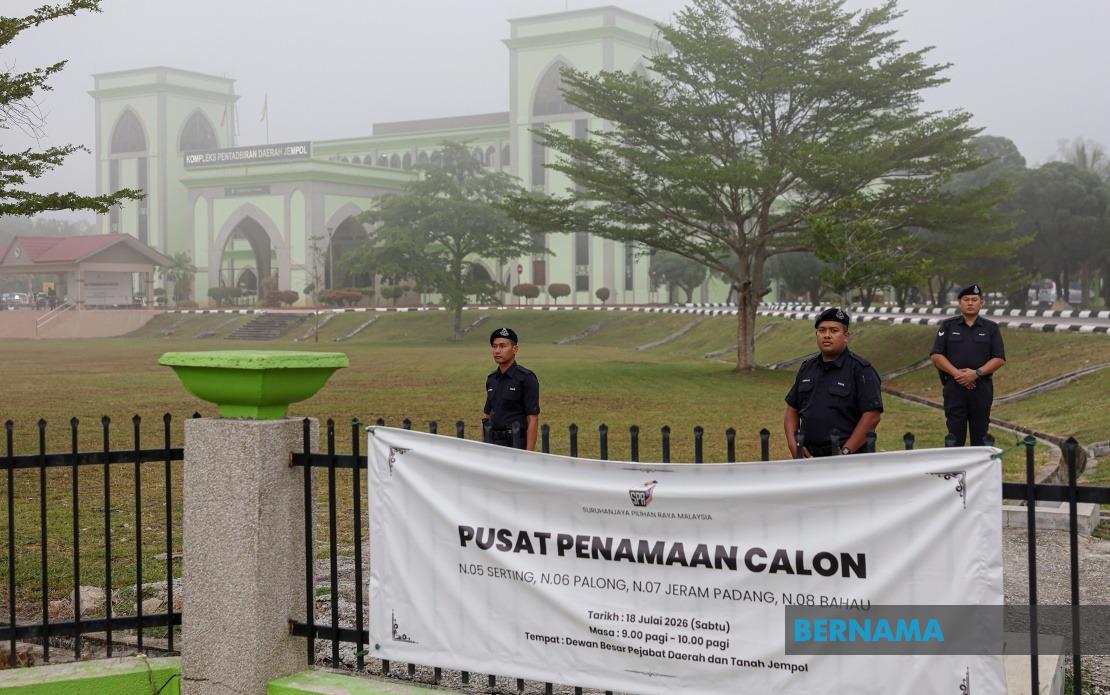
Negeri Sembilan officially commenced its 16th state election cycle on Thursday with the opening of all eight nomination centres across the state at 9 am, signalling the beginning of a carefully orchestrated electoral process overseen by the Election Commission. The nomination window, compressed into a single hour until 10 am, represents a critical juncture where political parties and independent candidates must formally register their contenders for the 36 available state assembly seats. Following the close of registration, returning officers will immediately release the official roster of eligible candidates, providing stakeholders and voters with clarity on the competitive landscape ahead.
The election was triggered by the dissolution of the Negeri Sembilan State Legislative Assembly on June 5, a constitutional step initiated after the Yang Dipertuan Besar of Negeri Sembilan, Tuanku Muhriz Tuanku Munawir, granted his consent. This dissolution concluded the term of the 15th state assembly, which has governed Negeri Sembilan since 2023, and set in motion the electoral machinery that culminates in voting on August 1. The entire electoral schedule has been meticulously planned, with early voting opportunities available on July 28 for designated groups including military personnel and police officers.
The campaign period has been established as a 14-day sprint beginning immediately after the official announcement of candidates and concluding at 11.59 pm on July 31. This condensed timeframe compresses political messaging and canvassing activities into a relatively short window, requiring parties to execute efficient ground operations and media strategies. The intensity of this campaign window reflects the competitive nature of Malaysian state elections, where every day of voter engagement carries significant weight in swaying undecided constituencies.
Security preparations have been substantial, with Negeri Sembilan police chief Datuk Alzafny Ahmad confirming the deployment of 2,393 police personnel across all eight nomination centres. This security posture underscores the importance authorities attach to maintaining orderly conduct during the nomination process, a period historically prone to political tensions and heated exchanges between contending camps. The police presence aims to guarantee that the registration process remains peaceful and that all participants, from major parties to independent candidates, can operate without intimidation or disruption.
Weather conditions across all seven districts of Negeri Sembilan have been reported as favourable, eliminating potential logistical complications that might have hindered voter mobility or the smooth functioning of polling infrastructure. This meteorological advantage provides a positive backdrop for both the nomination phase and the subsequent campaign period, enabling parties to conduct outdoor rallies and grassroots engagement without weather-related setbacks.
The electorate in Negeri Sembilan presents a substantial voter base numbering 889,490 registered voters according to the Election Commission's electoral roll as of June 4. This total comprises 867,151 ordinary voters, 16,884 military personnel and their spouses, and 5,455 police officers eligible for early voting. The diversity of the voter population, spanning civilian and uniformed personnel, reflects Negeri Sembilan's demographic composition and the logistical complexity of administering elections across different voting categories and locations.
The 2023 state election established a political baseline against which the 2026 results will inevitably be compared. Pakatan Harapan's commanding victory with 17 of 36 seats provided them with clear control of the state government, while Barisan Nasional's 14 seats constituted a significant opposition bloc and Perikatan Nasional's five seats represented an emerging political force in the state. Understanding these baseline seat distributions is crucial for analysing the 2026 election results, as shifts in these numbers will indicate broader movement among voters and changes in party fortunes.
The Negeri Sembilan election holds implications extending beyond state politics. As a mid-sized peninsular state with substantial federal representation, electoral outcomes here often serve as bellwethers for broader national political trends. Voter behaviour in Negeri Sembilan, a state spanning multiple districts with varying socio-economic profiles, can signal whether federal political dynamics are reshaping at the grassroots level. The result will provide valuable data points for national political operators assessing the stability of current coalitions and the prospects for realignment ahead of eventual general elections.
For Malaysian and regional observers, the Negeri Sembilan election represents the normal functioning of Malaysia's democratic institutions and the predictable scheduling of state elections across the federation. Unlike some states where elections cluster in specific years, Negeri Sembilan's 2026 poll demonstrates the staggered nature of Malaysia's electoral calendar, with different states holding elections at different times. This distribution spreads electoral activity and public engagement across the calendar year rather than concentrating them in a single campaign period, a structural feature that characterises Malaysia's federal system.

