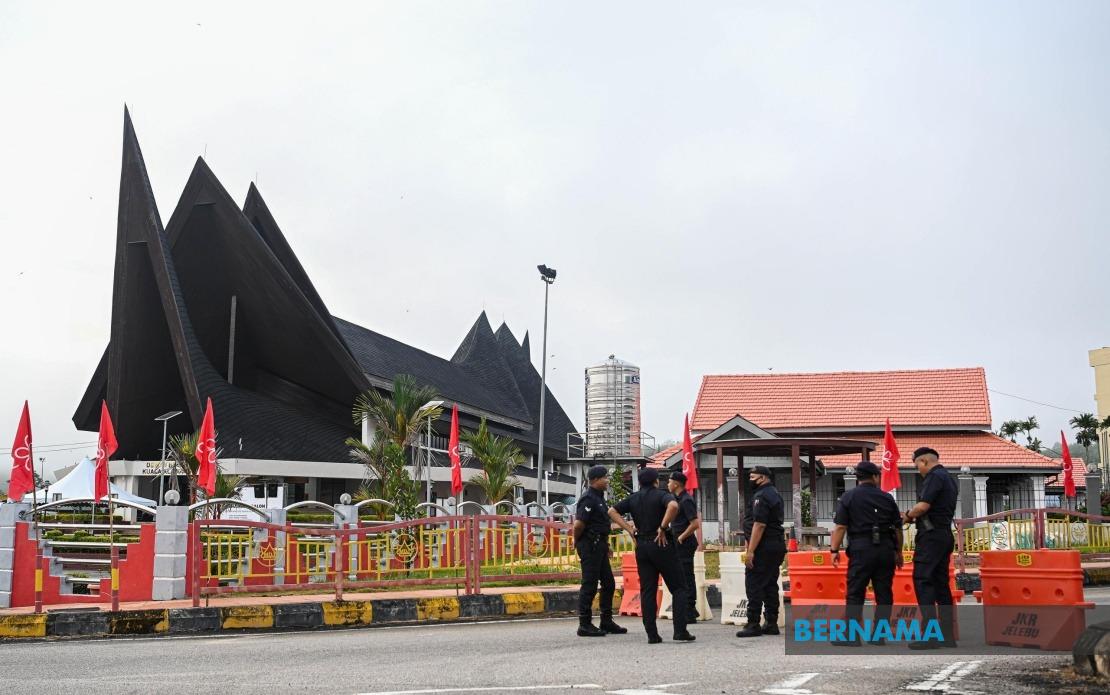
The 16th Negeri Sembilan State Election took a significant step forward on July 18 as the Election Commission opened nomination centres across the state under clear and favourable weather conditions. The process, which ran from 9 am to 10 am, marked the formal beginning of candidate registration for what is shaping up to be a closely contested election in the central Malaysian state. Eight nomination centres were activated simultaneously to accommodate the various political coalitions and independent parties seeking to field candidates in this electoral cycle.
With 889,490 eligible voters registered to participate in the election, the stakes are considerable for all contending parties. This electorate comprises 867,151 ordinary voters alongside 16,884 military personnel and their spouses and 5,455 police officers, reflecting the diverse demographic composition of Negeri Sembilan. The inclusion of uniformed service personnel voting carries particular significance in Malaysian state elections, as these blocs can influence outcomes in closely held constituencies, particularly in areas with significant military or police installations.
Election Commission officials completed extensive preparations to ensure the nomination process operated smoothly and transparently. Media organisations stationed journalists and camera crews at nomination centres as early as 7 am, underscoring the level of media interest in Negeri Sembilan's electoral contest. Political party representatives and their supporters began arriving throughout the morning to witness the formal submission of candidate nominations, transforming nomination centre compounds into hubs of political activity and visibility.
The electoral calendar itself has been expedited following the June 5 dissolution of the 36-seat state assembly. The Election Commission scheduled early voting for July 28, allowing advance ballot casting before the main polling day on August 1. This compressed timeline reflects the timing of the state election call and provides political parties with roughly two weeks to campaign and mobilise their supporters across the state's various constituencies.
Pakatan Harapan has committed to contesting all 36 seats, signalling its intention to pursue a comprehensive mandate across the state. This represents an all-in strategy that suggests confidence in the coalition's electoral prospects, though it also exposes every single contested seat to potential loss. By contrast, Barisan Nasional is contesting 25 seats, a more selective approach that allows the coalition to concentrate resources and messaging in areas where it maintains traditional strength or competitive positioning. Perikatan Nasional is fielding candidates in 11 seats, maintaining a modest presence that reflects its status as a smaller player in Negeri Sembilan's political landscape.
Several smaller political parties are participating in the election with single-seat contests. Parti Orang Asli Malaysia, Parti Sosialis Malaysia, and Parti Barisan Jemaah Islamiah Se-Malaysia each entered candidates in one constituency. These micro-parties, whilst unlikely to win seats, serve important functions in Malaysian elections by offering voters alternative choices and occasionally highlighting specific policy concerns that larger coalitions may overlook.
Partai Pribumi Bersatu Malaysia emerged as the final major announcement, deciding to contest as a solo entity rather than remaining embedded within a larger coalition framework. Bersatu will field candidates in 24 seats, with two of these positions allocated to Parti Bersepakat Hak Rakyat Malaysia under the Bersatu logo. This configuration underscores the complex and fluid nature of Malaysian coalition politics, where formal partnership structures can mask varying levels of integration and autonomy among participating parties. Bersatu's decision to contest independently rather than align with Perikatan Nasional or another coalition reflects internal strategic calculations about party brand identity and electoral positioning.
The 2023 Negeri Sembilan state election results provide crucial context for assessing this contest's competitive landscape. Pakatan Harapan won 17 of the 36 seats, establishing itself as the largest bloc but falling short of the 19 seats required for a simple majority. Barisan Nasional secured 14 seats, maintaining a significant opposition position, whilst Perikatan Nasional captured five seats. The fragmented outcome demonstrated the state's competitive nature and suggested that the 2024 election could witness significant seat changes depending on voter sentiment shifts and candidate quality.
For Malaysian and Southeast Asian observers, Negeri Sembilan elections hold broader significance beyond the state itself. State elections serve as important barometers of national political trends, allowing analysts to gauge shifts in voter preferences before federal elections. Negeri Sembilan's mixed demographics—combining urban constituencies with rural and semi-rural areas—make it representative of Malaysia's electoral complexity. Results here may indicate how key voter blocs nationwide are aligning, particularly regarding support for different political coalitions.
The nomination process completion marks the transition to intensive campaigning across the state. Political parties will now mobilise resources to promote their candidates and articulate their visions for Negeri Sembilan's future. The campaign period will determine which parties can convince voters that their candidates offer the most credible governance platforms and the most effective representation of local interests. Competition for swing votes in marginal constituencies will likely prove decisive given the 2023 results' tight distribution.
Weather conditions favoured the nomination process's smooth conduct, ensuring that procedural delays did not impede candidate registration. The Election Commission's successful management of the eight simultaneous nomination centres demonstrated logistical capability and organisational readiness for the full election cycle ahead. With early voting scheduled for late July and polling day set for August 1, the election machinery is now fully activated, and Negeri Sembilan enters the critical final phase of its electoral cycle.

