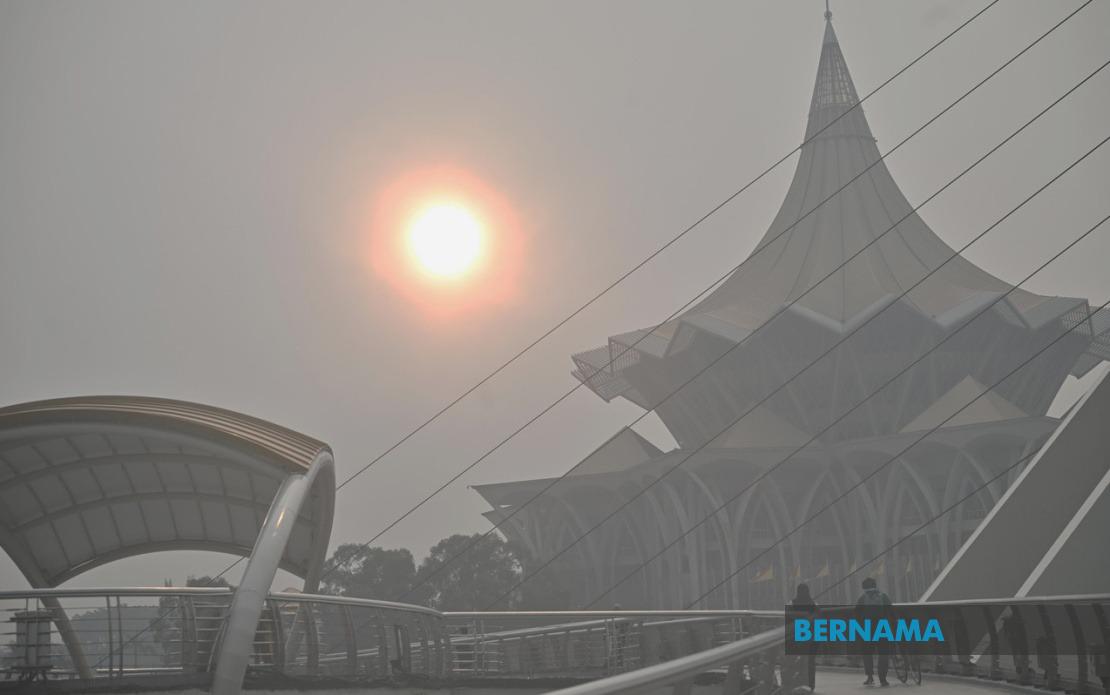
The Sarawak Education Department has ordered the temporary closure of 591 educational institutions across the state, effective from today through tomorrow, in response to extended periods of oppressive heat and drought conditions. This sweeping measure affects a combined 197,323 students and teaching staff, representing a significant disruption to the academic calendar across multiple districts. The action reflects growing official concern about the compounding effects of prolonged dry weather on public health and environmental stability throughout the region.
The closures span both primary and secondary institutions under the jurisdiction of 10 different District Education Offices spread across Sarawak. Primary schools account for the bulk of shuttered facilities, with 509 establishments serving 107,590 pupils forced to remain closed. Secondary institutions represent the remainder, with 82 schools affecting 89,733 students. The affected educational zones encompass a broad geographical swath of the state, including the administrative districts of Kuching, Padawan, Bau, Lundu, Samarahan, Simunjan, Serian, Sri Aman, Lubok Antu and Betong. This distribution demonstrates the pervasiveness of the climatic stress across urban, semi-urban and rural communities.
For Malaysian parents and educators, such closures highlight the increasingly frequent disruptions that extreme weather patterns pose to the education system. While school closures due to weather are not uncommon, the expanding frequency and scope of such measures signal deepening climate vulnerability. The state government's decision underscores how meteorological extremes can cascade into cascading administrative challenges, forcing authorities to balance child welfare against educational continuity. Similar conditions in recent years have prompted comparable responses, suggesting that episodic weather-driven disruptions may become a recurring feature of the academic calendar.
The Sarawak State Disaster Management Committee has initiated comprehensive monitoring protocols addressing the multifaceted threats posed by the extended dry spell. State officials are tracking a constellation of interrelated hazards, including elevated wildfire risk, deteriorating air quality metrics, active hotspot developments, and mounting pressures on freshwater supplies. The committee's assessment recognises that prolonged heat and drought conditions create a perfect storm of vulnerabilities, with each factor potentially exacerbating others in a vicious cycle. Forest fires and peatland fires, once ignited, consume extensive tracts of land and generate smoke that severely degrades air quality across wide areas.
Air quality measurements across nine locations in Sarawak revealed concerning pollution levels as of early afternoon today. Multiple monitoring stations recorded unhealthy Air Pollutant Index readings, including Kuching (191), Samarahan (175), Serian (195), Sri Aman (178), Sarikei (154), Sibu (108), Lundu (180), Tebedu (169) and Lubok Antu (191). These numbers indicate that residents in affected areas are breathing air contaminated to levels that pose health risks, particularly for vulnerable populations including children, the elderly and those with respiratory conditions. The wide geographical distribution of elevated API readings suggests that smoke from active fire sources is affecting diverse communities across the state simultaneously.
Water supply pressures represent another critical concern during extended dry periods. Sarawak's water infrastructure, like systems throughout Malaysia, faces seasonal stress during drought conditions. Reduced rainfall diminishes inflows into reservoirs and natural water sources, compelling authorities to manage consumption carefully and implement usage restrictions if reserves deplete too rapidly. For a state with significant agricultural and industrial water demands alongside domestic consumption, supply shortages can generate economic disruptions beyond the immediate inconvenience to households. The disaster management committee's focus on water supply monitoring reflects awareness that prolonged dry conditions can rapidly transition from uncomfortable to crisis territory.
The state's disaster management apparatus is intensifying preparedness and prevention activities, with particular emphasis on high-risk areas where fire danger is most acute. Such measures typically include enhanced public messaging about fire safety, increased ground and aerial surveillance of forested areas, and pre-positioning of firefighting resources. Community engagement and awareness campaigns encourage residents to avoid activities that might trigger unintended ignition, such as uncontrolled agricultural burning or discarding smoking materials carelessly. Historical experience demonstrates that many forest fires originate from human activities that could be prevented through vigilance and education.
For Southeast Asia more broadly, Sarawak's current predicament reflects a broader regional pattern of intensifying climate variability. Prolonged dry spells alternating with extreme rainfall events are becoming increasingly documented across the equatorial and tropical regions of Southeast Asia. Environmental scientists attribute such shifts to evolving global climate patterns, though specific causation remains subject to ongoing research. Malaysia's geographical position astride the equator makes it particularly sensitive to subtle shifts in atmospheric circulation and oceanic conditions that can persist for weeks or months, disrupting patterns that communities have historically relied upon.
The situation in Sarawak carries particular resonance for other Malaysian states and Southeast Asian neighbours with similar climatic profiles and infrastructure vulnerabilities. School closures, air quality degradation and water supply concerns have previously affected Peninsular Malaysia during extended dry periods, particularly in major urban centres dependent on reservoir systems. The frequency and intensity of such disruptions may increase as climate patterns evolve, forcing policymakers to contemplate longer-term adaptation strategies rather than treating each event as an isolated crisis requiring temporary responses. Investment in drought-resistant water infrastructure, enhanced forest fire prevention systems and climate-resilient public health protocols may become essential policy priorities across the region.
The temporary nature of the current school closures suggests that authorities expect conditions to improve within the next 24-48 hours. However, longer-term forecasts and historical patterns will determine whether this represents merely a brief respite or the beginning of sustained improvement. Residents and officials alike will be monitoring weather forecasts closely, watching for signs of approaching monsoon systems or other rain-bearing weather patterns that could alleviate the current stress. In the interim, the affected communities navigate the disruptions to education, commerce and daily life that extreme weather continues to impose with increasing regularity.

