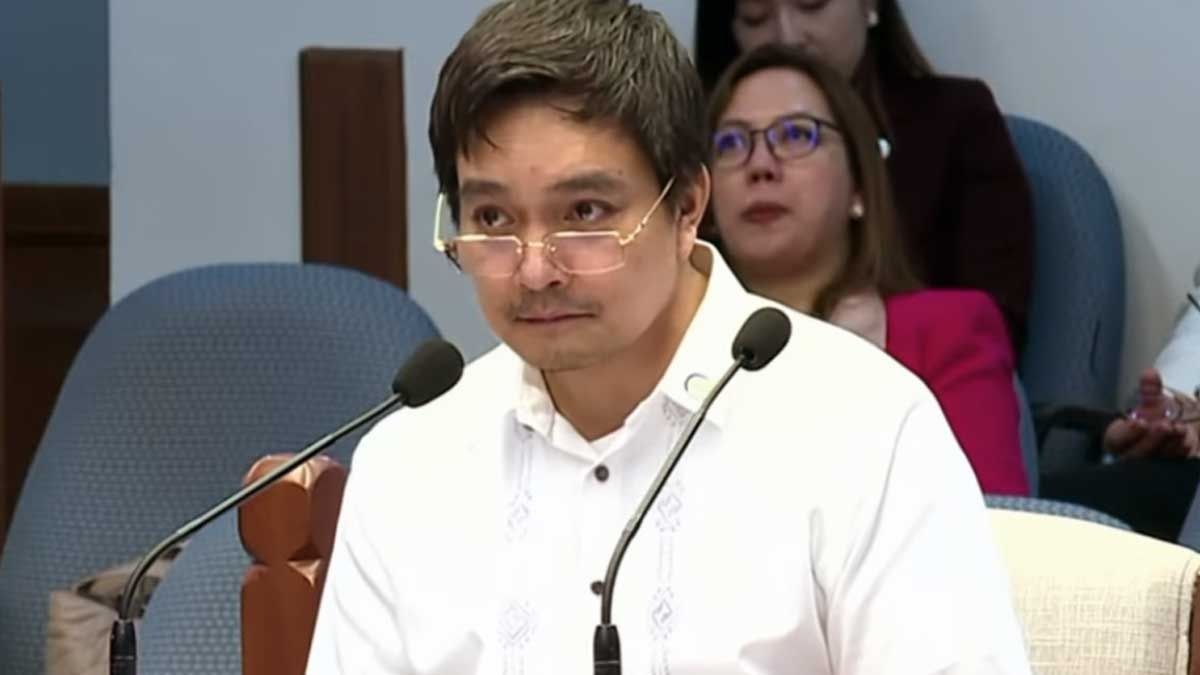
During the ongoing impeachment proceedings against Philippine Vice President Sara Duterte, National Bureau of Investigation Regional Director Jeremy Lotoc made a significant distinction on Tuesday that may prove crucial to the case: while he possesses no direct personal knowledge that Duterte hired an assassin to kill President Ferdinand Marcos Jr., the investigative materials his agency gathered point toward that conclusion. This carefully-worded testimony came during cross-examination as the defence sought to undermine the NBI's central claims, exposing the evidentiary gap that could become a critical battleground in the high-stakes political trial unfolding in Congress.
Lotoc, who headed the NBI's Crime Division during the investigation, was questioned extensively by defence lawyer Mark Vinluan about the allegations stemming from Duterte's inflammatory remarks made during an online media briefing on November 23, 2024. Those controversial statements—in which the Vice President referenced contracting someone to kill the president, first lady Liza Araneta-Marcos, and former House Speaker Martin Romualdez—now form the basis of the fourth article of impeachment filed against her by political rivals seeking her removal from office.
The distinction between circumstantial evidence and direct knowledge proved to be a flashpoint throughout the proceedings. When Vinluan pressed Lotoc directly on whether he had personal knowledge that Duterte had contracted an assassin, the NBI executive acknowledged the limitation while simultaneously asserting that the investigation's accumulated findings supported such a conclusion. "We do believe that the Vice President had contracted someone, but I don't have personal knowledge, if that is the personal knowledge you want to know about. But we do believe this based on the evidence that we've gathered and based on our investigation," Lotoc stated, attempting to navigate the tension between investigative conclusions and evidentiary proof.
The impeachment trial itself has become a contentious arena where procedural disputes frequently overshadow substantive examination of the evidence. At one critical juncture, Senate Presiding Officer Francis "Chiz" Escudero felt compelled to intervene, reminding both the defence and prosecution counsels that "you are not in a college debate." This intervention became necessary when Vinluan and prosecutor Amando Ligutan engaged in heated exchanges over the interpretation of Duterte's statements in the controversial video, with the defence lawyer initially attempting to establish that because Duterte made unsubstantiated corruption allegations in the same footage, her credibility on all matters should be questioned.
The cross-examination strategy employed by the defence appeared designed to highlight the investigative team's lack of corroborating evidence for the most serious allegation—the actual engagement of an assassin. When Lotoc conceded that he possessed no personal knowledge of whether Duterte had truly contracted someone for the purpose of carrying out murders, Vinluan seized the opening, drawing a direct parallel to the witness's acknowledgment of lacking personal knowledge regarding the separate corruption allegations Duterte had made. The logic was straightforward: if the NBI could not verify one set of claims from the video through independent investigation, why should the tribunal trust their conclusions about the more grave allegations?
In response to Senate President Sherwin Gatchalian's inquiry about what specific evidence demonstrated Duterte's capability to execute such threats, Lotoc initially suggested that her position as Vice President itself demonstrated such capability. This answer, however, prompted immediate pushback from Gatchalian, who correctly observed that holding high office does not automatically translate to having either the inclination or the practical means to commission murders. Confronted with this logical challenge, Lotoc pivoted to what may ultimately be the prosecution's strongest line of argumentation: the historical context of Duterte's family and alleged conduct.
Lotoc invoked the pending International Criminal Court case against Duterte's father, former President Rodrigo Duterte, arising from allegations of extrajudicial killings during his administration's controversial war on drugs. This reference carried significant weight in the Philippine political context, where the Duterte family's governance record remains deeply polarizing. The NBI witness argued that given this familial background and the documented accusations of summary executions under her father's presidency, the Vice President possessed both the ideological inclination and the practical knowledge necessary to carry out or commission similar acts. "Being in that situation, she has the capability, aside from the fact that she is the Vice President," Lotoc explained.
The invocation of the ICC case represented a calculated prosecutorial choice, transforming what might otherwise appear as character assassination into an argument rooted in demonstrable historical precedent. For Malaysian and broader Southeast Asian observers of Philippine politics, this strategy illuminates how historical grievances and family legacies continue to shape contemporary political struggles in the region. The case underscores recurring patterns in Southeast Asian democracies where questions of state violence, accountability, and political succession intersect.
Escudero's repeated interventions to maintain procedural order reflected the broader challenge facing the impeachment trial: maintaining focus on substantive evidence while preventing the proceedings from devolving into partisan theatre. The presiding officer's insistence that witnesses provide "complete and specific answers" attempted to create space for factual inquiry, yet the fundamental tension remained unresolved—the defence continued to hammer on the distinction between investigative suspicion and legal proof, a distinction that ultimately matters in determining whether Duterte should be removed from office.
The testimony also exposed methodological questions about the NBI investigation itself. Rather than presenting a clear chain of evidence linking Duterte to a specific assassin or concrete plans, the agency appeared to rely on inferential reasoning: her statements suggested intent, her family history suggested capability, and therefore the circumstantial evidence supported the conclusion that she had contracted someone. Whether this evidentiary approach meets the threshold required for impeachment—a question that remains contested among constitutional scholars—will likely shape the trial's ultimate trajectory.
As the impeachment proceedings continue, the gap between what investigators believe to be true and what they can definitively prove through direct evidence may ultimately determine the Vice President's political fate. The case reflects broader challenges facing accountability mechanisms in Southeast Asia, where historical patterns of state violence, family political dynasties, and questions of institutional power create complex terrain for judicial and political processes. For Philippines observers and regional analysts tracking governance and democratic processes in Southeast Asia, the outcome may signal important lessons about the limits and possibilities of holding powerful political figures accountable.

