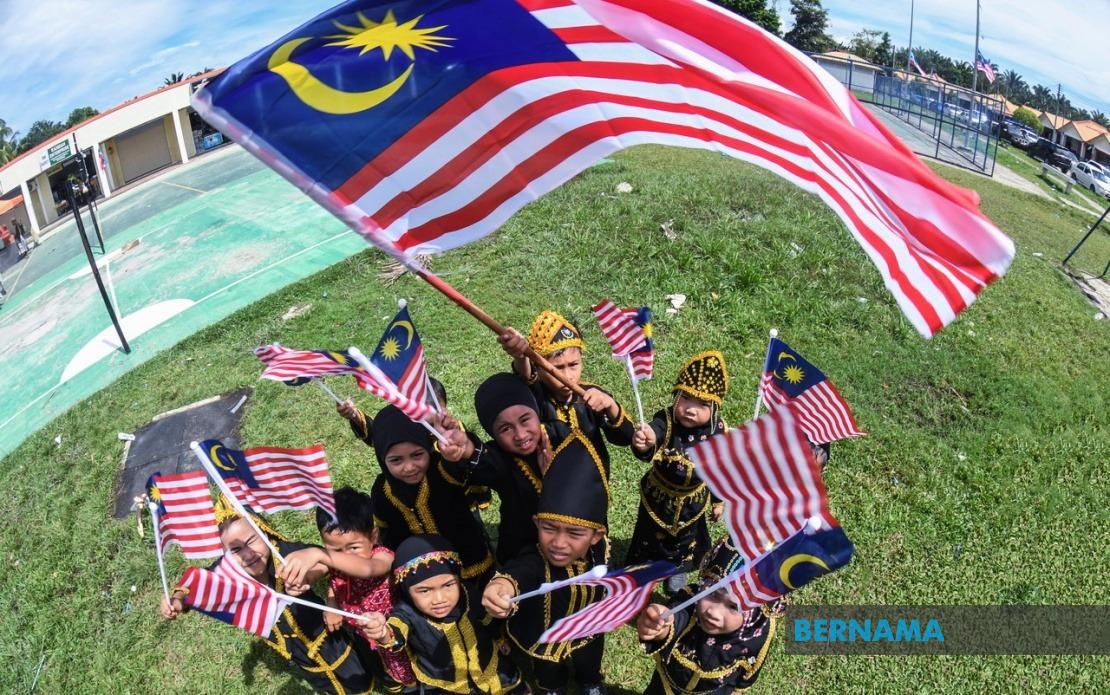
The Information Department has announced that Malaysia's National Month and Jalur Gemilang 2026 launch will adopt a scaled-back but deeply patriotic approach, reflecting contemporary global circumstances. The ceremony, scheduled for July 19 at the Ministry of Health Training Institute Sultan Azlan Shah in Tanjung Rambutan, Perak, represents a strategic shift from the expansive public events held in Muar and Cyberjaya during previous years.
Muhammad Najmi Mustapha, director of the Information Department's Communications and Community Development Division, explained that the decision to move from outdoor gatherings to an indoor format acknowledges the broader international context in which Malaysia operates. The global energy supply crisis and regional military conflicts in West Asia have prompted the government to recalibrate how it observes its most significant national occasions, without compromising the celebratory essence that citizens expect.
Prime Minister Datuk Seri Anwar Ibrahim will officiate the launch ceremony beginning at 10 am, signalling the government's commitment to the 2026 celebrations despite the constrained format. The proceedings will receive extensive media coverage through Radio Televisyen Malaysia and the Malaysian National News Agency, with simultaneous streaming on social media platforms including Merdeka360, the Ministry of Communications' channels, and the Information Department's accounts. This multi-platform approach ensures that despite the modest venue, public participation in the launch experience remains accessible across Malaysia.
The government's rationale for the indoor setting reflects pragmatic governance during turbulent times. Officials have emphasized that containing the scale of festivities need not diminish the patriotic sentiment or national unity messages that these celebrations serve to reinforce. By maintaining ceremonial dignity within a controlled environment, organizers believe they can deliver a meaningful commemoration without the resource implications of previous large-scale arrangements.
Central to the 2026 campaign is the continuation and expansion of the "1 Rumah 1 Jalur Gemilang" initiative, which encourages individual households to display the Malaysian flag as an expression of national pride. The programme has evolved significantly since its introduction, incorporating two new clusters focused on houses of worship and sports facilities. This expansion broadens participation beyond the original seven clusters spanning education, higher education, healthcare, security, community engagement, industrial sectors, and government institutions. The inclusive framework recognizes that patriotism transcends institutional boundaries and thrives when ordinary Malaysians at grassroots level feel empowered to demonstrate civic pride.
Social media engagement forms a critical pillar of the 2026 strategy, with authorities actively promoting digital expressions of nationalism. Citizens are encouraged to adopt the Jalur Gemilang as profile pictures across platforms and share content commemorating National Month using designated hashtags: #HKHM2026, #MalaysiaMADANI, #KesejahteraanDinikmati, and #Merdeka360. This social media dimension democratizes participation, allowing Malaysians regardless of geographic location or mobility constraints to contribute visibly to the national conversation.
Communications Minister Datuk Seri Fahmi Fadzil previously unveiled the overarching theme for 2026 celebrations: "Malaysia MADANI: Kesejahteraan Dinikmati," which translates as prosperity being enjoyed and shared among citizens. This thematic emphasis addresses aspirations for equitable development and societal wellbeing, positioning national celebrations not merely as ceremonial occasions but as platforms for articulating the government's vision of inclusive prosperity. The Malaysia MADANI logo, retained as the official emblem through 2026, provides visual consistency and reinforces this developmental narrative.
The August 31 National Day commemoration at Dataran Putrajaya will maintain this philosophy of modesty combined with vibrancy. Officials have signalled that while the gathering will be contained in scale, its character will remain celebratory and participatory. The venue selection emphasizes the nation's capital as the symbolic centre where Malaysians converge to reaffirm constitutional bonds and shared identity.
For Southeast Asian observers, Malaysia's recalibration of national celebration practices offers relevant lessons. As regional economies navigate overlapping challenges—energy transition, geopolitical volatility, and fiscal constraints—governments must balance ceremonial continuity with contemporary realities. Malaysia's approach demonstrates that reduced spectacle need not diminish patriotic substance, and that meaningful national engagement can occur within modest parameters when coupled with sophisticated communications strategy.
The Information Department's emphasis on periodic updates through the Merdeka360 portal and social media channels indicates a modernized approach to national communications infrastructure. Rather than relying on single focal events, the government is nurturing distributed networks of celebration and participation across Malaysia's geography and demographics. This distributed model may prove more resilient to future disruptions than concentrated gatherings.
Ultimately, the 2026 National Month launch reflects Malaysia's maturation as a nation capable of maintaining institutional continuity and patriotic expression despite external headwinds. The modest format does not signify diminished national pride but rather its sophistication—the confidence to express identity through measured, inclusive, and digitally-enabled means rather than through the spectacle that previous eras demanded. As Malaysia approaches its 2026 National Day celebrations, this recalibration suggests that patriotic sentiment endures regardless of the scale of official ceremony.

