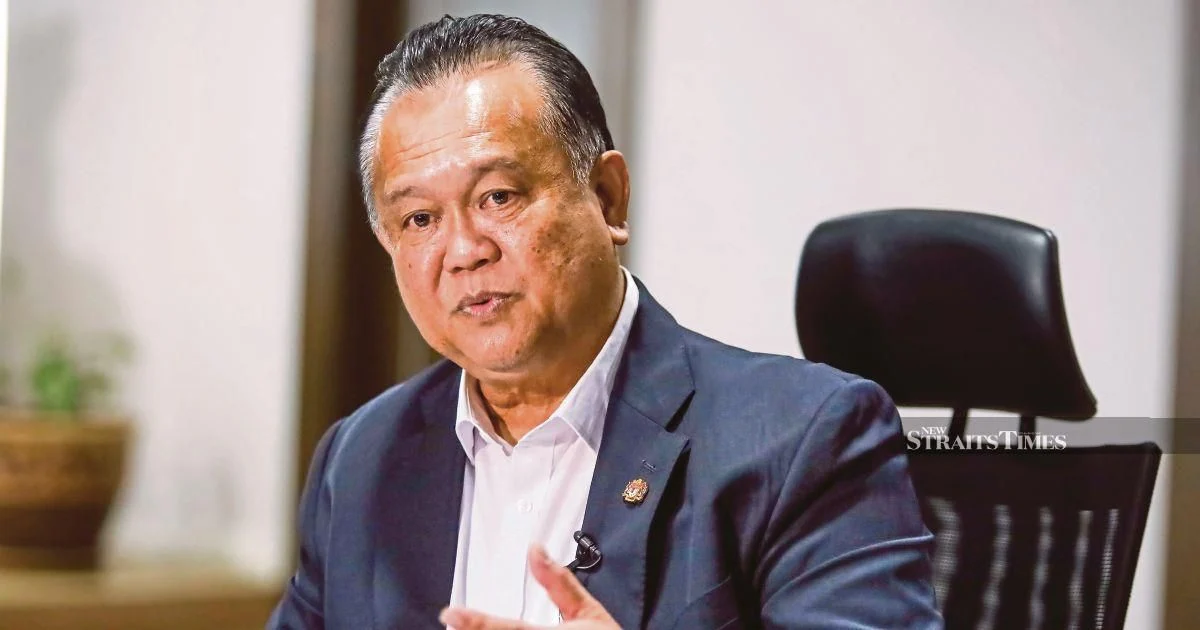
Malaysia's approach to transport infrastructure is entering a new chapter, with the Works Ministry signalling a fundamental reorientation away from the highway-building paradigm that has dominated development planning for decades. Speaking in Kuala Lumpur, Works Minister Datuk Seri Alexander Nanta Linggi articulated a vision that acknowledges the enduring role of road networks while simultaneously suggesting a substantial recalibration in how authorities will deploy capital and design new mobility solutions.
The minister's statement reflects a broader acknowledgment within government circles that the traditional model of solving congestion through continuous highway expansion has reached practical and financial limits. Rather than embarking on fresh major road projects at the scale witnessed in previous decades, the focus will concentrate on optimising existing infrastructure through technological innovation and smarter management systems. This represents a pragmatic recognition that land constraints, environmental considerations, and fiscal pressures make unlimited highway construction untenable, particularly around the Klang Valley and other densely populated corridors where competition for space is already intense.
Central to the revised transport philosophy is the integration imperative. Nanta's remarks underscore that highways must function not as standalone arteries but as components of cohesive mobility ecosystems where private vehicles, buses, trains, and other modes flow seamlessly. This thinking aligns with international best practice in developed nations, where transport networks have evolved from siloed systems toward coordinated arrangements that offer users genuine alternatives and flexibility. For Malaysian commuters, this could eventually translate into journey planning tools that seamlessly combine multiple transit options, unified ticketing, and timetable coordination that eliminates frustrating waiting periods between connections.
The emphasis on intelligence and connectivity implies significant technological integration. Smart highway systems employing real-time traffic monitoring, dynamic lane management, and responsive signal control can substantially increase throughput without physical expansion. Simultaneously, connecting roads more deliberately to adjacent rail lines, bus terminals, and park-and-ride facilities would encourage modal shift among commuters. For instance, workers in satellite towns could drive to convenient hubs, board rapid transit into city centres, and reverse the journey without needing to navigate congested urban streets. Such arrangements reduce overall traffic volumes while maintaining mobility and convenience.
Malaysia's context makes this reorientation particularly significant. The Klang Valley, home to approximately eight million people, operates under severe spatial constraints that make traditional widening solutions increasingly impractical. Extended journeys on congested highways consume enormous quantities of fuel, generate substantial emissions, and erode productivity through time wasted in traffic. The transition toward integrated, technology-enabled systems promises meaningful relief without requiring the massive acquisition of land that fresh highway corridors would demand. Moreover, cities across Southeast Asia including Singapore and Bangkok have demonstrated that intelligent transport management can substantially improve flow even on existing infrastructure.
The minister's positioning also carries implications for Malaysia's climate commitments and urban livability objectives. By implicitly downplaying new highway construction in favour of public transit enhancement and smart infrastructure, the government signals alignment with regional and global sustainability priorities. Transport represents one of Malaysia's largest carbon-emitting sectors, and reducing private vehicle dependency through superior mass transit options directly addresses this challenge. Creating cities where residents can reasonably decline car ownership improves air quality, reduces noise pollution, and frees land currently occupied by parking facilities for productive uses.
For investors and developers, this policy shift carries material consequences. Real estate valuations increasingly correlate with proximity to efficient public transit rather than highway access alone. Mixed-use developments that integrate residential, commercial, and mobility hubs become more attractive investments. Conversely, out-of-town shopping centres and office parks dependent on highway accessibility face challenges as consumer preferences increasingly favour walkable, transit-connected destinations. The statement from the Works Ministry effectively resets expectations around how land value accumulates in the transport-oriented future.
The practicalities of implementation will prove demanding. Existing highway concessionaires hold long-term operating contracts with revenue expectations predicated on continued growth. Shifting travel patterns away from private vehicles requires investing substantially in competing public transit, a capital-intensive undertaking. Coordination among multiple agencies operating railways, buses, and taxis has historically proven difficult. Integration also demands standards-setting and system-wide planning that transcends individual project silos. Yet the minister's framing suggests the government recognises these challenges and is willing to tackle them as imperatives rather than obstacles.
Nanta's remarks arrive as Malaysia grapples with post-pandemic mobility patterns that have shifted significantly. Remote work arrangements reduce commuting demand on traditional rush-hour corridors, while e-commerce has transformed freight movement requirements. These changes present opportunities to redesign transport provisioning rather than simply reconstructing pre-pandemic patterns. Authorities can pilot innovative solutions like flexible public transit routing, congestion pricing to manage demand, and integrated mobility platforms in this period of transformation, establishing templates for sustainable urban movement.
Looking forward, the practical manifestation of this policy depends on sustained commitment and adequate funding. Government budget allocations will reveal whether the rhetoric translates into action or remains aspirational positioning. International experience suggests that successful transport reorientation requires decade-long commitments with consistent resourcing and political support spanning multiple electoral cycles. For Malaysian commuters and businesses, the promised shift from highway expansion toward smarter, integrated mobility systems could substantially enhance quality of life and economic efficiency if executed with determination and vision.

