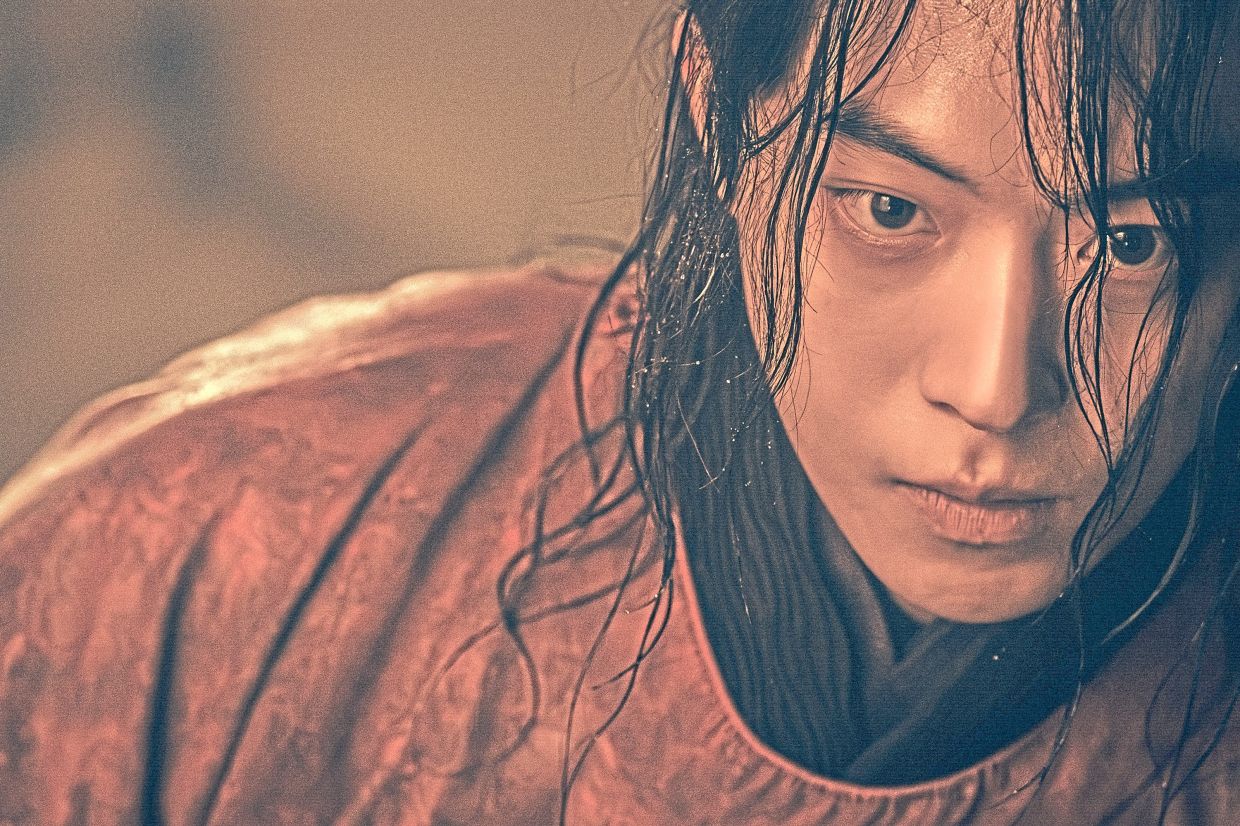
Nam Joo-hyuk is attempting to rebuild his acting career with The East Palace, a supernatural period drama launching on Netflix as part of the platform's summer programming. The series marks his first substantial film or television appearance since completing South Korea's mandatory military conscription in September 2024, and arrives at a critical juncture for the actor, whose public standing was damaged by serious allegations that emerged nearly three years ago.
The East Palace positions Nam in the lead role as Gu-cheon, a protagonist capable of moving fluidly between the mortal world and the realm of spirits. His character becomes entangled in palace intrigue when supernatural forces begin menacing the royal compound. Opposite him is Roh Yoon-seo, cast as an enigmatic maid employed within palace walls, whose own mysteries intertwine with the central narrative. The production recruits Cho Seung-woo, an established and respected performer known for acclaimed work in Stranger and The King's Doctor, to embody the king tasked with summoning the pair to investigate the curse afflicting his domain.
Director Choi Jung-kyu has constructed the drama around genuine Korean folkloric traditions and shamanic practices, moving beyond superficial cultural ornamentation. In remarks delivered at a recent industry gathering, Choi explained his creative intent to allow traditional Korean elements to emerge organically from the historical setting rather than imposing them artificially onto an otherwise generic narrative framework. This approach extends throughout all production dimensions, including narrative pacing and visual presentation, reflecting a commitment to authenticity alongside entertainment value.
The visual language of The East Palace prioritises the majesty of classical Korean palace design combined with meticulous period-accurate costume work. Beyond practical aesthetics, the production required extensive post-production visual effects to realise the supernatural components of the story. Choi acknowledged the technical burden this placed on performers, who frequently delivered scenes opposite digital characters and creatures that existed only in the editing suite. The director credited his post-production team with intensive refinement work, ensuring that folklore elements conveyed their intended meaning clearly to viewers across different backgrounds and cultural contexts.
Cho, who carries significant prestige within the Korean entertainment industry, offered additional perspective on the series' thematic architecture during the press engagement. He identified a symbolic landscape element—a body of water appearing repeatedly throughout the narrative—that visually encapsulates the show's underlying tension and dramatic complexity. While appearing tranquil on its surface, this pond contains profound turbulence beneath, functioning metaphorically as the centre of an invisible storm. Cho suggested that understanding this motif would enrich viewer appreciation of the complete work.
For Nam, The East Palace represents far more than a routine professional engagement. In June 2022, anonymous allegations of school bullying emerged publicly, creating a substantial credibility crisis that effectively halted his momentum within the industry. Nam categorically rejected the accusations as unfounded. By 2024, investigations had progressed sufficiently that two individuals identified as key sources of the rumours faced legal conviction for criminal defamation, having disseminated demonstrably false information. Despite this judicial vindication, the damage to his reputation and career trajectory remained substantial.
Nam's return to prominent screen roles carries symbolic weight beyond his immediate professional prospects. The actor described the emotional weight of his comeback, acknowledging that he felt profound responsibility both in his performance and throughout the production environment. He expressed determination to execute his role without becoming a liability to the broader creative team, suggesting acute awareness of how his participation might influence public and industry perception of the series.
The actor revealed that he first encountered The East Palace's script while fulfilling his military obligations, during a period when extended downtime allowed imaginative engagement with material. Reading the screenplay under those circumstances sparked genuine enthusiasm for the project, motivating his commitment to take on what he recognised as a demanding and complex character. This narrative choice—of accepting the role during military service—carries implications beyond simple career mechanics, suggesting proactive engagement with his professional future despite the extraordinary circumstances he faced.
The East Palace arrives as a test case for Korean entertainment's capacity to move past scandal and allegation toward redemption narratives. Whether audiences will embrace Nam's return to mainstream visibility, and whether the drama's supernatural and historical elements will resonate with international viewership, remains an open question. For Malaysia and broader Southeast Asian audiences, the series offers both supernatural entertainment and a window into contemporary Korean cultural production, particularly the industry's relationship with scandal, justice, and professional rehabilitation. Netflix's commitment to distributing the drama across its global platform suggests confidence that the production's quality and thematic depth will engage viewers regardless of the personal narrative surrounding its lead actor.

