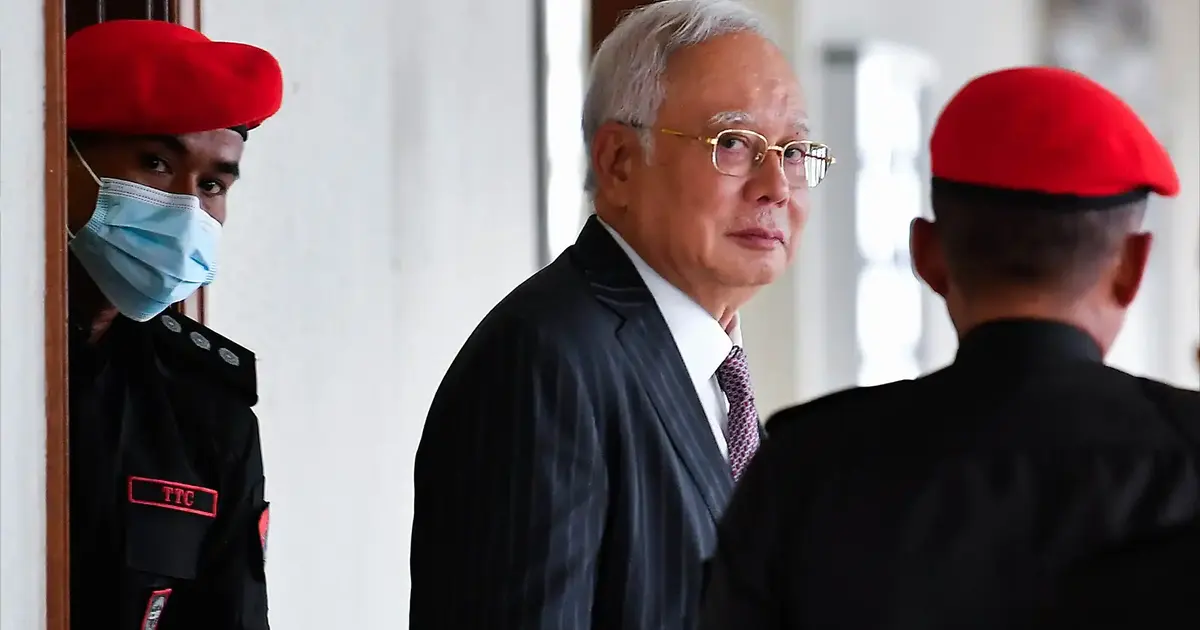
Former Prime Minister Najib Razak's defence team is mounting a procedural challenge to the credibility of the 1MDB investigation, casting doubt on the impartiality of the investigator tasked with tracing the movement of US$620 million in disputed funds. Senior counsel Shafee Abdullah raised the concern during court proceedings, highlighting a critical timing issue that he argues undermines the investigation's independence and objectivity.
At the heart of the defence challenge is a chronological sequence that Shafee contends raises legitimate questions about the investigator's potential bias. According to his submission, Kroll Advisory Ltd's investigations director Richard Templeman commenced his formal probe approximately two months after 1MDB had already initiated civil proceedings against the former premier. This temporal relationship, the defence argues, suggests the investigation may have been conducted with predetermined conclusions rather than as an independent fact-finding exercise.
The significance of this timing argument lies in legal principles governing evidence and investigative integrity. When an investigation begins after a party has already filed litigation, questions naturally arise about whether the investigator is conducting a neutral examination or merely gathering supporting material for the claimant's case. The defence is essentially contending that Templeman's probe cannot be considered a fresh, unbiased inquiry into the fund movements but rather a post-hoc effort to bolster 1MDB's legal position.
Kroll Advisory is a prominent international corporate investigations firm that has handled numerous high-profile cases involving financial misconduct and asset recovery. The company's involvement in examining 1MDB's financial dealings carries significant weight in courtroom proceedings, as Kroll holds considerable reputation in forensic investigations. However, reputation alone does not shield investigations from scrutiny regarding their methodology, independence, and the circumstances under which they were commissioned.
The US$620 million in question represents one of the most contentious aspects of the broader 1MDB scandal, which has captivated public attention across Southeast Asia and beyond. The funds' movement through various accounts and jurisdictions formed the cornerstone of multiple criminal and civil investigations globally. Understanding how those monies were transferred, who authorized the movements, and whether they were misappropriated remains central to the ongoing legal battles surrounding the former sovereign wealth fund.
Najib's defence strategy here reflects a broader litigation approach focusing on procedural vulnerabilities and evidentiary weaknesses rather than solely contesting the substance of the allegations. By challenging the investigator's independence, the defence team may be attempting to undermine the weight of Kroll's findings before the court even evaluates the actual evidence presented. Such procedural attacks can sometimes prove effective in weakening the prosecution or plaintiff's case, particularly if they succeed in casting legitimate doubt on how evidence was gathered or analysed.
For Malaysian observers following the protracted 1MDB litigation, this development illustrates how complex financial crime cases often hinge not just on what happened to the money, but on how investigations were conducted and whether the processes meet legal standards for fairness and impartiality. The court's treatment of Shafee's challenge will signal how seriously Malaysian judges weigh procedural objections in white-collar crime cases, particularly when they involve investigations commissioned after litigation has commenced.
The broader implications extend to how international investigators should ideally be engaged in complex financial cases. Best practices typically suggest that investigations should be initiated as soon as wrongdoing is suspected, before litigation is filed, to preserve the appearance of independence. When investigations commence after legal action has begun, questions about investigator bias become harder to dismiss, regardless of the investigator's actual intentions or competence.
This challenge also reflects the increasingly sophisticated legal defences mounted in high-profile Malaysian financial crime cases. Rather than simple denials, defence teams now deploy technical arguments about investigative methodology, timing, and institutional independence. Such approaches require courts to grapple with meta-questions about how cases should be investigated and presented, not merely with the facts of the case itself.
The outcome of Shafee's procedural objection could have ramifications beyond Najib's case. Malaysian courts' receptiveness to challenges based on investigator impartiality may influence how future large-scale financial investigations are structured and when international investigators are commissioned. If courts prove sympathetic to such arguments, investigating bodies may adopt more cautious approaches to timing and engagement protocols.
As the case progresses through the Malaysian legal system, the court will ultimately determine whether the timing gap between 1MDB's suit and Templeman's investigation fundamentally compromises the probe's evidentiary value. This decision will contribute to the evolving jurisprudence on how Malaysia addresses complex financial crimes and the procedural safeguards necessary to ensure both effective prosecution and fair trials. The tension between these objectives remains one of the defining challenges in white-collar crime litigation throughout the region.

