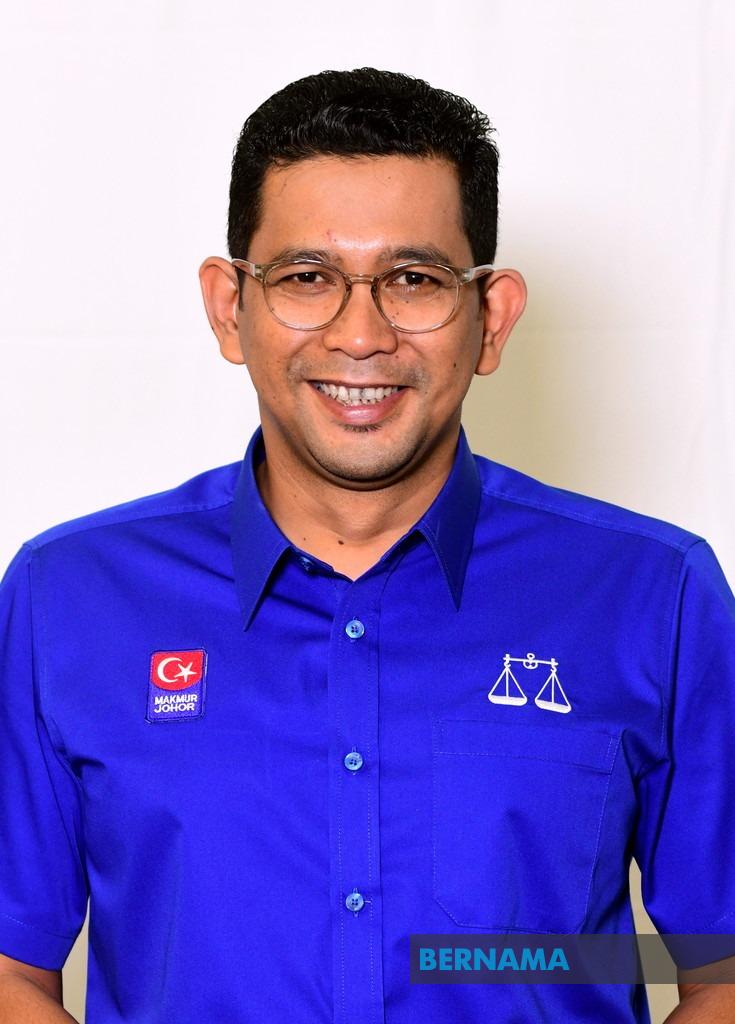
Datuk Najib Samuri, the Barisan Nasional candidate contesting the Parit Yaani state seat, is approaching the 16th Johor state election campaign with a narrative that emphasises continuity over novelty. Rather than treating the official campaigning phase as an opportunity to introduce himself or outline new promises, Najib positions it as a natural extension of sustained community work he has undertaken over the preceding four years. This framing reflects a broader coalition strategy of banking on ground-level service delivery and established relationships with constituents as the foundation for electoral success.
Speaking at the BN election machinery launching ceremony in Batu Pahat, Najib articulated his vision of the campaign not primarily as a vote-gathering exercise but as public manifestation of embedded community service. He stressed that the machinery's preparation and the candidate's visibility are rooted in actions already taken—resolved infrastructure challenges, completed projects, and sustained services delivered to residents across the three administrative zones that comprise the constituency: Parit Yaani itself, Tongkang Pechah, and Broleh. This messaging suggests confidence in the groundwork already completed and positions any electoral victory as recognition of past performance rather than response to campaign promises alone.
The candidate reported that his physical campaign coverage has already reached approximately 80 per cent of the demographic areas within the constituency as of late June, having commenced in the early part of the month. This level of on-ground activity—encompassing door-to-door engagement, community events, and direct constituent interaction—demonstrates intensive preparation preceding the official campaign period. Such ground-level penetration is viewed within coalition circles as essential in an era where multiple candidates contend for single seats, requiring parties to consolidate existing support bases while attempting to persuade swing voters.
Najib acknowledged the competitive nature of the one-on-one contest for the seat, recognising it as presenting distinct challenges for Barisan Nasional in a political landscape where opposition coalitions have strengthened substantially since the 2018 general election. However, he projected confidence in the BN machinery's capacity to maintain the coalition's hold on Parit Yaani, asserting that preparedness across all operational levels—from polling district management to volunteer coordination—has reached its highest state. This institutional readiness reflects weeks of planning and resource allocation dedicated to the constituency.
Among the technical challenges facing modern political campaigns, Najib noted a slight deterioration in the effectiveness of the party's social media algorithmic reach beginning the day of his remarks. Rather than treating this as a significant impediment, he characterised it as a manageable issue that would not substantially impede campaign momentum, particularly given the intensity of ground-level activities already underway. This observation reflects the evolving dual-front nature of contemporary electoral contests in Malaysia, where digital presence and physical engagement operate in parallel, each with distinct dynamics and vulnerabilities.
Strategic reinforcement has arrived through the mobilisation of Kedah Barisan Nasional machinery, which has been deployed to strengthen the coalition's position across the Sri Gading parliamentary area—the larger jurisdiction encompassing Parit Yaani. Kedah BN chairman Datuk Seri Mahdzir Khalid praised the systematic structure of the local campaign apparatus, noting that its organisational efficiency has eliminated the need for external partners to establish infrastructure from foundational levels. This cross-state coordination reflects a federation-wide coalition strategy of deploying resources to competitive seats, particularly in states where demographic or political shifts might threaten traditionally safe constituencies.
The logistical foundation supporting this campaign comprises 30 polling district centres distributed across Sri Gading, with 17 stationed within Parit Yaani and 13 within the adjacent Parit Raja state seat. All of these operational hubs were activated and fully functional immediately upon conclusion of the nomination process, demonstrating pre-positioned infrastructure and trained personnel ready for rapid deployment. Such operational readiness—reflected in opening centres without delays—translates into competitive advantage during the compressed campaign period, enabling rapid scaling of activities and information dissemination.
The election timeline compresses campaign activities into a brief window, with early voting scheduled for July 7 and polling day set for July 11. This compressed schedule places particular emphasis on pre-campaign positioning and machinery preparation, explaining why both Najib and his supporting coalition partners stressed the maturity of their organisational readiness. Candidates and parties unable to leverage existing ground structures face substantially steeper challenges in reaching voters and converting undecided constituents during such abbreviated official campaign periods.
For Malaysian political observers and electoral analysts, the Parit Yaani campaign encapsulates broader patterns evident in contemporary state-level contests: the renewed emphasis on ground-level service delivery as electoral currency, the central importance of pre-campaign constituency work in determining competitive position, and the strategic deployment of coalition resources across federal structures to defend or capture marginal seats. Najib's framing of campaigning as extension rather than initiation reflects confidence in the coalition's institutional capacity and suggests that Barisan Nasional's electoral strategy in Johor relies substantially on consolidation of existing support and systematic outreach rather than transformative campaign messaging. Whether this ground-centric approach proves sufficient in constituencies experiencing shifting voter demographics and growing electoral fluidity remains a critical question as July 11 approaches.

